


Red light therapy for hair growth is now one of the most searched options by men with early-to-moderate male pattern baldness. Does it work, and if so, for whom, how much, and what should a medically savvy buyer expect? This evidence-based guide cuts through marketing to lay out sudden gains, realistic limits, user complaints, trial numbers, and device specs—so you can make a confident, clinician-minded choice if you’re considering a home-use laser cap.
Key Takeaways
- Clinical trials from 2022-2024 confirm statistically significant hair regrowth in men with androgenic alopecia using red light therapy caps, but actual results and responder rates vary.
- Strict adherence to long-term use (usually 3-6 months minimum) is required for visible improvements, and about 15–20% of users may see little or no benefit, even with proper use.
- Key technical specs—wavelength (ideally 630–680 nm), diode count, and FDA-cleared models—are more important for results than brand hype; consult a dermatologist for the best combination approach.
- Quick Bottom Line — Does red light therapy work for male pattern hair loss?
- How it’s thought to work — mechanism, biological rationale, and limits
- The 2022–2024 Clinical Trial Evidence — trials, endpoints, and responder rates
- Real-World User Experience (2023–2024 verified reviews & complaints)
- Buying Guide — cost (2024) and how to read device specs
- Protocols, timeline & expected outcomes — How to use a laser cap and when you’ll see changes
- Who is most/least likely to benefit — patient selection and staging
- Safety, regulation & dermatologist position
- Competitor blind spots — 3 FAQs top articles miss (and how we’ll answer them)
- Practical call-to-action for readers — next steps, what to ask your dermatologist, and red flags
- FAQs
Quick Bottom Line — Does red light therapy work for male pattern hair loss?
Recent clinical trials show that red light therapy for hair growth can yield measurable regrowth in men with androgenic alopecia, but results are not universal. In a 2024 clinical study using a 675 nm device, men saw a 17 % increase in total hair count and density after three months (JMIR Dermatology, 2024). Another 2022 multicenter, double‑blind, sham‑controlled cap trial in the US found an average gain of about 7.5 hairs per cm² (around 30% increase) by 24 weeks, with about 60% of men getting at least a 10% bump in terminal hair count. A 2023 randomized study found a 15% improvement. However, 15–20% saw little or no regrowth despite compliance.
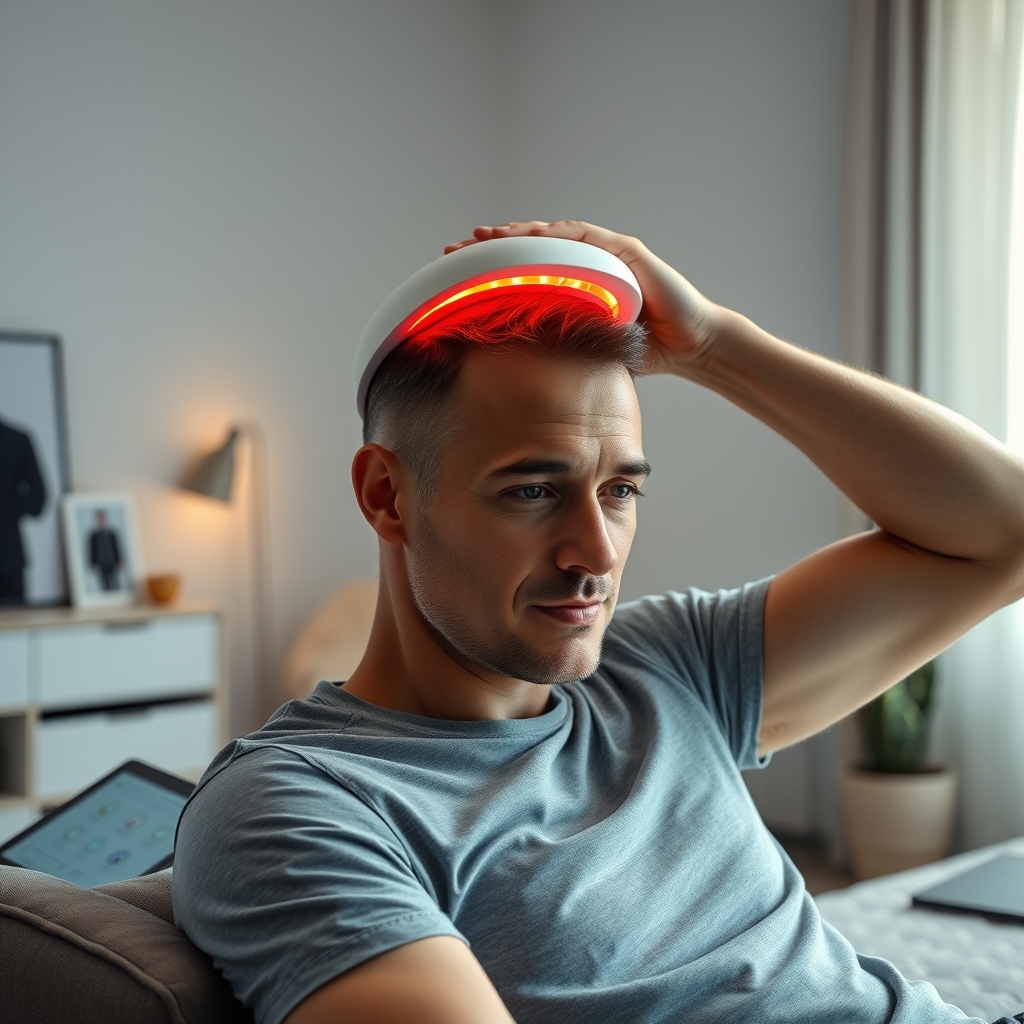
How it’s thought to work — mechanism, biological rationale, and limits
Red light therapy for alopecia works via “photobiomodulation”: specific wavelengths (commonly 630–680 nm) of light energy are absorbed by scalp tissues, supporting the anagen (growth) phase of hair follicles. This allows weakened follicles—i.e., those that still exist but are shrinking and “miniaturizing”—to produce thicker, longer hairs again. However, red light therapy will not regrow hair in areas where follicles are dead or scarred, nor on parts of the scalp that never naturally grew hair (Stanford Medicine). If you can still see some fuzz, or thinning, not shiny skin, you’re a better candidate.
The 2022–2024 Clinical Trial Evidence — trials, endpoints, and responder rates (deep dive)
Let’s break down how the recent trials were run and what they found so you can set evidence-based expectations—not get swept up by hype.
- 2024, India, 675 nm Laser Cap: 3 months of treatment led to a 17.2% increase in total hair count per test area (from ≈104 to ≈123 hairs), 17.2% boost in density, and 13.9% mean hair thickness gain. Both vellus (“fuzzy”) and terminal (“mature”) hairs improved.
- 2022 US, 24-Week Double-Blind, Sham-Controlled Laser Cap Study: ≈7.5 hairs/cm² increase (≈30% increase over baseline) at 24 weeks, with about 60% of participants achieving ≥10% improvement in terminal hair count (ShannelWatson.com).
- 2023, 16-Week Randomized Trial: ≈15% increase in total hair numbers versus control.
Wavelengths effective in studies: nearly always in the 630–680 nm range. Most commercial caps emulate this. Most studies required strict adherence—missing sessions reduced effect. Around 15–20% did not respond even with proper use.
Want to compare photobiomodulation and other light-based therapies—including for skin or pain? Our photobiomodulation therapy guide breaks down the differences.
Real-World User Experience (2023–2024 verified reviews & complaints)
Clinical numbers tell only part of the story—let’s talk about daily realities. The most frequent adverse experiences reported by verified buyers and maintenance complaints forums:
- Mild scalp warmth or transient redness (erythema) during treatment; typically resolves in minutes.
- Itching, tingling, or scalp tightness—usually transient, although it may recur with each use for some.
- Initial “shedding” phase lasting several weeks, which can worry new users; this is usually a sign of miniaturized hairs cycling out before regrowth.
- Strict adherence required: daily or 3–4 times weekly use, with no holidays during the first 3–6 months—or improvements fade.
- High upfront device costs ($500–$3,000): caps with more lasers or FDA-cleared models tend to be pricier.
- Poor fit, uncomfortable straps, or audible cooling fans discourage some users from sticking to the routine.
- About 15–20% of men report little or no visible regrowth after 6 months of compliance (Western Reserve Dermatology).
- Ongoing maintenance costs include occasional battery or charger replacements.
See comprehensive home device reviews in our red light therapy device guide if you want side-by-side specs.
Buying Guide — cost (2024) and how to read device specs
Red light (laser) caps are not all equal—here’s what to check before hitting “buy.”
- Wavelength: Seek devices emitting between 630–680 nm; this matches major clinical trial parameters (e.g., 675 nm Indian study, 2024). Claims outside this band signal poor clinical validation.
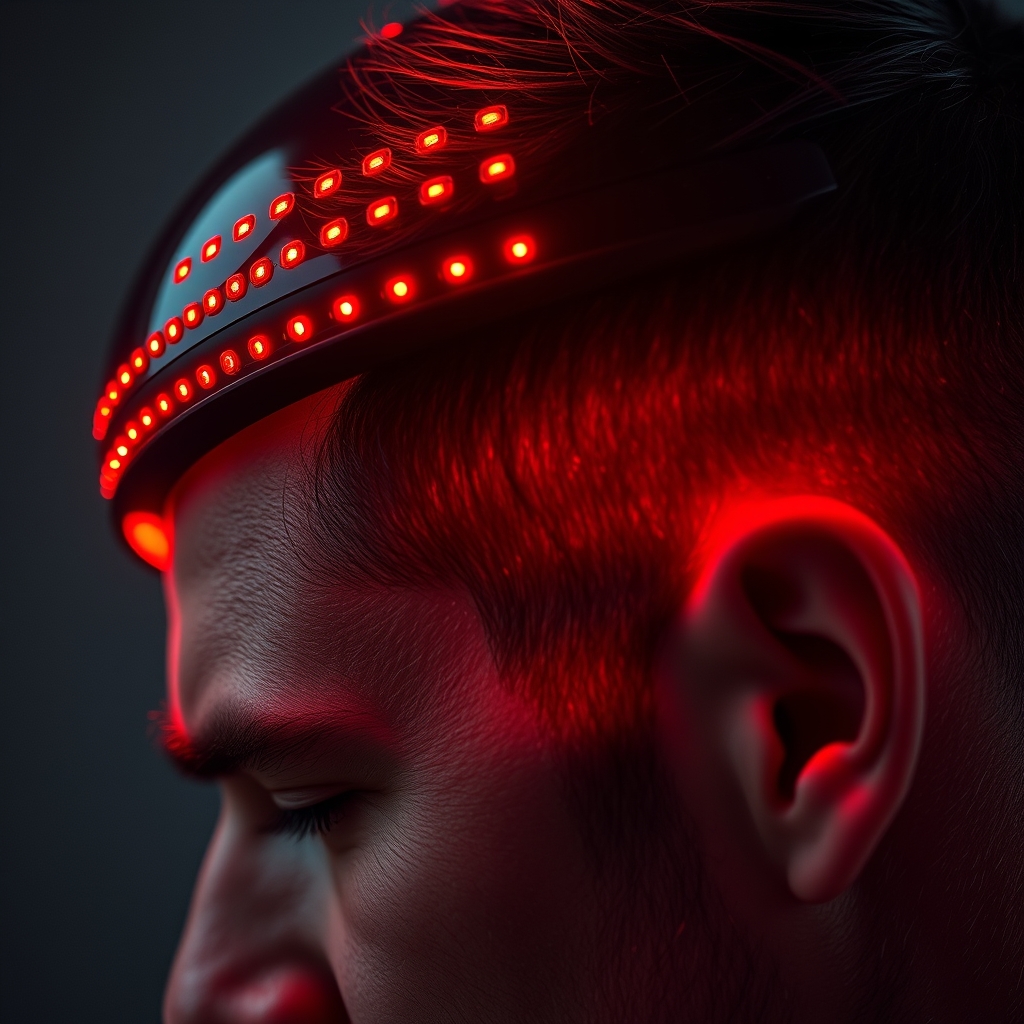
- Diode (Laser/LED) Count: More is not always better, but very low counts risk patchy treatment. 2024 FDA-cleared models, like the iRestoreProfessional, use ~282-300 lasers/LEDs (Today.com).
- Irradiance (Power Density): Compare delivered dose, not just power specs. Too low—no effect; too high—increased discomfort.
- FDA Clearance: “Cleared” means the device met minimum US safety and efficacy for a specified indication (NIH PMC). This is not FDA “approval.” Always check for clearance number, not just “registered.”
For full-body panels and targeted devices, see our guide on red light therapy panels for home.
Protocols, timeline & expected outcomes — How to use a laser cap and when you’ll see changes
Proper use is non-negotiable for results. Here’s what trials reveal:
- Most trial protocols required daily or 3–4x/week sessions, typically 15–30 min per use, for 3–6 months straight.
- Earliest measurable improvements (visible in close-up photos) occurred between 3 and 4 months. The 675 nm trial showed +17% hair count in 3 months. A 16-week trial showed 15% vs control. At 24–26 weeks, trials report about +7.5 hairs/cm² over baseline.
- Missing sessions or stopping too early commonly results in stalled or reversed gains. Maintenance is lifelong: once regrowth is achieved, drop to 1–2x/week for upkeep, as per protocols.
Learn how to use red light therapy in combination with other health spending options in our detailed guide: Red Light Therapy HSA Eligible: 7 Best Ways to Get HSA/FSA Approval.
Who is most/least likely to benefit — patient selection and staging
Clinical trials and dermatologists agree: the best candidates for red light therapy for hair loss in men are those with early-to-moderate androgenetic alopecia (Norwood II–V), with visible thinning and miniaturized (weak, fuzz-like) but still existing follicles.
- Most likely to benefit: Men aged 25–55 with Norwood II–V, still seeing visible thin hairs, with no scalp scarring and never totally bald in the area.
- Less likely: Men with shiny bald spots (follicle death), scarring alopecia, or areas that never produced hair.
- Not for: Scars, burns, slick bald zones, or hair loss from severe autoimmune or thyroid causes.
- Dermatologists warn: If you’re unsure, or you have an unusual hair loss pattern, always seek a professional evaluation before use or investing in expensive gear.
Wondering about device-based differences for other uses? See our red light therapy mask for skin guide.
Safety, regulation & dermatologist position
Most home-use LLLT/laser caps are FDA-cleared for hair regrowth in androgenetic alopecia—this means they met standards for safety and “substantial equivalence” to previously cleared devices. FDA clearance is not the same as deep endorsement for efficacy, but, crucially, the devices are considered low risk.
- Serious side effects are rare in studies and from real-world use: most complaints are minor and transient (redness, warmth, itching).
- Some users report temporary exacerbations of scalp sensitivity or, in rare cases, persistent irritation; always consult your doctor if in doubt.
- Mainstream dermatology guidance: off-label use (i.e. for other types of hair loss) is discouraged without direct oversight (Stanford Medicine). Discuss LLLT as a supplement to, not a replacement for, finasteride/minoxidil or PRP if medically suitable.
Curious how LLLT compares to near-infrared devices for other issues? Check our near infrared light therapy guide.
Competitor blind spots — 3 FAQs top articles miss (and how we’ll answer them)
- Does more diodes = better results? Not always: Real-world dose depends on wavelength and irradiance, not just diode count. A cap with 100 well-positioned, 675 nm lasers at 60 mW/cm² can outdo a cap with 300 weak, misdirected LEDs. Prioritize verified irradiance specs and wavelength over raw diode numbers.
- How can I know if I’ll respond? The strongest predictors: presence of miniaturized (fine, peach fuzz) follicles, family history of non-scarring androgenic alopecia, Norwood stage II–V, younger age, and no previous total baldness. Men with prior aggressive hair-loss therapies or long-standing bald patches (shiny scalp) have lower chance of regrowth. Always ask for a trichoscopy or scalp exam to determine follicle viability before buying.
- Can you combine red light therapy with minoxidil, finasteride, or PRP? Yes; trials indicate additive benefit and no reported increase in risk (UbieHealth Doctor’s Note). Ask your dermatologist to help coordinate a schedule to avoid overlaps and maximize effects.
Practical call-to-action for readers — next steps, what to ask your dermatologist, and red flags
Want results from red light therapy for hair growth? Here’s your action plan:
- Insist on devices with published, sham-controlled trial data; avoid any brand or product making “guarantees” or posting only slick before–after photos.
- At your next dermatologist appointment, ask: “Are my follicles still viable when viewed with trichoscopy?” and “Would combining LLLT with finasteride/minoxidil or PRP improve my odds?”
- If you don’t see measurable improvement (by photo or hair counts) after 6 months of strict use, consider stopping—about 15–20% of compliant users will not respond, and alternatives exist.
- Red Flags: No clinical data, no FDA clearance, device wavelengths outside 630–680 nm, cost far below or above market, or aggressive cure-all claims.
For other proven ways to use red light safely at home, see our best red light therapy device reviews.
FAQs
How long before I see results from red light therapy for hair growth?
Most clinical trials, including the 2024 675 nm study, report measurable improvement in hair count and density within 3–4 months; however, visually noticeable results may take 4–6 months for most users. Strict adherence is required in this period.
Does red light therapy regrow hair in bald, shiny areas?
No. Red light therapy for hair loss men only works if viable (miniaturized or dormant) follicles remain. It does not “clone” new follicles or work on scarred, permanently bald scalp regions.
What device specs matter most for laser cap hair growth red light therapy?
Prioritize wavelength (630–680 nm), FDA clearance, and irradiance (power density delivered per cm²) over raw diode count. A higher number of diodes can help with coverage only if other factors are met.
Can I combine laser cap use with minoxidil or finasteride?
Yes, combination therapy is supported in several studies and expert reviews. Always consult your dermatologist to coordinate routines and minimize scalp irritation risk.
What are the most common downsides or side effects?
Mild scalp warmth, itching, a temporary increase in shedding (during early use), discomfort from poor cap fit, and the need for strict long-term adherence are the most reported issues. 15–20% of users may see little benefit.