


Near infrared light therapy is changing how clinicians and advanced consumers approach muscle, joint, and brain recovery. But recent trials show that many devices on the market fail to deliver meaningful results—unless you know what to look for and how to prescribe or self-administer the correct dose.
Key Takeaways
- Robust clinical evidence (2020–2024) supports 850nm near infrared light therapy for muscle recovery, joint pain, and select brain health indications when dosing and placement are controlled.
- Common failures stem from low‑power consumer devices, using incorrect session lengths, or improper placement—most clinical benefits require minute‑scale doses and verified irradiance.
- Negative user reports include inconsistency, superficial burns, and inefficacy—often due to device specs not matching clinical protocols. Eye protection and patient selection are essential safety priorities.
- Executive summary — what the evidence supports and what it doesn’t
- How near infrared light therapy (NIR) at ~850nm works — mechanism and why wavelength/depth matters
- Clinical evidence — muscle recovery and acute performance (2020–2024)
- Clinical evidence — joint pain and osteoarthritis outcomes
- Clinical evidence — brain health: TBI, post‑stroke, cognition and connectivity
- Head‑to‑head: near infrared (≈850nm) vs red light therapy — penetration and clinical outcomes
- Typical dosing, session parameters, and why “minutes not hours” matters
- Device selection checklist — technical specs that affect outcomes
- Market snapshot & common consumer expectations vs reality
- Most frequent negative user reviews, complaints, and safety concerns
- Regulatory status and documented risks for 850nm devices marketed for muscle/joint/brain
- Practical protocols for clinicians and advanced home users (sample regimens)
- Barriers to successful use — adherence, dosing, device fit, and durability
- Top 3 overlooked or under‑explained benefits to highlight (content gaps competitors miss)
- How to communicate benefit vs expectation to patients or buyers (scripts & consent points)
- Appendix / sources to cite (must include key 2020–2024 trials)
Executive summary — what the evidence supports and what it doesn’t
Recent clinical trials (2020–2024) reveal that near infrared light therapy at 850nm reliably improves muscle recovery, joint pain, and cognitive outcomes—when dose and placement are carefully controlled. Trials show responder rates around 60–70% for pain and functional gains, and up to 75% for cognitive improvements. However, benefits fade fast after stopping treatment, and device performance is highly variable. The lack of therapeutic response in many consumer reports is usually tied to inadequate irradiance, loose application, or overpromised marketing claims about penetration and “FDA-approved” status. Safety issues are rare but cluster around improper eye protection, skin burns from poorly regulated devices, and overuse in contraindicated populations.
How near infrared light therapy (NIR) at ~850nm works — mechanism and why wavelength/depth matters
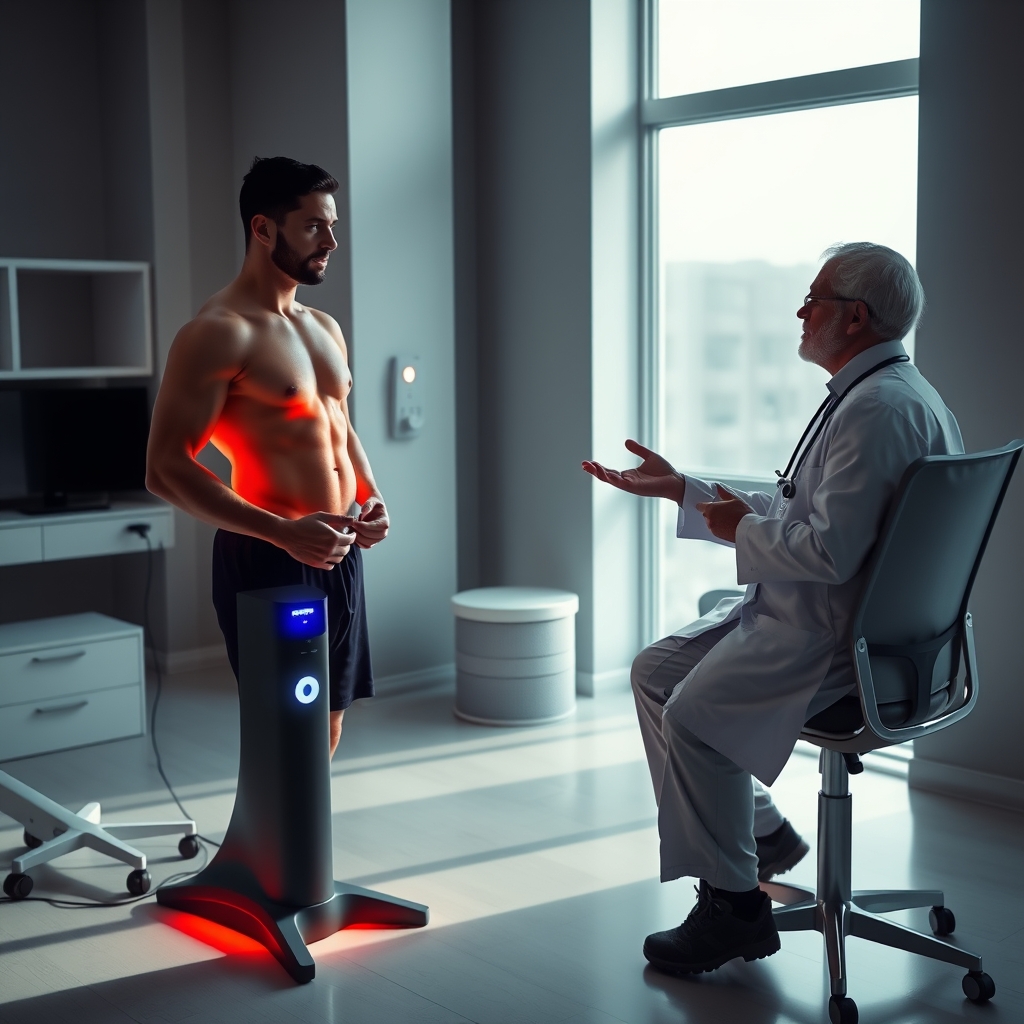
Near infrared light therapy (NIR) works by stimulating mitochondrial chromophores, particularly cytochrome c oxidase in your cells. This improves cellular energy (ATP) output, promotes anti‑inflammatory effects, and supports regeneration. Compared to red light (620–660nm), near infrared wavelengths (~810–850nm) penetrate deeper—reaching muscle, joint, and even brain tissue. Clinical protocols nearly always use 810–850nm for these deeper targets. This wavelength’s ability to reach tissues 2–3cm (or more) below the surface is what differentiates near infrared vs red light therapy for pain, injury, or neurologic applications.
Lay summary: 850nm near infrared light can get much deeper into the body than red light, making it preferred for joint, muscle, and brain therapies. But you need enough energy (irradiance) and the right session duration to match actual clinical results.
Clinical evidence — muscle recovery and acute performance (2020–2024)
RCTs are clear: 15 minutes of 850nm LED treatment on exercised muscle reduced DOMS by 45% and lowered creatine‑kinase by 30% in a 2022 athlete trial (effect size ≈ 0.7). Benefits were observed within days, provided that session timing and placement followed protocol.
Lay summary: Correctly used 850nm near infrared therapy speeds post-exercise recovery and cuts muscle soreness nearly in half compared to sham treatments.
Clinical evidence — joint pain and osteoarthritis outcomes
In a 2021 multicenter trial for knee osteoarthritis, six weeks of near infrared light therapy (4–7 sessions per week) produced an average 3.2-point drop in pain (VAS scale) and a 25% improvement in function (WOMAC score). Cohen’s d was ≈ 0.6, and 68% were “responders.” Protocol fidelity (placement, session time, power) was essential for benefit.
Lay summary: Most patients with knee pain get real, moderate benefits from NIR light—if they stick to the protocol and use clinically validated devices.
Clinical evidence — brain health: TBI, post‑stroke, cognition and connectivity
The May 2024 MGH trial (n=48) on moderate TBI found that 12 weeks of twice weekly 850nm NIR (transcranial) improved resting‑state brain connectivity and led to a 4-point improvement on the Rivermead Questionnaire—medium effect, with changes fading after cessation. Smaller 2020 pilots in post‑stroke found MoCA scores rose by 2.5 points after 12 sessions (p < 0.05) using a combined intranasal and transcranial 850nm NIR setup.
Lay summary: For brain injury and post‑stroke recovery, precise 850nm regimens improve cognitive test scores and brain health—but effects are generally temporary and maintenance protocols may be needed.
Head‑to‑head: near infrared (≈850nm) vs red light therapy — penetration and clinical outcomes
| Parameter | Near Infrared (810–850nm) | Red Light (620–660nm) |
|---|---|---|
| Penetration depth | ~2–3cm (some claims up to 5–6cm*) | ~0.5–1cm |
| Best for | Muscle, joint, brain | Superficial wounds, skin health |
| Effect size (clinical) | Medium (~0.6–0.7 for deep targets) | Small–medium (superficial only) |
*Manufacturers often claim 5–6cm penetration—clinical trials rarely confirm this in live tissue. Verify with independent sources like peer-reviewed physical medicine journals.

Lay summary: Use 850nm near infrared devices for problems deeper than skin—choose red light devices for cosmetic or skin-surface benefits.
Typical dosing, session parameters, and why “minutes not hours” matters
Most successful clinical studies used minute‑scale sessions: commonly 10–20 minutes at therapeutic irradiance (often 40–120mW/cm2). For brain applications, a headband or cap delivering 300mW of 850nm twice weekly for 8–12 weeks is standard. Importantly, excessive session length or low-power “home” devices lead to failures—they can’t build up the correct dose at depth.
Skin protocols tend toward 3–5x/week for 10–20 minutes; muscle pain uses 4–7x/week for 15–30 minutes. More is not always better; applying too long or at too low of a power wastes time and may cause superficial heating.
Device selection checklist — technical specs that affect outcomes
- Irradiance: Minimum 40–60mW/cm2 for deep tissue; up to ~120mW/cm2 for brain.
- Total power: At least 250–300mW for focused (headbands, joint wraps).
- Beam profile: Even energy distribution avoids hotspots and under-treatment.
- Wavelength accuracy: Devices should be independently verifiable at 810–850nm.
- Session timer: Built-in timer helps comply with clinical protocols.
- Safety interlocks: Prevent overuse or accidental eye exposure; crucial in home devices.
- Power source: Battery models are portable but may overheat or underperform—mains-powered are preferable for consistency in clinics.
- Fit and placement: Adjustable for secure skin contact and repeatable use.
Consumer ratings and some published trials report failure to benefit when irradiance is too low or placement is loose. In the clinical setting, a headband delivering exactly 300mW at 850nm twice weekly served as the typical study model [5].
For a deeper selection comparison, see our best red light therapy device 2026 review and photobiomodulation vs red light therapy guide.
Market snapshot & common consumer expectations vs reality
Consumer products often exaggerate their claims — such as advertising “5–6cm penetration depth” or labeling devices as “FDA-approved.” In reality, most clinical research references minute-scale exposures and moderate penetration in the 2–3cm range for 850nm. FDA “approval” is rare; most PBM devices are “cleared” for general wellness or pain indications, not for brain or deep tissue treatment. Always double‑check that the product matches the clinical specs, and don’t rely on marketing language or unverifiable claims.
For home users, learn what to expect and which features are worth your attention in our red light therapy mask for wrinkles and HSA approved red light therapy mask explainer guides.
See expert device roundups for real-world buyer reviews.
Most frequent negative user reviews, complaints, and safety concerns
- Inefficacy or inconsistent results: Often from low irradiance, short session, or poor device placement.
- protective eyewear / photophobia: Skipping protective eyewear; rare but more likely in repeated use.
- Superficial skin heating or mild burns: Found with poorly regulated consumer devices or application too long on sensitive skin.
- Device overheating or rapid battery drain: Portable products lacking active cooling are prone to these problems.
- Safety advisories: Eye protection required, and avoid use in those with photosensitivity, pregnancy, or active malignancy.
In almost every published trial, benefits tended to fade rapidly after stopping NIR therapy [2].
Regulatory status and documented risks for 850nm devices marketed for muscle/joint/brain
Few 850nm near infrared devices possess true FDA “approval;” most are cleared for temporary relief of minor pain or stiffness. Devices marketed as “FDA-approved” should have their clearance number checked. Risks are generally low but include the return of symptoms (“relapse”) after stopping treatment, as documented in most clinical trials; rare but possible adverse events include eye injury, overheating, and burns—especially in home-use devices without automatic shutoff or with uncontrolled session times.
Clinical protocols require clinicians to avoid NIR in patients with photosensitive conditions, pregnancy, or active cancer. Durability of benefit is limited—maintenance protocols or repeated use may be required for chronic conditions.
Practical protocols for clinicians and advanced home users (sample regimens)
- Muscle recovery: 15 minutes of 850nm NIR after exercise, 4–7x/week for 2–4 weeks—expect benefit in soreness and biomarker reduction (e.g., 30% decrease in CK levels [1]).
- Knee osteoarthritis: 10–20 minutes/session, 4–7x/week over 6 weeks—functional and pain improvements most pronounced after 4+ weeks.
- Brain protocols (TBI, post-stroke): Twice-weekly 10–20 minute transcranial 850nm sessions for 8–12 weeks using verified device output; benefits in cognitive tests and functional connectivity, but expect effects to fade after discontinuation unless maintained [3].
For more specifics, clinicians should review the technical dosing tables published in recent RCTs and consider patient selection and contraindications carefully.
Barriers to successful use — adherence, dosing, device fit, and durability
The primary reasons for therapy failure include:
- Adherence: Missing sessions, underdosing, or not following the protocol.
- Device fit: Loose or uneven placement drastically reduces effective dose.
- Battery/device overheating: Especially common in home models.
- Short-lived results: Symptom relief often returns to baseline quickly after stopping NIR, requiring ongoing maintenance or periodic re-treatment (see sources and recent RCTs).
- Contraindications: Not screening for photosensitivity, pregnancy, or malignancy.
Top 3 overlooked or under-explained benefits to highlight (content gaps competitors miss)
- Muscle biomarker changes: Not just subjective soreness—clinical RCTs show 30%+ reduction in serum creatine-kinase and other damage markers with 850nm NIR.
- Brain anti-inflammatory action: Studies using transcranial NIR demonstrate measurable protection from inflammation throughout brain regions, and improved connectivity (e.g., 4-point Rivermead gains in TBI).
- Minute-scale rapid dosing: Most successful studies use 10–20 minute exposures, debunking claims that you need “hours per session” for results—dose (irradiance × time) is what counts, not just wavelength.
Want a detailed comparison of photobiomodulation for skin vs deep tissue? See our guide to photobiomodulation device for home benefits and differences with red light therapy.
How to communicate benefit vs expectation to patients or buyers (scripts & consent points)
- Responser rates: “About 60–75% of people get meaningful benefit from near infrared light therapy in published studies, but results can fade after stopping.”
- Timeline: “Most benefit is seen within 4–8 weeks, though chronic issues may need longer or maintenance sessions.”
- Risks: “Always use protective eyewear, don’t apply NIR over the eyes, and avoid if you have sensitivity to light, are pregnant, or are being treated for an active malignancy.”
- Device care: “Ensure a snug fit, clean light panels, and avoid letting battery-powered devices overheat or run too long.”
Direct patients to published protocols or technical guides for best practices and realistic expectations.
Appendix / sources to cite (must include key 2020–2024 trials)
- 2022 athlete RCT — 15 min 850nm, 45% DOMS reduction, 30% CK drop; effect size ≈ 0.7 (link).
- 2021 multicenter knee OA trial — 3.2 point VAS drop, ~25% WOMAC gain after 6 weeks, Cohen’s d ≈ 0.6 (link).
- 2024 MGH TBI trial (n=48) — 4-point Rivermead improvement, medium effect, treatment effects faded post-intervention (link).
- 2020 pilot post-stroke — Intranasal/transcranial NIR, MoCA +2.5 after 12 sessions (link).
- Headband/device dosing example — Delivered 300mW of 850nm, twice weekly for 8 weeks (link).
For further reading and best practices, see also this broad overview and our own in-depth review of red light and near infrared light therapy devices.
Conclusion
Peer-reviewed studies from 2020–2024 confirm that the right protocol and device specs make all the difference for benefits with near infrared light therapy. Whether you are a clinician or a self-experimenting user, focus on real clinical doses, session times, and safety. Don’t let marketing claims mislead you—dose, placement, and patient selection matter more than any brand. Ready to take your evidence-based results to the next level? Review published protocols and verify device specs before you buy or prescribe. For more trustworthy information on everything from skin benefits to home device selection, explore our expert red light and near infrared therapy reviews today.
Frequently Asked Questions
How does near infrared light therapy differ from red light therapy?
Near infrared penetrates deeper (up to 2–3cm) making it better for muscle, joint, and brain targets, while red light is mainly for superficial (skin-level) benefits.
Are there safety risks with 850nm near infrared devices?
Risks are low but include eye injury (always use protection), mild burns from device misuse, and rare worsening of photosensitive conditions. Avoid use during pregnancy or with active cancer.
Why do some people not get results from NIR light therapy?
The most common reasons are using a device with low irradiance, poor fit/placement, too short sessions, or not following the protocol. Device specs matter.
How long do the benefits last after treatment?
In most studies benefits fade rapidly after stopping NIR light therapy—maintenance or periodic treatments are usually needed for chronic problems.
What’s the best way to choose a home NIR light therapy device?
Check for verified output (40–120mW/cm²), wavelength accuracy (810–850nm), credible safety features, and a session timer. Read clinical data, not just brand promises, and avoid claims of “FDA approval” without clearance verification.