


Red light therapy for athletes is one of the most talked-about recovery strategies in 2024, promising everything from faster muscle repair to better training readiness. But does the science actually support the hype—and how should real athletes fit photobiomodulation (PBM) into a practical recovery routine?
Key Takeaways
- Red light therapy for athletes offers modest, reliable recovery benefits—mainly reduced delayed-onset muscle soreness (DOMS) and slightly lower muscle-damage biomarkers—when used consistently for 2–4 weeks.
- Performance gains for strength or endurance are minimal or inconsistent according to recent meta-analyses—don’t expect instant results or record-breaking lifts.
- Stacking RLT with ice baths or massage guns can optimize both subjective relief and objective recovery, but prioritizing dosing, device specs, and session timing is key.
- Executive evidence snapshot: what the 2022–2024 trials actually show
- Deep dive — clinical trial highlights (2022–2024)
- Mechanisms that matter for athletes (how RLT/PBM may aid recovery)
- Actionable protocol — recommended RLT pre‑workout and post‑workout routine
- Near‑infrared (NIR) specifically — effects on VO2 max and endurance metrics
- Head‑to‑head & stacking — RLT vs ice baths, massage guns, compression
- Real user pain points & negative reviews — issues athletes report
- Device buying guide (2024): wavelengths, dose metrics, and device types to prioritize
- Typical costs & market reality in 2024 — what athletes should budget and expect
- Top 3 sub‑topics most competitor articles miss (opportunities to outrank)
- Evidence-based buying checklist & 5 quick questions to ask a vendor
- Quick decision flowchart (should I buy, rent, or skip?)
- Short FAQ (safety, eye protection, skin effects, expected timelines)
- TL;DR conclusion + recommended next steps for athletes
Executive evidence snapshot: what the 2022–2024 trials actually show
Recent systematic reviews and randomized controlled trials from 2022 to 2024 reveal that photobiomodulation sports recovery offers athletes several modest but credible benefits.
When used consistently (daily or near-daily) for two to four weeks, red light therapy can accelerate post-exercise recovery, lowering biomarkers like creatine kinase (CK) and decreasing perceived DOMS compared to passive recovery alone. However, nearly all high-quality studies agree—there is no statistically significant benefit for peak strength (maximal voluntary contraction) or clear, repeatable gains in endurance performance after single or short-term use. The strongest effects are seen in repeated sessions across a training cycle, not from “one-off” treatments.
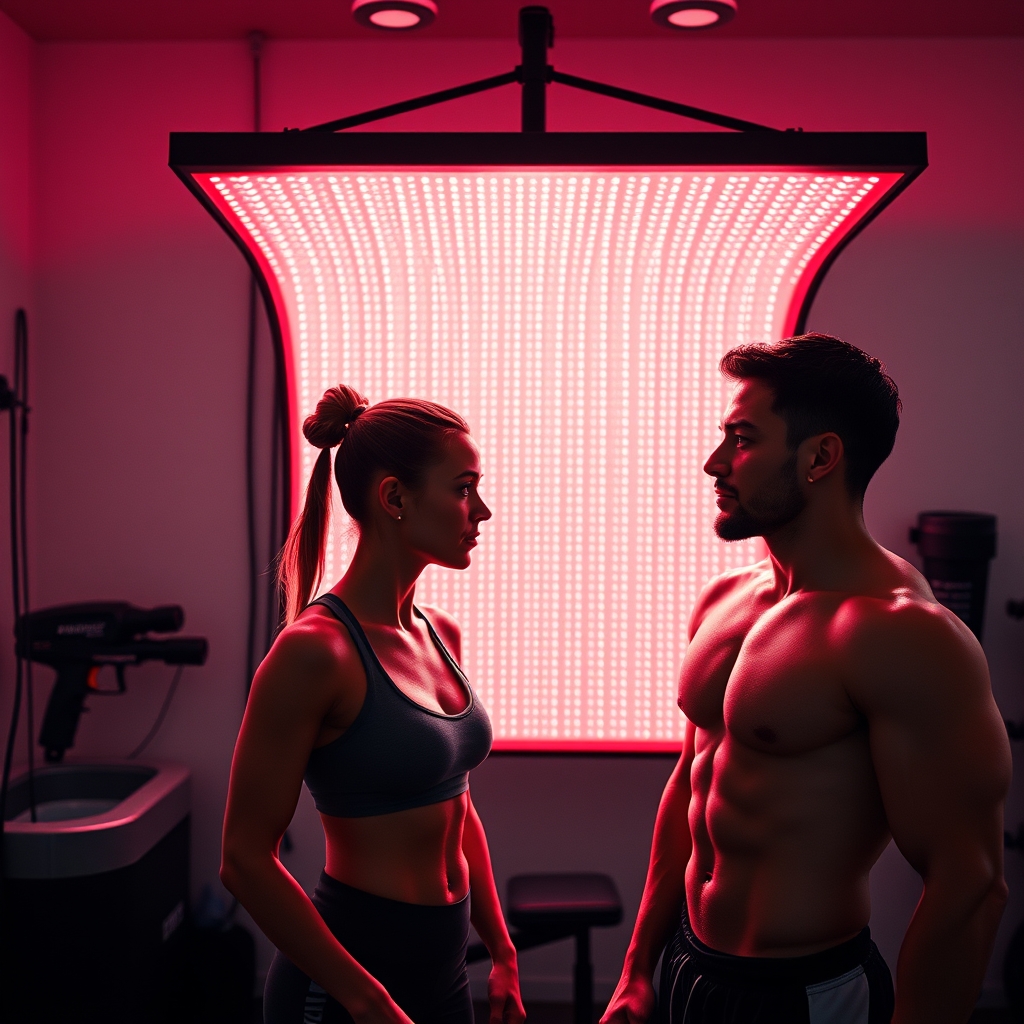
Athletes primarily notice improved recovery experiences—less soreness, lower muscle-damage biomarkers, and slightly faster post-workout readiness. Clinical reviews consistently show these effects are modest and reliable (see Santos et al. 2024, Li BM et al. 2024).
Deep dive — clinical trial highlights (2022–2024)
Recent meta-analyses and systematic reviews, such as Santos 2024 and Li BM et al. 2024, studied both resistance-trained and endurance athletes. These trials assessed:
- Pre vs post exercise application of red light therapy
- Objective outcomes: creatine kinase levels, maximal voluntary isometric contraction (MVIC), VO2 max, and delayed-onset muscle soreness (DOMS)
- Subjective outcomes: perceived muscle soreness and readiness
Key findings:
- Muscle recovery: Reliable reduction in CK, LDH, and DOMS, particularly when RLT/PBM is applied pre-workout or immediately after.
- Strength gains: No consistent difference in acute or longer-term maximal strength.
- Endurance: Sporadic, small improvements in VO2 max or time to exhaustion with NIR, but data is variable (see below).
Source: Li BM et al. 2024, Santos S et al. 2024
For a practical review of PBM vs other modalities, see Fisher et al. 2018 PDF.
Mechanisms that matter for athletes (how RLT/PBM may aid recovery)
How does red light therapy actually impact recovery? PBM acts on several physiological levels:
- Limits exercise-induced muscle damage: Confines muscle microtrauma, reducing the need for a broad inflammatory response.
- Reduces soreness: Subjects report lower post-exercise muscle soreness (DOMS).
- Modulates growth factors: PBM can stimulate favorable changes in myogenic regulatory factors.
- Improves local circulation: Increases formation of red blood cells in targeted tissue, supporting oxygenation and nutrient delivery.
These collectively explain the improved muscle recovery profile and perceived readiness promoted in several meta-analyses [Santos et al. 2024].
Actionable protocol — recommended RLT pre‑workout and post‑workout routine
What exactly should an athlete do? A consensus is emerging from the evidence:
- For recovery: Apply red light therapy (630–660nm red and 810–850/880–905nm NIR recommended) to trained muscle groups immediately after training for 5–10 minutes per area.
- For performance priming: Use RLT pre-workout to boost local circulation and prep muscle for intense efforts.
- Cadence: Repeat daily or after most training sessions for two to four weeks. One-off sessions yield limited results.
You must schedule multiple short sessions (typically 5–10 minutes per muscle group) each day to match the protocols used in most trials. Device coverage area, irradiance, and angle matter—and stacking RLT with your existing recovery tools (ice, compression) can maximize benefit.
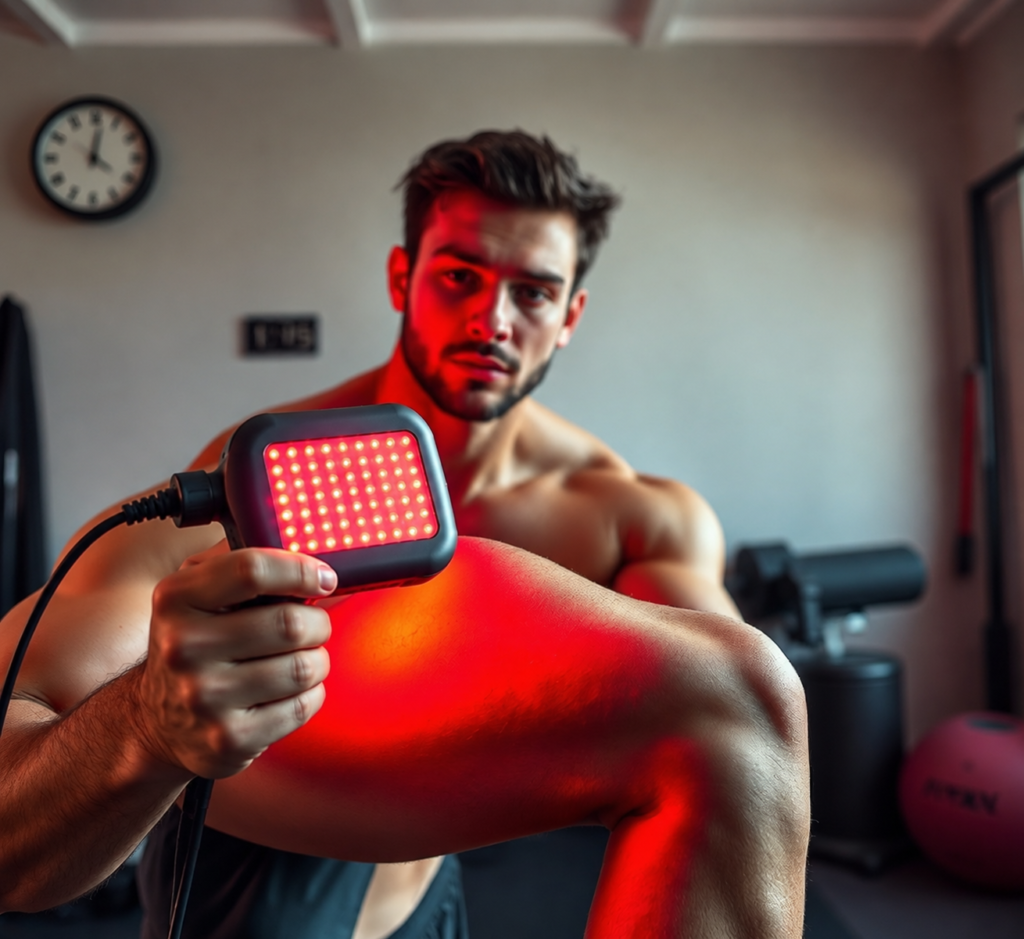
Simple Pre- and Post-Workout Protocol
- Device Type: Panel or large handheld; ensure output is 100–200 mW/cm² at target distance.
- Wavelengths: Dual red (630–660 nm) + NIR (810–850 nm) for maximum reported benefit.
- Pre-Workout: 5–8 minutes, 20–30 min before training, focused on main muscle group.
- Post-Workout: 8–12 minutes, target all trained muscles within the first hour after exercise.
- Cadence: 5–7 days per week for 2–4 weeks.
For evidence-based device recommendations, see the best red light therapy device 2026 guide.
Near‑infrared (NIR) specifically — effects on VO2 max and endurance metrics
What about aerobic gains? Near-infrared light (NIR) at 810–850 or 880–905 nm was studied for effects on oxygen uptake and endurance:
- Limited, inconsistent results: Some trials showed marginal improvements in VO2 max or time to exhaustion, but many reports showed no advantage over placebo.
- Study heterogeneity: Variation in device specs, protocol duration, and subject fitness makes results difficult to generalize.
“In another group of studies evaluating red light therapy for endurance athletes, the results were very inconsistent, with no reliable changes in biochemical markers of cellular damage.” Full analysis here. If VO2 max is your main goal, consider NIR as a possible adjunct rather than a stand-alone fix.
Learn more in our near infrared light therapy benefits guide.
Head‑to‑head & stacking — RLT vs ice baths, massage guns, compression
How does RLT compare to classic recovery staples?
| Method | Pros | Cons | Best Use Case |
|---|---|---|---|
| red light therapy panel (PBM) | Modest reduction in biomarkers and DOMS; promotes biochemical recovery; no muscle chill | Requires consistent multi-week use; slow results; device cost and setup; scheduling/time commitment | Stack with other tools for ongoing recovery or pre-workout priming |
| Ice Bath/Cold Water Immersion | Immediate pain/soreness relief; good for acute inflammation; familiar routine | Cold adaptation may blunt muscle adaptation gains; not for everyone | Post-hard training or competition for acute soreness |
| massage gun | Instant relief; easy for localized muscle knots; portable | Temporary effects; can cause bruising or discomfort if misused | Rapid relief before/after training, short-term easing of muscle tension |
| Compression Gear | Easy, passive use; possible lymphatic drainage benefit | Not as evidence-backed for major recovery gains | Supplemental use; combine with other strategies |
Most athletes report the perception of slow or invisible results with RLT compared to immediate feedback from ice baths or massage guns. RLT is best stacked—not used solo—especially for those already committed to a complete recovery protocol.
For maximizing device ROI for home use, see our red light therapy panel guide.
Real user pain points & negative reviews — issues athletes report
Despite the promise of photobiomodulation sports recovery, many athletes and gym-goers voice consistent complaints:
- Unclear dosing—device specs often lack wavelength, irradiance, or optimal session duration details
- Slow, hard-to-perceive benefits—especially relative to ice or percussive therapy
- Mild skin warmth, redness, or transient discomfort
- Eye strain if goggles are skipped—especially with high-intensity panels
- Time management—requires scheduling multiple 5–10 minute sessions each training day
- Device cost and bulk—full-body coverage panels and beds can be prohibitively expensive
Users often feel frustrated by the need for precise setups that aren’t well explained in consumer instructions. “Many consumer-grade units do not provide adequate dosing data,” echoes one 2024 review.
For device portability and travel options, check our portable red light therapy device guide.
Device buying guide (2024): wavelengths, dose metrics, and device types to prioritize
If you’re shopping for photobiomodulation (PBM) equipment in 2024, scan the spec sheet for:
- Wavelengths: Look for dual red (630–660nm) and NIR (810–850nm or 880–905nm)
- Irradiance: Aim for 100–200 mW/cm² at the specified treatment distance (not just at the LEDs)
- Energy density reporting: Device should state recommended joules/cm² (ideally 10–30 J/cm² per protocol; clinical studies vary)
- Form factors: Panels (best for groups or full-body), handhelds (targeted spots), beds (pro clinics)
- Downsides: Many home units lack dosing specs, are bulky, and may overpromise on performance claims
Set realistic expectations on coverage area—smaller/cheaper units mean longer, more frequent sessions. For skin, pain, and at-home device details, see our full device buying guide.
Typical costs & market reality in 2024 — what athletes should budget and expect
Red light therapy device costs in 2024 break down as follows:
- Portable/Handheld: $200–$500 (for localized use, good for travel or spot-treating injuries)
- Mid-Range Panel: $600–$1,500 (suitable for regular user, partial body coverage)
- Full-Panel or Bed: $2,000–$7,000+ (for clinics or full-body use, time-efficient but costly and very bulky)
Consider both coverage area and session time—cheaper, smaller units mean you’ll spend more time per session to achieve comparable dose levels. Most users pay out-of-pocket; RLT is not yet mainstream or generally covered by insurance for muscle recovery.
If you’re cost-sensitive, review stacking strategies before committing to full panels. For HSA tips and more, visit our RLT HSA eligibility guide.
Top 3 sub‑topics most competitor articles miss (opportunities to outrank)
Many articles gloss over these practical essentials—here’s how to do better:
- Precise, evidence-based dosing & measurement:
- Calculate energy density (J/cm²) per area: Energy = (irradiance [mW/cm²] × time [s]) / 1000
- Example: 100 mW/cm² for 10 minutes (600 sec) = 60 J/cm² per treated spot
- Track session logs for each muscle group to avoid overtreatment
- Time-stamped pre-workout protocol for real athletes:
- Best: 5–8 minutes targeted application, 20–30 minutes before high-intensity training, repeated daily for 2–4 weeks for measurable benefit
- Log both subjective (readiness, DOMS) and, if possible, objective markers (CK via lab or at-home test kits)
- Device selection checklist tied to goals and budget:
- Wavelength: Must list both red and NIR bands explicitly
- Output power: Stated at treatment distance, not just “total panel output”
- Coverage area: Match to your main recovery needs; legs for runners, upper body for lifters
- Warranty and transparent return policy
Few competitors offer this level of dosing and protocol specificity. For a deeper dive, see our photobiomodulation therapy guide.
Evidence-based buying checklist & 5 quick questions to ask a vendor
- Does your device use both red (630–660 nm) and NIR (810–850/880–905 nm) wavelengths?
- What’s the average irradiance at 10–20 cm (not just “at source”)?
- Do you provide energy density (J/cm²) protocol recommendations for sports recovery?
- Can you cite published clinical studies supporting your dosing?
- What’s the warranty and return/refund policy if it doesn’t work for my needs?
If a vendor can’t answer these, reconsider—device transparency is crucial for red light therapy for athletes.
Quick decision flowchart (should I buy, rent, or skip?)
- Is your primary goal: Reducing DOMS & improving recurrent post-workout recovery after heavy volume? Consider buying or weekly clinic use.
- Want faster strength or endurance gains? Evidence says skip—no statistically significant performance boost for max strength recorded.
- Limited time or budget? Trial smaller, portable units or schedule clinic sessions for targeted needs.
- Seeking instant relief? Add massage gun or ice bath as the “quick fix”—RLT works slowly.
- Does your training team, recovery studio or sports clinic already offer PBM? Test there first before buying.
Short FAQ (safety, eye protection, skin effects, expected timelines)
Is red light therapy safe for athletes?
Yes, when used as directed—main risks are mild skin warmth or transient redness. Eye strain is rare with proper goggles. Avoid overexposure or treating open wounds directly.
Do I need special eye protection?
Yes. For high-powered panels, always use blackout goggles or shields—especially for facial and upper-body treatments. This minimizes the chance of eye strain or photophobia.
How soon should I expect results?
Measurable recovery benefits typically appear after repeated daily sessions for 2–4 weeks, not instantly. Plan to evaluate progress after a month of use.
Can I just use my panel once after a big workout?
One-off sessions may produce minor relief, but clinical data shows much stronger results with repeated scheduling over several weeks. For optimal improvement in recovery biomarkers, be consistent.
What side effects should I watch for?
Mild warmth, temporary skin redness, and occasional eye strain if used without goggles. Stop use if discomfort persists beyond a few hours.
TL;DR conclusion + recommended next steps for athletes
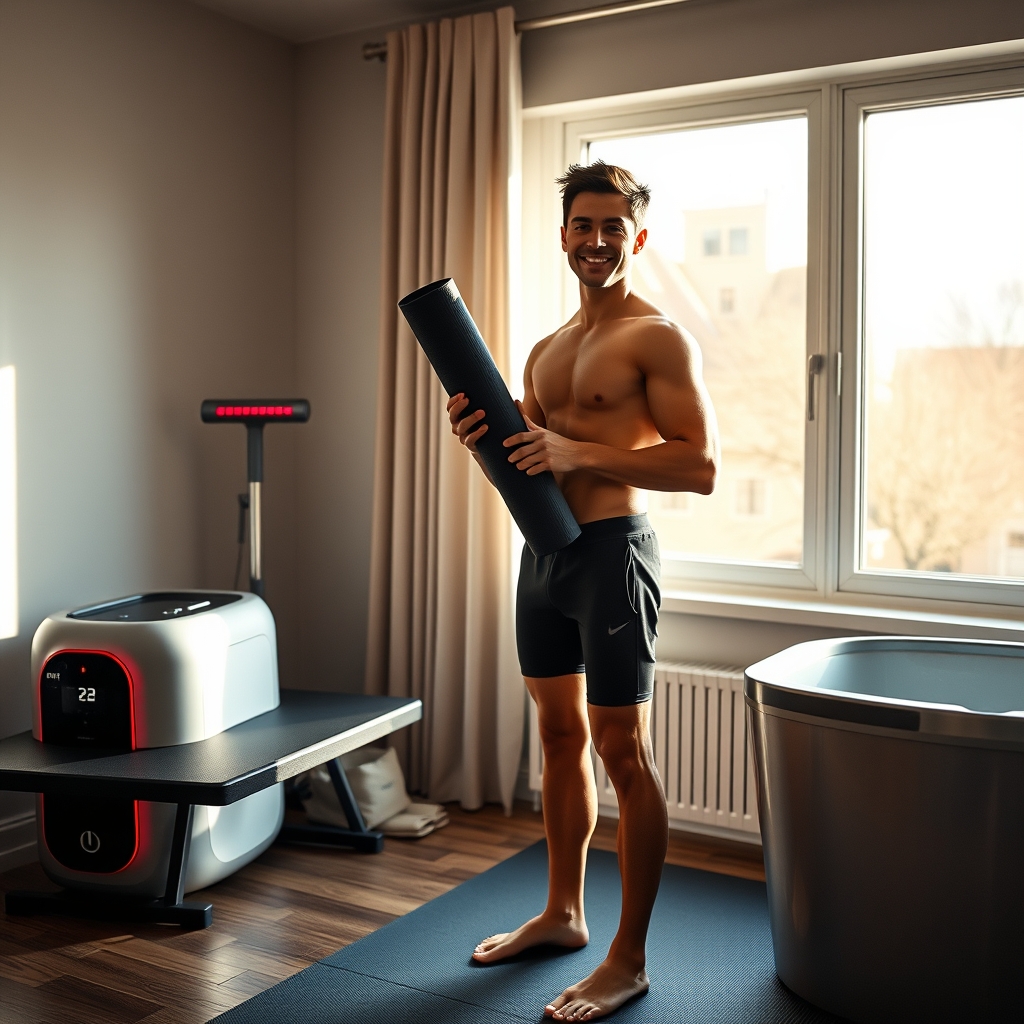
Red light therapy for athletes is not a shortcut to instant strength or record endurance—but it is a coachable, reliable tool for modest recovery enhancement when used consistently for 2–4 weeks, especially as a pre-workout or post-workout add-on. It lowers soreness and muscle-damage markers, making you feel “ready” faster. Stack red light with ice and massage guns for complete recovery, and choose a device with transparent output specs.
To get started: trial daily 5–10 minute sessions per trained muscle group for 2–4 weeks, log your outcomes, then decide if the ROI is there for your stack. For more, see our panel buying guide or photobiomodulation protocol tips.
Ready to make red light therapy for athletes part of your stack? Do your research, start small, and always match your protocol to solid science.