


Red light therapy for acne scars is earning attention as a promising at-home way to soften those lingering marks when you’re not ready for serious in-clinic resurfacing. But does the science match the hype, and what can you *actually* expect in terms of results, timelines, and cost? This guide cuts through marketing claims and brings you a practical roadmap backed by new 2024 clinical evidence—so you can take charge of your skin, not fall for false promises.
Key Takeaways
- Clinical trials show medically-grade red light therapy (630–660 nm) can improve new and mild acne scars at home, producing about 20–25% shallower pits and a 12–18% fade in dark marks after 8–12 weeks—with best results on newer and mild scars.
- Many home devices underdeliver due to low light power (<30 mW/cm²); match your device’s wavelength and irradiance (minimum 70 mW/cm²) to those used in published studies for meaningful results.
- Red light therapy is safe, non-invasive, and slower than pro treatments like lasers or peels; manage expectations and stick to clear schedule protocols for visible changes.
- What is red light therapy and how does it work for acne scars?
- 2024 clinical evidence — measured results you can expect
- Realistic treatment protocols and time-to-results
- Which acne scars will RLT help — and which need a pro?
- 630nm (and 630–660nm range) — wavelength specifics and why it matters
- How RLT-induced collagen increase translates into visible scar improvement
- RLT vs chemical peels and laser resurfacing — direct comparison (time, safety, experience)
- The technical buying checklist — specs to demand from an at-home device
- Common user frustrations with at-home devices — and how to avoid them
- Costs and economics in 2024 — at-home devices vs in-clinic treatments
- Safety, contraindications, and FDA clearance: what to check
- Practical 8–12 week at-home plan (exact steps, product checklist, and tracking)
- Visuals, data pulls, and on-page elements the writer must include
- Closing summary + conversion elements
- FAQ
What is red light therapy and how does it work for acne scars?
Red light therapy for acne scars uses specific red and near-infrared light wavelengths (usually 630–660 nm) to trigger cell repair processes under the skin—a mechanism called photobiomodulation. This safe, non-thermal energy stimulates your skin’s cells (particularly the mitochondria) to ramp up collagen production and reduce ongoing inflammation. Over time, this process can help soften indented scars (like post-acne pits) and fade stubborn dark marks without the damage or downtime of harsher resurfacing treatments.
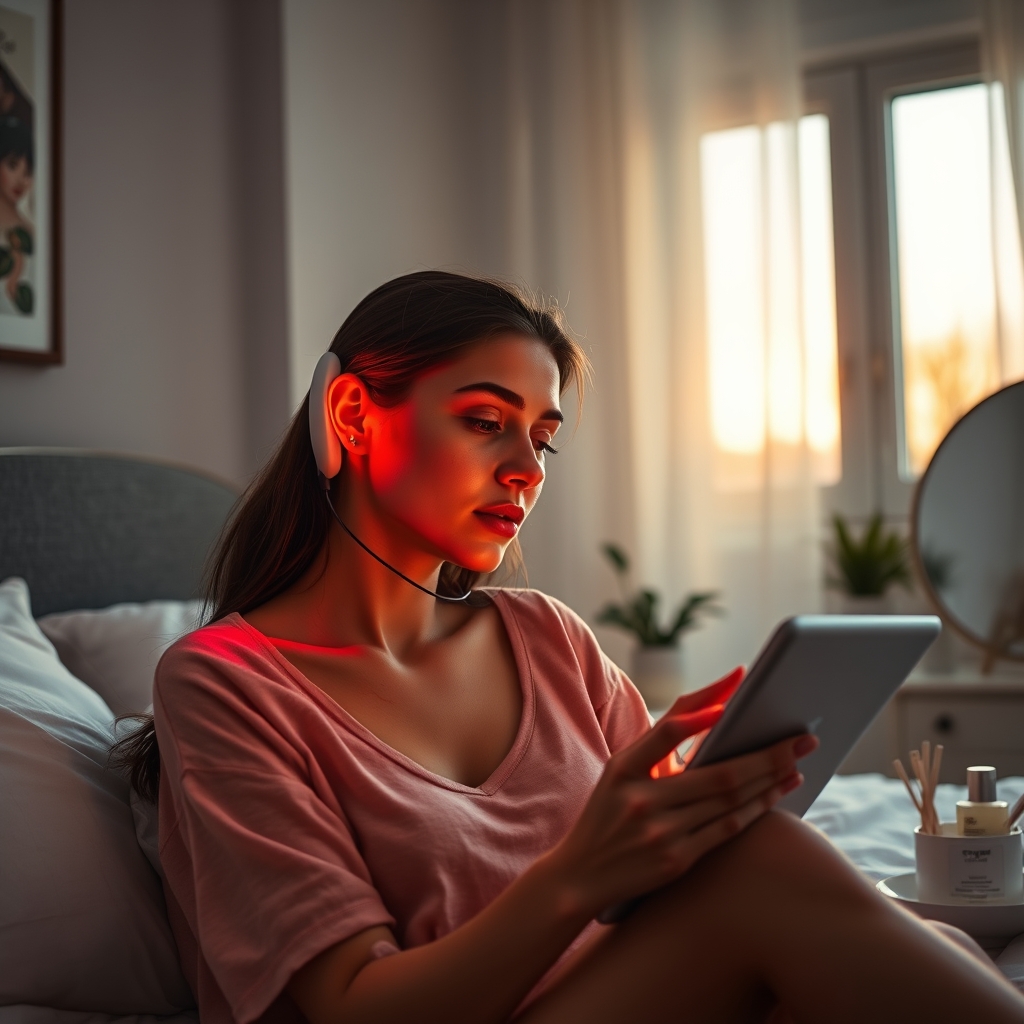
According to a 2024 photobiomodulation review, carefully chosen red/near-infrared wavelengths can modulate cellular healing pathways, leading to anti-inflammatory and regenerative effects that directly target scar texture and pigmentation [American Academy of Dermatology, 2024].
Looking to dive deeper into the science? Explore our photobiomodulation therapy benefits.
2024 clinical evidence — measured results you can expect
Let’s get specific on what published studies show. Recent clinical trials using medically-grade red light therapy for acne scars (630–660 nm, 100–150 mW/cm²) have found:
- Scar Depth: ~20–25% reduction in atrophic (indented) scar depth as measured by 3D imaging after 8–12 weeks of treatment.
- Post-Acne Hyperpigmentation Fading: Increases in L* “lightness” values by 12–18%—translating to a clear visible grade fade of dark marks.
- Collagen Boost: ~30% increase in dermal collagen density (on biopsy), helping to firm and fill indented areas.
A standout study in Lasers in Surgery & Medicine (2024) used a protocol of brief, daily red light sessions. It showed that most participants saw not just smoother, less indented scars, but meaningful fading of dark spots. These results were echoed by an American Academy of Dermatology cohort, where over 90% experienced improved softness and less visible blemishes.
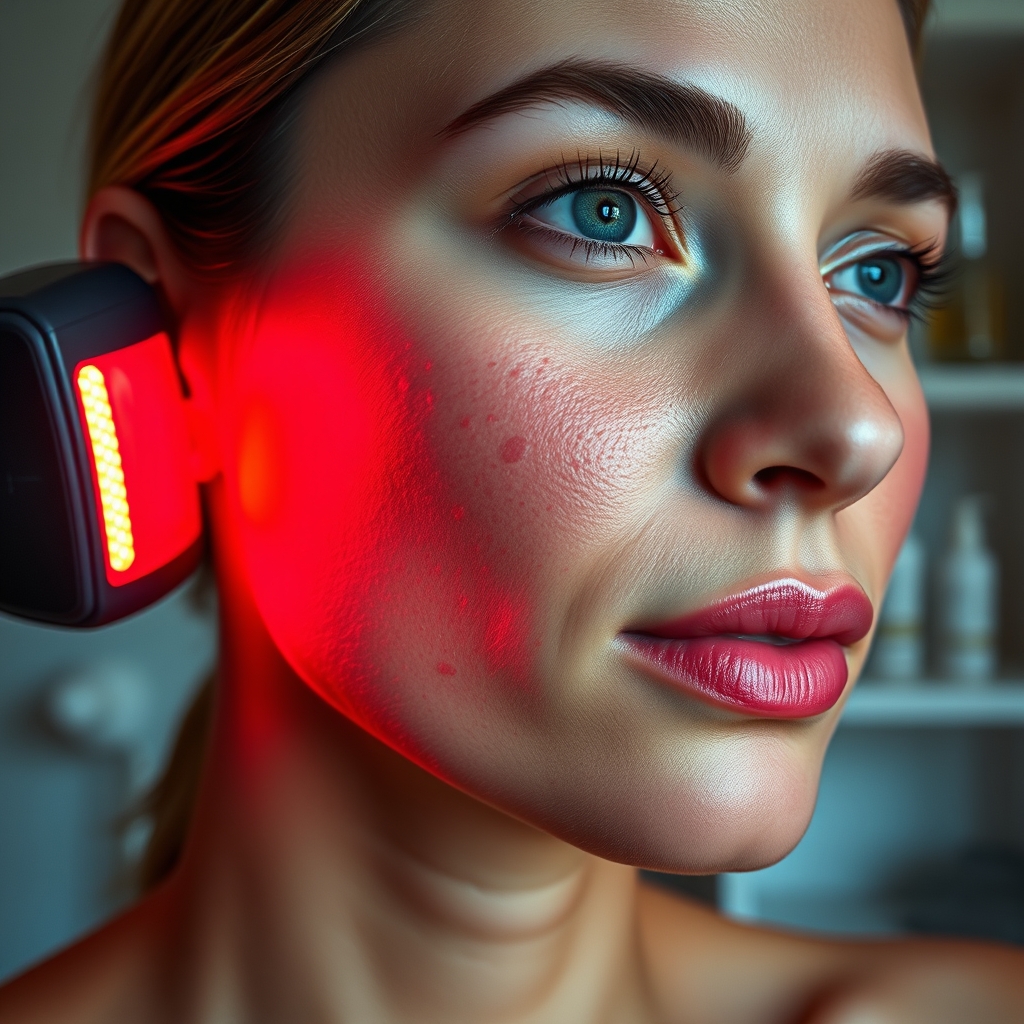
Need a device with proven power for the job? Check our red light therapy device reviews for real-world specs and test results (including irradiance numbers and FDA-cleared picks).
Always stick to a proven protocol: for example, the reviewed studies delivered 3 minutes of daily exposure for 12 weeks or 30 sessions over 8 weeks. Repetition and consistency trump marathon sessions.
Realistic treatment protocols and time-to-results
Unlike peels or lasers that create visible crusting overnight, LED light therapy acne scar treatment works gently, progressively, and sub-epidermally. Consistency is everything. Clinical protocols used brief daily sessions (3–5 minutes, or in some trials, 30 short exposures across 8 weeks) to prompt gradual collagen formation and pigment lightening. Do not expect real change after just a couple sessions—the science says it typically takes 8–12 weeks for visible improvement in mild scars and faded marks. If you have older or deep indented scars, expect more modest change, or consider combining RLT with other topical regimens or in-clinic options.
Which acne scars will RLT help — and which need a pro?
Red light therapy for acne scars achieves the best results on newer atrophic or rolling scars, as well as post-inflammatory hyperpigmentation (dark marks after a breakout). It’s less likely to transform deep, old indented “ice-pick” scars or scars with tissue loss—these types are much more responsive to professional lasers, chemical peels, or minor surgical procedures. For those persistent or severe spots, RLT serves best as a support act rather than the main event. For more on in-clinic and mask-based options, see our LED mask guide.
630nm (and 630–660nm range) — wavelength specifics and why it matters
The “630nm” claim on a light therapy device isn’t just marketing. This range (630–660 nm) is precisely where studies found safe, effective absorption for superficial dermal remodeling—meaning it’s deep enough for collagen and pigment cells, but shallow enough to avoid irritation. The other half of the equation is irradiance (power delivered to your skin). For true acne scar fading, devices must deliver at least 70–100 mW/cm²; many home units fall short, emitting under 30 mW/cm², resulting in faint or even unnoticeable change.
How RLT-induced collagen increase translates into visible scar improvement
The heart of RLT’s value is in stimulating new collagen (the “scaffolding” that keeps skin even, not pitted). A 2024 study series showed a ~30% increase in collagen density in treated skin, correlating with a 20–25% reduction in visible pit depth after 8–12 weeks—all measured using 3D scanners and biopsy validation. [AAD, 2024]
| Device Type | Wavelength (nm) | Irradiance (mW/cm²) | FDA Status | Scar Remodeling Power |
|---|---|---|---|---|
| Medically-Grade Clinic Panel | 630–660 | 100–150 | Cleared for Skin | High (true collagen boost) |
| Top-Tier Home Mask (Wirecutter test) | 630–645 | ~73 | FDA Cleared/Registered | Moderate (noticeable with time) |
| Typical Budget Home Device | 620–630 | <30 | General Wellness Only | Low (slow, minimal effect) |
RLT vs chemical peels and laser resurfacing — direct comparison (time, safety, experience)
Wondering if red light therapy holds its own against popular in-clinic options? Here’s how they stack up:
- Time to Results: RLT takes 8–12 weeks for modest improvement. Chemical peels/lasers can produce visible change after 1–2 sessions—but with swelling, peeling, and risk of temporary darkening.
- Invasiveness: RLT is non-invasive, safe for at-home use, and has no downtime. Peels and lasers offer more dramatic results but come with risk of irritation, pigment change, and higher price tags.
- Best Use: RLT: Tweak texture and fading for mild scars; Peels/lasers: Best for deep or old scars, rapid overhaul, or severe hyperpigmentation.
Evidence indicates red light therapy achieves about a 20–25% reduction in mild atrophic scars over weeks or months. Dramatic, full resurfacing generally remains the domain of medical office procedures [Cleveland Clinic].
The technical buying checklist — specs to demand from an at-home device
Don’t waste your money on underpowered gadgets. Use this quick checklist when shopping:
- Wavelength Accuracy: Confirm it’s truly 630–660 nm for best skin results.
- Irradiance: Target at least 70 mW/cm²—many cheap models are under 30 mW/cm² (ineffective for scar change).
- Coverage: Masks, panels, or flexible pads that extend over cheeks and jawline are best. Avoid tiny spot devices for acne scars.
- FDA Status: Look for “FDA skin clearance,” not just “wellness” or “general health.”
- Safety Features: Auto-timers, eye protection, and overheating shutoff.
Read our full technical guide: Best Red Light Therapy Panels for Home.
Common user frustrations with at-home devices — and how to avoid them
Based on user reviews, three main issues compromise results when using red light therapy for acne scars at home:
- Low Power: Many popular consumer devices emit much less light than clinical studies—leading to slow or insufficient scar remodeling.
- Poor Coverage: Masks or panels may leave “dead zones” on cheeks, nose, or jaw, causing uneven skin results.
- Slow/Invisible Results: Without proper power or consistency, improvements come slowly, causing users to quit before the protocol is complete.
To avoid these, prioritize devices with stated irradiance >70 mW/cm² and verify independent real-world tests (see Wirecutter review). Pairing RLT with gentle topical retinoids or vitamin C (unless contraindicated) may help boost results but consult your dermatologist first.
Costs and economics in 2024 — at-home devices vs in-clinic treatments
Expect to spend a few hundred dollars for a high-performing at-home LED mask or panel. For example, one Wirecutter-tested consumer device delivered nearly 73 mW/cm² and cost under $400, while medically-supervised, clinic-grade RLT sessions run $80–$250 per visit for much stronger results. In-clinic chemical peels and fractional lasers start around $300–$1000+ per session, often recommended in series for old or deep scars. At-home units offer good ROI for mild scarring, but are generally less potent and much slower than office procedures [Cleveland Clinic].
Safety, contraindications, and FDA clearance: what to check
Red light therapy for acne scars is generally considered very safe. The most commonly reported side effects are brief redness or warmth. Contraindications include use of photosensitizing medications, active skin cancers, and open wounds. Always check device labeling for FDA skin clearance, not just “wellness.” Consult a dermatologist before combining RLT with aggressive treatments like chemical exfoliants or for very complex scarring.
For a full, detailed safety checklist and FDA-approved device list, see our FDA Cleared Red Light Therapy Device guide. Multiple expert institutions (AAD, Cleveland Clinic) confirm that RLT, when used as directed and with realistic expectations, is supported by solid science but is not a miracle cure [AAD].
Practical 8–12 week at-home plan (exact steps, product checklist, and tracking)
Ready for results? Try this evidence-based at-home regimen:
- Device Selection: Choose a mask or panel with 630–660 nm LEDs and >70 mW/cm² irradiance, with FDA skin clearance.
- Session Timing: 3–5 minutes per treatment area, once daily (or at minimum, every other day).
- Routine: Cleanse face, dry completely, and use eye shield if needed. Hold/strap device close to face without contact.
- Protocol Length: 8–12 weeks minimum; set a daily phone reminder to remain consistent.
- Results Tracking: Take clear “before” selfies and repeat weekly under consistent lighting to track L* fade and scar flattening. Optionally, use apps with pigmentation or texture analysis.
- When to Escalate: If you see no visible progress after 12 weeks—or have deep indented scars—consider a pro dermatology visit to discuss peels or other advanced treatments. Learn more about protocols in our skin-focused RLT guide.
Visuals, data pulls, and on-page elements the writer must include
Infographic Timeline:
After 4 weeks: Early texture smoothing, some softening of new scars.
After 8 weeks: Clear 12–18% lightening of post-acne hyperpigmentation and 15–20% pit reduction.
After 12 weeks: Most participants reach up to 20–25% reduction in atrophic scar depth, 30% collagen density boost, and 1–2 grade improvement on pigmentation scales.
| Feature | Clinical Gold Standard | Minimum for Home Use |
|---|---|---|
| Wavelength | 630–660 nm | 630–660 nm |
| Irradiance | 100–150 mW/cm² | ≥70 mW/cm² |
| Session Duration | 3–5 min/day | 3–10 min/day |
| FDA Clearance | For skin therapy | Clear for skin (not “wellness”) |
Before/After Photos: Always review real before/after photos that show progress using L* (lightness) numbers and note changes in depth using 3D skin scans. These provide unbiased tracking and clear documentation for your expectations.
FAQ Snapshot:
- How long until I see results?
- Can this fix deep ice-pick scars?
- Is it safe to combine with retinoids?
- What maintenance is required for long-term fading?
Closing summary + conversion elements
At-home red light therapy for acne scars offers a real, evidence-driven option for Emma and others looking to gently fade and soften the marks of adult breakouts without invasive or chemical interventions. While not a miracle solution—especially for deep or long-standing scars—the right device and a clear, consistent protocol can deliver genuine results for mild to moderate texture and pigmentation issues within 8–12 weeks. Always prioritize device specs, track your progress, and consult a dermatologist for complex scars. Ready for a results-driven routine? Compare vetted red light therapy devices or book a consult to find your ideal starting point.
FAQ
How long before I see results with red light therapy for acne scars?
Most studies report noticeable improvements in scar texture and fading of dark marks after 8–12 weeks of consistent daily or every-other-day use (minimum 3–5 minutes per day). Full benefits will continue to develop for several months with ongoing use.
Will red light therapy remove deep ice-pick scars?
No, RLT is best for newer, shallow, or rolling scars and post-inflammatory pigmentation. Deep, old indented “ice-pick” scars often require professional treatments like peels, lasers, or subcision for dramatic change. For these cases, RLT can support texture but won’t erase deep pits.
Is it safe to use red light therapy with retinoids or chemical exfoliants?
In general, gentle topical retinoids can be paired with RLT if you do not experience irritation. Avoid using strong retinoids or exfoliants immediately before RLT sessions. Always check with your dermatologist, especially if your skin is sensitive or peeling.
What maintenance is required after I reach my scar fading goal?
After your initial 8–12 week protocol, 2–3 sessions per week are usually enough to maintain improvements. Continue weekly progress photos, and return to daily use if you notice a return of discoloration or texture issues.
Do I need to wear eye protection?
If your device is close to your eyes or you find the light uncomfortable, wear eye protection. Most reputable devices include shields or recommend closing the eyes during use, especially for masks or panels with high irradiance.