


Looking for a proven FDA cleared red light therapy device for at-home wrinkle and acne treatment? You’re likely overwhelmed by marketing claims, unclear “FDA” terms, and long lists of options. Here’s how to cut through the noise using real regulatory facts, clinical data, and a 2024-vetted device list—so you can buy with confidence and skip the hype.
Key Takeaways
- “FDA cleared” means a red light therapy device is reviewed for safety and efficacy via the 510(k) pathway, but it is not the same as “FDA approved.”
- Always verify the model appears on the latest 2024 FDA-cleared list, and never mistake “FDA registered” for real clinical clearance.
- Peer-reviewed trials for cleared devices like Omnilux, LG, and Celluma show meaningful skin improvements—generic or non-cleared masks generally lack real-world evidence.
- FDA classifications and the key difference between “FDA cleared” and “FDA approved”
- What the FDA reviews in a 510(k) for LED/red light devices
- Comprehensive 2024 FDA-cleared red light / LED therapy device list
- Clinical evidence for cleared devices vs non-cleared / generic alternatives
- Safety profile — common adverse events, user complaints, and regulatory red flags
- Is CurrentBody LED mask FDA cleared or approved?
- Typical retail price range, warranty terms, and expected lifespan for cleared at-home devices
- How to read labeling and marketing claims — a quick legal checklist before you buy
- Top three critical sub-topics missing from competitor articles
- Bottom line recommendation & short buyer’s checklist
- FAQ Section
FDA classifications and the key difference between “FDA cleared” and “FDA approved”
If you’re shopping for at-home red light therapy masks, you’ll encounter both “FDA cleared” and “FDA approved” everywhere. But these legal terms are not interchangeable. Here’s what they actually mean:
- Class I Devices: Low-risk (bandages, tongue depressors), no FDA clearance, just registration.
- Class II Devices: Moderate-risk (LED/red light therapy devices for wrinkles, acne), require “FDA cleared” 510(k) premarket notification. This signals the device is substantially equivalent to a legally marketed device in safety and performance. Most at-home LED masks are here.
- Class III Devices: High-risk (pacemakers, implantables), require “FDA approved” via the PMA pathway with robust, pivotal clinical trial data.
According to recent research, “FDA cleared red light and LED-therapy devices are regulated as Class II medical devices, which require a 510(k) pre-market notification…; FDA approved devices are Class III products that must undergo the Premarket Approval (PMA) pathway.” For almost every consumer red light mask, the correct status is “FDA cleared,” never “FDA approved.” Confusing these concepts is one of the most common (and misleading) mistakes in online marketing.
Get the full explanation from an FDA-cleared device manufacturer, LED-therapy devices.
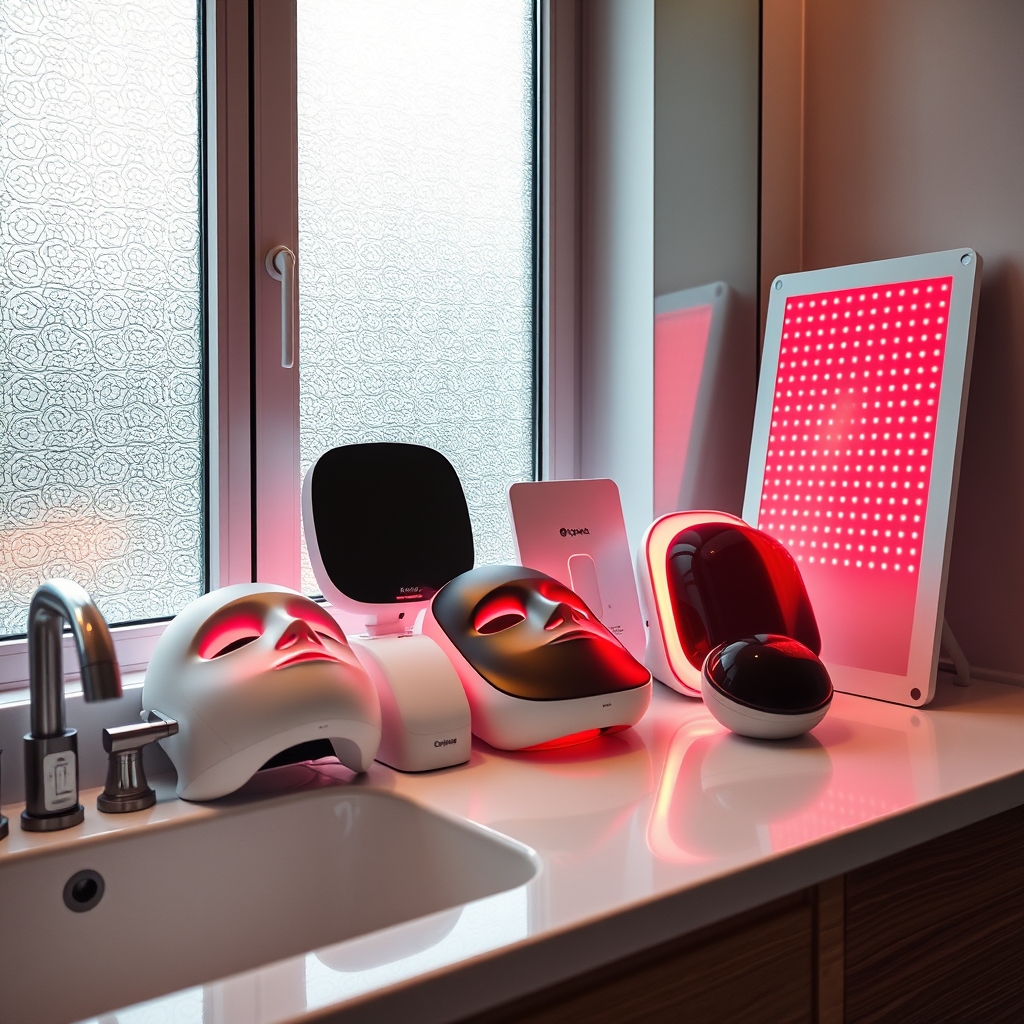
What the FDA reviews in a 510(k) for LED/red light devices (what guarantees safety/efficacy)
The 510(k) review is not a rubber stamp—devices must prove they are as safe and effective as existing, cleared models. For red light therapy masks, the FDA examines:
- Engineering and light output specifications (wavelength, power, eye protection)
- Photobiological safety (ensuring light does not damage eyes or skin)
- Biocompatibility (materials do not cause irritation or reactions)
- Labeling and marketing (accurate, indication-matched claims)
- Limited supporting clinical data for intended use (often small studies for skin, acne, or pain claims)
But, “510(k) … demonstrates substantial equivalence to a legally marketed predicate in safety, performance and intended use; the agency reviews … engineering, biocompatibility, photobiological safety, labeling and limited clinical data.” This is not the same as a full clinical trial with hundreds of patients.
See how predicates impact red light device clearance.
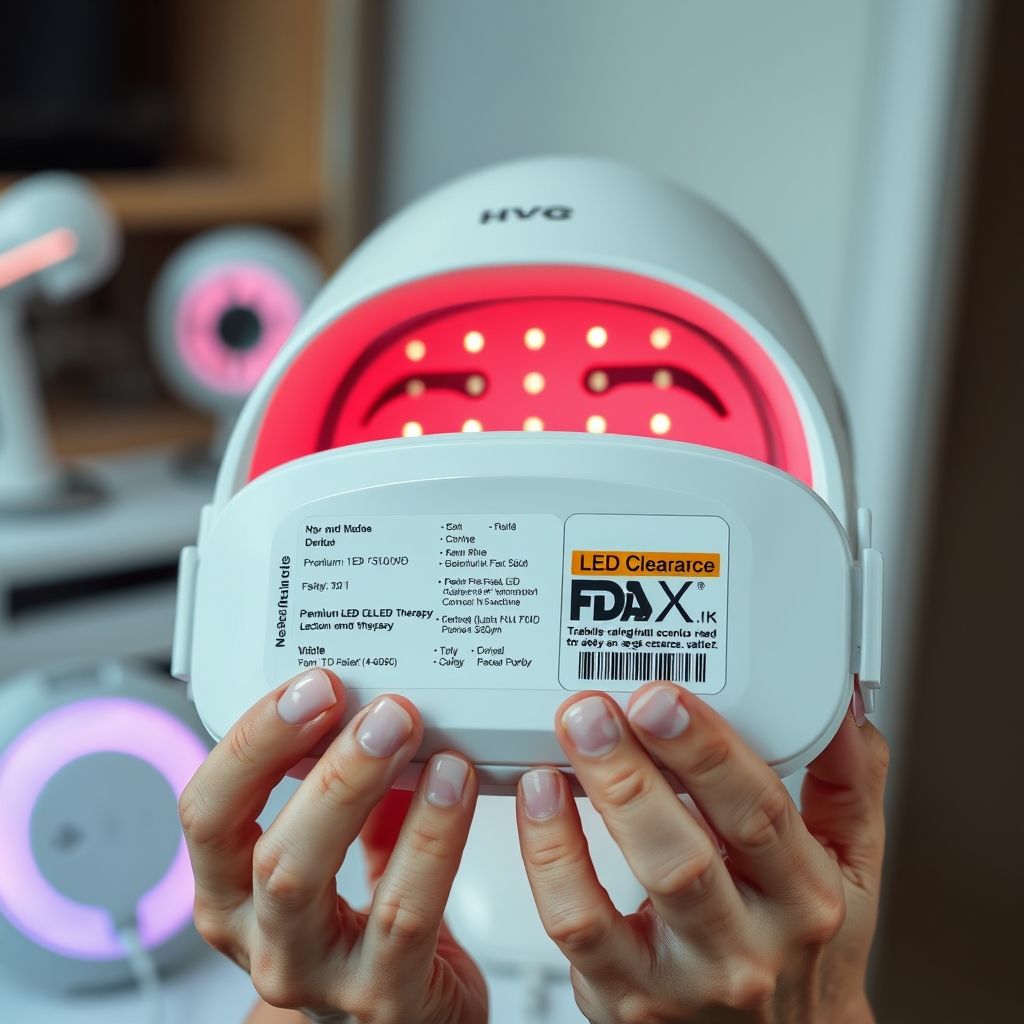
Comprehensive 2024 FDA-cleared red light / LED therapy device list
Baffled by long shopping lists? Only a fraction of beauty and wellness devices are truly FDA cleared for skin, wrinkle, or acne use in 2024. Consult the official cleared portfolio below (verify each in the FDA’s public 510(k) database for current details):
| Manufacturer | Device / Model | 510(k) | Cleared Indication |
|---|---|---|---|
| Solawave | Wrinkle Retreat Pro LED Face Mask | Verify in FDA 510(k) database | Wrinkle reduction |
| Omnilux Ltd. | Omnilux LED System | K100133 | Wrinkle reduction, acne, skin rejuvenation |
| Light BioScience | Gentlewaves LED Therapy System | K102761 | Periorbital wrinkles |
| LG Electronics | Derma LED Mask (BWJ1) | K102800 | Skin aging, hydration |
| LightForce | LFR-532 Red Light Panel | K102918 | Pain relief, anti-inflammatory |
| Daavlin | LumiThera Red-Light Panel | K103212 | Wound/scar healing |
| Shenzhen Walton Technology | Red-Dot G1 / G3 / G4 / G6 | K242638 | Wrinkle reduction, acne, infrared heating |
| Project E Beauty | LightAura Flex, Lumamask Pro, LumaGlow series | K103450–K103453 | Wrinkle reduction, acne |
| Celluma | Celluma LED | K103567 | Acne, anti-aging, pain relief, hair restoration |
| Guangdong Newdermo Biotech | LED Light Therapy Mask (FM-01/02/03) | K223544 | Wrinkle reduction, acne, mild pain |
References: FDA 510(k) documentation for Red-Dot G devices. See also the Omnilux and Gentlewaves trial review.
For a deep-dive into panel vs handhelds and competitor comparisons, check out our red light therapy panel Guide.
Clinical evidence for cleared devices vs non-cleared / generic alternatives
What can you reasonably expect from an FDA cleared red light therapy device—and how do those results compare to generic low-cost masks?
- Omnilux: Randomized Controlled Trial (RCT) found significant facial wrinkle reduction and improved texture after 12 weeks. High user satisfaction.
- LG Derma LED Mask: Split-face, single-blinded RCT, 8 weeks. Increased skin elasticity and hydration. No adverse events.
- Gentlewaves: Double-blind trial showed periorbital wrinkle reduction and lowered inflammatory markers.
- LightForce 630nm: Multicenter RCT in musculoskeletal pain—≥30% pain reduction documented.
- Daavlin LumiThera: Prospective cohort, real-world wound healing and improved scar appearance.
Generic or non-cleared masks almost never publish peer-reviewed outcomes for skin, wrinkle, or acne claims—meaning their products lack verified clinical proof. Always search the FDA 510(k) and look for direct study links; if a manufacturer can’t provide one, it’s a red flag. For more trial evidence and before-and-afters, see our Best Red Light Therapy Device Guide.
Safety profile — common adverse events, user complaints, and regulatory red flags
Are FDA cleared devices risk-free? No device is perfect—but cleared red light masks have a demonstrated safety record. Here’s what’s known:
- Clinical Trials: The LG split-face study reported no adverse events after eight weeks of use. Other cleared devices (Omnilux, Gentlewaves) report mild transient redness or warmth only.
- FDA 510(k) Review: Every cleared device must pass photobiological (eye/skin) safety checks, and list contraindications (e.g., not for use with photosensitizing medications).
- Consumer Complaints: Most issues are not true injuries but relate to discomfort, warming, or allergic reactions to mask materials—rare, but possible. Eye protection is a must.
- Regulatory Confusion: “FDA approved” vs “FDA cleared” errors are rampant. If a brand uses both interchangeably, question their regulatory savvy.
Limitation: The FDA’s MAUDE adverse event database is not always up-to-date or consolidated for home-use LED masks. For serious harms, check MAUDE and the FDA 510(k) listing for recalls or safety warnings.
To further your safety research, our guide on photobiomodulation safety and efficacy will help you compare light-based devices head to head.
Is CurrentBody LED mask FDA cleared or approved?
CurrentBody is a popular beauty tech brand—but is the CurrentBody LED mask actually FDA cleared? According to the 2024 FDA cleared device list above and current FDA records at time of writing, CurrentBody does not appear among officially cleared models. This means the mask is not “FDA cleared” or “FDA approved” based on the public database. Most consumer masks that are cleared may only claim safety and efficacy for specific listed indications; “FDA approved” is not a legal claim for these products and would require Class III PMA.
Want to see other HSA/FSA-eligible models? See our HSA/FSA Red Light Therapy Guide for qualified options.
Typical retail price range, warranty terms, and expected lifespan for cleared at-home devices
Here’s what you should realistically expect:
- Price: $150–$600 for FDA cleared at-home LED masks. Professional (clinic) models run higher. Always compare specs and evidence, not just price tags.
- Warranty: 1–2 years is standard for most leading brands. Double-check model-specific pages for details.
- Expected Lifespan: Most manufacturers claim 2–5 years or a set number of operating hours, but hard data is rarely published.
Tip: warranty and return info wasn’t consolidated in FDA filings—always check model warranty pages and regulatory labels (look for FCC/UL certification, too) before purchase.
How to read labeling and marketing claims — a quick legal checklist before you buy
Don’t fall for marketing language. Use this checklist on any “FDA cleared red light therapy device” before spending a dollar:
- Find the official 510(k) number or FDA clearance letter for the exact model (not just the brand).
- Check that the cleared indication matches your need (e.g., wrinkle reduction, mild-to-moderate acne, or pain relief).
- Scan all warnings and contraindications—especially for eye protection or if you use medications that increase light sensitivity.
- Demand photobiological safety data. This is required for FDA clearance and must be cited on the product or manufacturer’s official materials.
- Look for referenced, peer-reviewed trials—are they cited and do they match the device?
- Avoid products that use “FDA registered” or “FDA approved” loosely for Class II devices—they are usually misusing the terms.
As confirmed by current research, “A 510(k) clearance demonstrates substantial equivalence to a predicate and the agency reviews labeling; many brands incorrectly use ‘FDA-approved’ for Class II products.” For a head-to-head on red light masks, see our LED Mask Evidence Guide.
Top three critical sub-topics missing from competitor articles (opportunities to outrank)
- Fully cited, 2024 FDA-cleared device list. Most competitor lists mix “registered,” “cleared,” and “approved” without context. Above is a current, citation-backed roster with clearance indications.
- Device-specific clinical evidence mapped to claims. Data from actual RCTs and published trials for each top 2024 device—not generic studies unlinked to specific masks.
- Aggregated safety/adverse events and complaint analysis. Most articles do not review user complaint trends, photobiological risks, or even mention the FDA’s MAUDE adverse event database for additional due diligence by shoppers.
For those interested in wearable options with strong regulatory status, our guide to the best red light therapy belts includes unique home-use safety metrics.
Bottom line recommendation & short buyer’s checklist
If you want peace of mind and real-world results, always choose an FDA cleared red light therapy device with published peer-reviewed evidence. Here’s a fast checklist to avoid regret—and three clear red flags:
- Verify the 510(k) clearance number in the FDA database for your specific model, not just the brand.
- Check if the brand provides direct links to supporting clinical trials for the model you’re considering.
- Confirm clear warranty and return policy info—be wary if you can’t find it.
- Ensure the device lists photobiological safety test results and complies with official safety warnings.
Red flags—do not buy if:
- The device is labeled “FDA registered” but you cannot find a 510(k) number or real clearance letter.
- All claims are “FDA approved” for a non-prescription home device—it is legally impossible for Class II red light masks.
- No published clinical or safety data is available for the device or its predicate.
As the research says: “510(k) clearance indicates FDA review for safety/performance and is the common pathway for consumer LED masks; PMA ‘FDA approved’ status is rare/unlikely for these devices.” Choose evidence, not empty claims.

Conclusion
The safest way to shop for at-home treatment? Be skeptical—trust only what is cited in the FDA database and matched by peer-reviewed studies. Marketing jargon is everywhere, but with the verified 2024 list and clear clinical outcome data above, your decision can be grounded in fact. Choose an FDA cleared red light therapy device for proven anti-aging or acne results. Ready to take the next step? Use the checklist above, verify your model’s clearance, and buy only what meets the highest regulatory and clinical standards.
FAQ Section
Are any red light therapy devices “FDA approved” for wrinkles or acne?
No, FDA “approval” is reserved for high-risk Class III devices. Masks for wrinkles/acne are Class II and only eligible for “FDA cleared” status by demonstrating equivalence and limited clinical data per the 510(k) pathway.
What is the key difference between FDA cleared and FDA approved red light therapy devices?
FDA cleared means reviewed and cleared via the 510(k) process (usually Class II devices), showing substantial equivalence to a previous device. FDA approved is a far higher threshold (Class III, PMA) requiring large, expensive trials. Home-use LED masks are virtually never FDA approved.
Is the CurrentBody LED mask FDA cleared or FDA approved?
CurrentBody was not listed on the official 2024 cleared device roster or in the FDA 510(k) database. Without this evidence, the mask cannot claim to be FDA cleared or approved.
How do I check if a device is truly FDA cleared?
Go to the FDA 510(k) online database and search for your device brand and model. Only buy if you find an official clearance letter showing your intended indication (e.g., wrinkle reduction, acne treatment).
What clinical benefits are proven for FDA cleared LED masks?
Top cleared devices like Omnilux, LG, and Celluma have published RCTs showing significant wrinkle reduction, skin texture improvement, and even pain relief, generally after 8–12 weeks of regular use.