


Red light therapy for dementia is gaining serious attention from both caregivers and clinicians looking for safe, non-drug interventions. But what does the latest research really show? And—most importantly—how can a family like yours use this at home, safely and affordably, to make a meaningful (if modest) difference?
Key Takeaways
- Recent clinical trials (2019–2024) consistently find red and near-infrared light therapy offers modest, measurable cognitive improvements in people with mild cognitive impairment or early-stage Alzheimer’s disease.
- Typical at-home regimens involve 20–30 minute sessions with transcranial light devices, 3–5 times weekly for 8–12 weeks, using wavelengths between 810 nm and 1068 nm.
- Home-use photobiomodulation devices range widely in price and support; caregiver success depends on matching protocols, tracking outcomes, and discussing all plans with your neurologist.
- Quick Evidence Summary — What the Recent Trials Actually Show
- Step-by-Step Guide for Caregivers — How to Get Started
- Advanced Analysis & Common Pitfalls
- Conclusion: What Matters Most
- FAQ
Quick Evidence Summary — What the Recent Trials Actually Show
In the last five years, interest in transcranial light therapy for dementia has exploded. What do real clinical trials (not just hype) say?
A systematic review published in 2024 analyzed nine trials (N ≈ 350). The results: red and near-infrared photobiomodulation for Alzheimer’s treatment delivers a modest but statistically significant benefit. Specifically:
- Average effect size on cognition: ~0.4 (a “moderate” impact).
- In a 2021 pilot using a 1068 nm helmet, participants improved 2–3 points on the Mini-Mental State Examination (MMSE) after just 12 weeks of 20-minute sessions, three times weekly [Source].
- The 2023 Vielight Toronto “Vielight” pilot found a 1.5-point ADAS-Cog gain over 12 weeks (five sessions per week).
Adverse events were very rare and mild (mostly discomfort or mild headaches). However, while red light therapy is promising, it is not a cure or a replacement for standard dementia care. Most benefit is seen in mild cognitive impairment (MCI) and early Alzheimer’s disease rather than advanced cases.
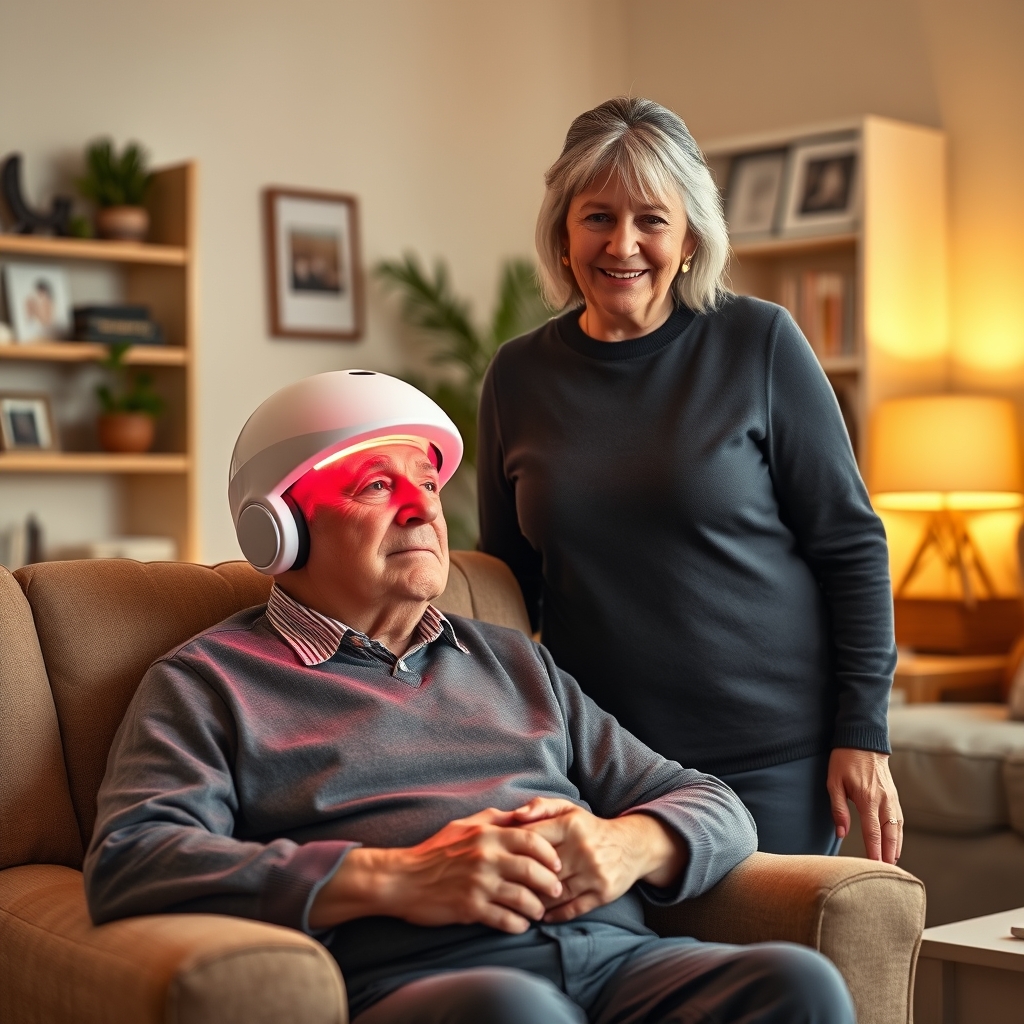
If you want a deep dive into technical device specs and home-use comparisons, see our guide on the best red light therapy devices.
Step-by-Step Guide for Caregivers — How to Get Started
Looking to try red or near-infrared therapy for a loved one? Here’s how to approach it, with clear, practical steps:
- Confirm eligibility. Red light therapy is most effective for people with mild cognitive impairment or early-stage Alzheimer’s. Advanced dementia and other types (like vascular dementia) are less studied.
- Discuss options with your neurologist. Bring questions (see box below). Ask if any ongoing clinical trials are local.
- Choose the right device. Helmets with 810–1068 nm LEDs or lasers are most studied. Price ranges:
Clinical-grade full-head helmets: ~$9,000 / £7,250
Consumer helmets: $300–$2,500
LED caps/panels: $500–$1,500
Clinic-administered sessions: $150–$300 per session - Set a protocol that matches the clinical evidence:
Example: 20–30 mins per session, 3–5 days a week, for 8–12 weeks
For longer-term protocols (like the Cognitive Preservation Project), some use twice-daily 24-minute sessions for up to 12 months (see Dementia Australia study). - Monitor carefully. Start with a baseline MMSE (or similar) score, and keep a caregiver logbook. Note any side effects, missed sessions, and functional changes. Compare results at 8–12 weeks.
- Review the outcome and adjust. If results are unclear, revisit with your clinician before continuing or changing your approach.
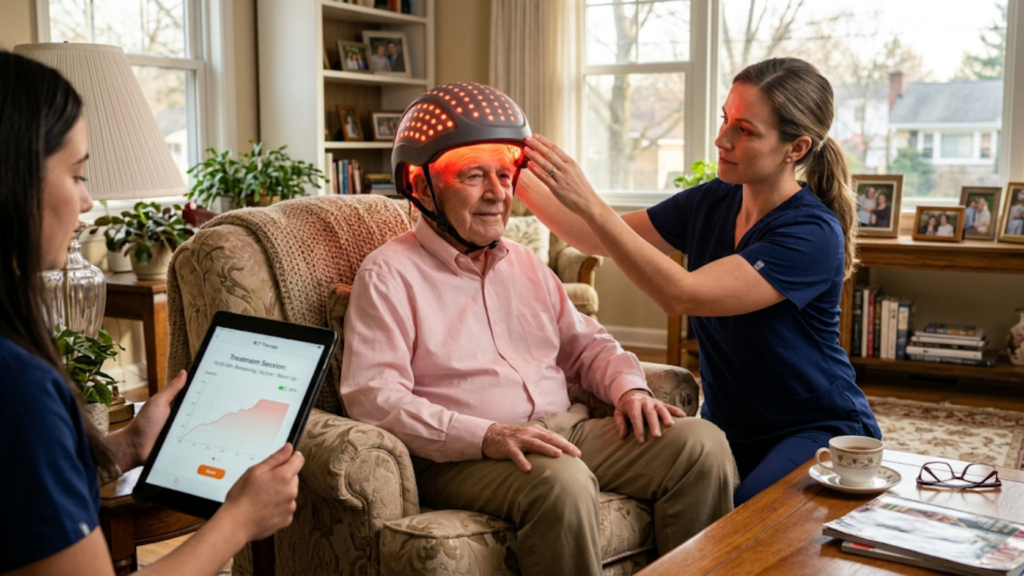
For a closer look at wearables, helmets, and panels, see our breakdown of transcranial red light therapy devices and how they compare for at-home brain health.
- Is photobiomodulation safe with my current medications?
- What wavelength and device type do you recommend?
- What cognitive test should we use to track improvement?
- What are the warning signs to stop therapy?
- Can you help with an HSA, FSA, or letter of medical necessity for insurance?
Advanced Analysis & Common Pitfalls
Not all red light therapy for dementia works the same. Here’s what often goes wrong, and why Device power and coverage can change your results.
- Wavelength matters: Near-infrared (NIR, 810–1068 nm) penetrates deeper into the brain than visible red (around 630–670 nm). The trials showing the best cognitive improvements used NIR, especially 1068 nm helmets [2021 pilot].
- Session length, frequency, and adherence: Protocols vary widely—most use 20–30 minute sessions 3–5x per week, but longer (or more frequent) protocols may provide bigger effects. Missing sessions or not following protocol leads to worse results.
- Device power and coverage: Consumer helmets and LED caps vary. Clinical models tend to deliver more consistent coverage at higher intensities. LED panels and handheld devices may not direct enough energy to brain regions unless correctly positioned.
- Comfort and setup: Many users (or caregivers) find large helmets bulky, noisy, or hot, which can hinder adherence. Fit and ease of use strongly affect long-term success.
- Conflicting advice and lack of standardization: Doctors may have little experience with home-use light therapy. Instructions for dosing and safety aren’t standardized, leading to confusion—one study’s “5x/week” could be another’s “daily,” and not all devices track cumulative dosing.
| Protocol (Trial) | Wavelength (nm) | Duration | Cognitive Gain | Device Type |
|---|---|---|---|---|
| 2021 Pilot | 1068 | 20 min, 3x/week, 12 weeks | +2–3 MMSE | Helmet |
| 2023 Vielight | 810 | 20 min, 5x/week, 12 weeks | +1.5 ADAS-Cog | Helmet |
| Cognitive Preservation Project | Red/NIR Mixed | 24 min, 2x/day, 12 mo. | Long-term under study | Helmet |
Common home-use problems:
- Cost burden and insurance coverage are big challenges. Many caregivers pay out-of-pocket—HSA/FSA strategies can help, but reimbursement is limited in 2024.
- Adherence fatigue (daily sessions for months) is real. Choose the most comfortable and easy-to-use device possible.
- Measuring benefit isn’t always easy: improvements are usually modest, so set clear, realistic expectations.
- Minor side effects (headache, warmth, scalp irritation) are uncommon and usually resolve promptly. Red flags: confusion, agitation, skin burns—stop and seek medical advice immediately.
- Quality and customer support are variable among consumer brands. Stick with well-reviewed suppliers and request data on power, wavelength, and safety certifications.
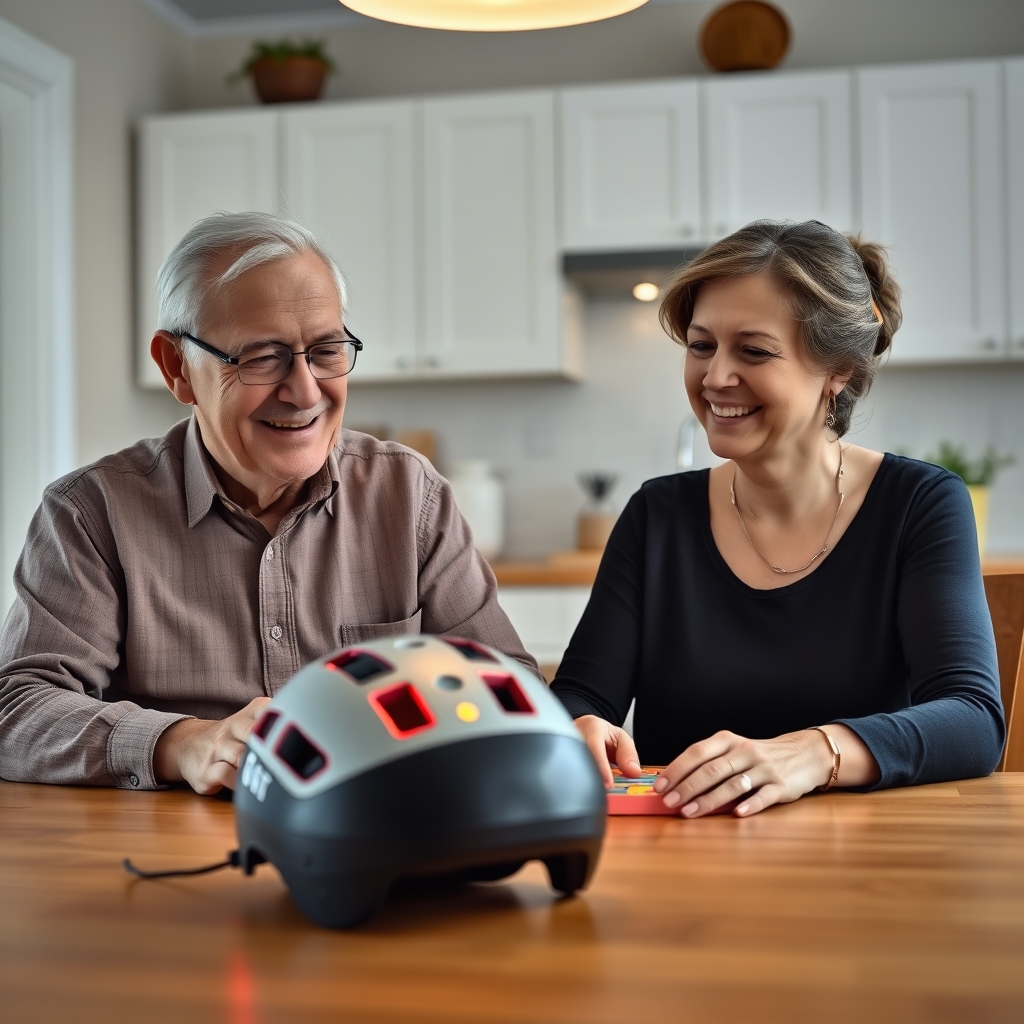
Want to see more about device types, helmet fit, and cost breakdowns? Our photobiomodulation therapy device guide includes detailed user reviews and tips for dementia caregivers.
Conclusion: What Matters Most
Here’s the bottom line: red light therapy for dementia offers modest, evidence-backed cognitive improvement in selected patients—especially those with mild cognitive impairment or early-stage Alzheimer’s disease. For families willing to dedicate daily time and effort, with the right device and realistic monitoring, it can be a practical option alongside standard care.
Always involve your neurologist, match proven clinical protocols, and monitor results every few months. For best value, compare red light therapy panels and helmets before you buy. If you’re considering trying red light therapy for dementia at home—take the next step: talk with your clinician, check eligibility for local studies, and create a clear plan for tracking benefit and safety.
FAQ
Is red light therapy for dementia FDA-approved?
As of 2024, most home-use devices for dementia are not FDA-approved specifically for cognitive treatment. Some devices may have general safety clearances. Always verify claims directly with the manufacturer and discuss with your clinician.
How soon will I see cognitive benefits?
Most clinical studies observed measurable benefits after 8–12 weeks with 20–30 minute sessions several times per week. Changes are typically modest and best tracked using the same cognitive test before and after.
Who should not use red or near-infrared light therapy for brain health?
People with advanced dementia, a history of seizure disorders, metallic cranial implants, or photosensitivity should not use photobiomodulation without specific medical advice. Always consult a neurologist.
Is there any risk of long-term harm?
Trials report very low rates of adverse effects, mostly mild and temporary. No severe long-term effects have been reported in the published literature, but larger studies are needed for full certainty.
Can insurance or HSA/FSA funds cover red light devices?
Coverage is rare. Some insurers may reimburse with a neurologist’s prescription and proper documentation. For detailed reimbursement tips, see our HSA/FSA guide.