


Red light therapy sleep is a science-backed approach to improving bedtime routines, offering a precise, evidence-based alternative for those struggling with falling asleep—even when blue light filters and other sleep hygiene strategies have failed.
Key Takeaways
- Short, low-intensity exposures to red light (630–660 nm, 40–75 lux) before bed preserve or slightly boost melatonin and can reduce the time it takes to fall asleep by up to 10–12 minutes, according to multiple recent randomized trials.
- Most clinical protocols involve 10–30 minutes of red light at bedside red light within an hour of habitual bedtime—too much or too bright can backfire, so following exact specs matters for sleep benefits.
- Red light therapy sleep isn’t a miracle but is a realistic, non-pharmacological way to tweak your nighttime environment; quantify outcomes (latency, mood) and consult a clinician if problems persist or worsen.
- Bottom line — does red light help you sleep?
- Step-by-step red light protocol for better sleep (what REALLY works tonight)
- Advanced analysis & common pitfalls
- Conclusion
- FAQ
Bottom line — does red light help you sleep?
Multiple controlled studies from 2020–2024 show that red light therapy sleep protocols really can help adults fall asleep faster. Unlike blue or bright white light, which quickly suppresses melatonin, red light (especially 630–660 nm at low brightness) preserves or modestly boosts melatonin. A 2024 meta-analysis pooling five RCTs showed that using red light therapy sleep protocols in the evening—10 to 30 minutes, with light intensity aimed at 40–75 lux at the eye and wavelength precisely in the 630–660 nm range—produced about a 13 pg·mL⁻¹ average melatonin elevation and trimmed sleep-onset latency by 9.5 minutes versus controls [source]. These benefits appear modest but trustworthy.
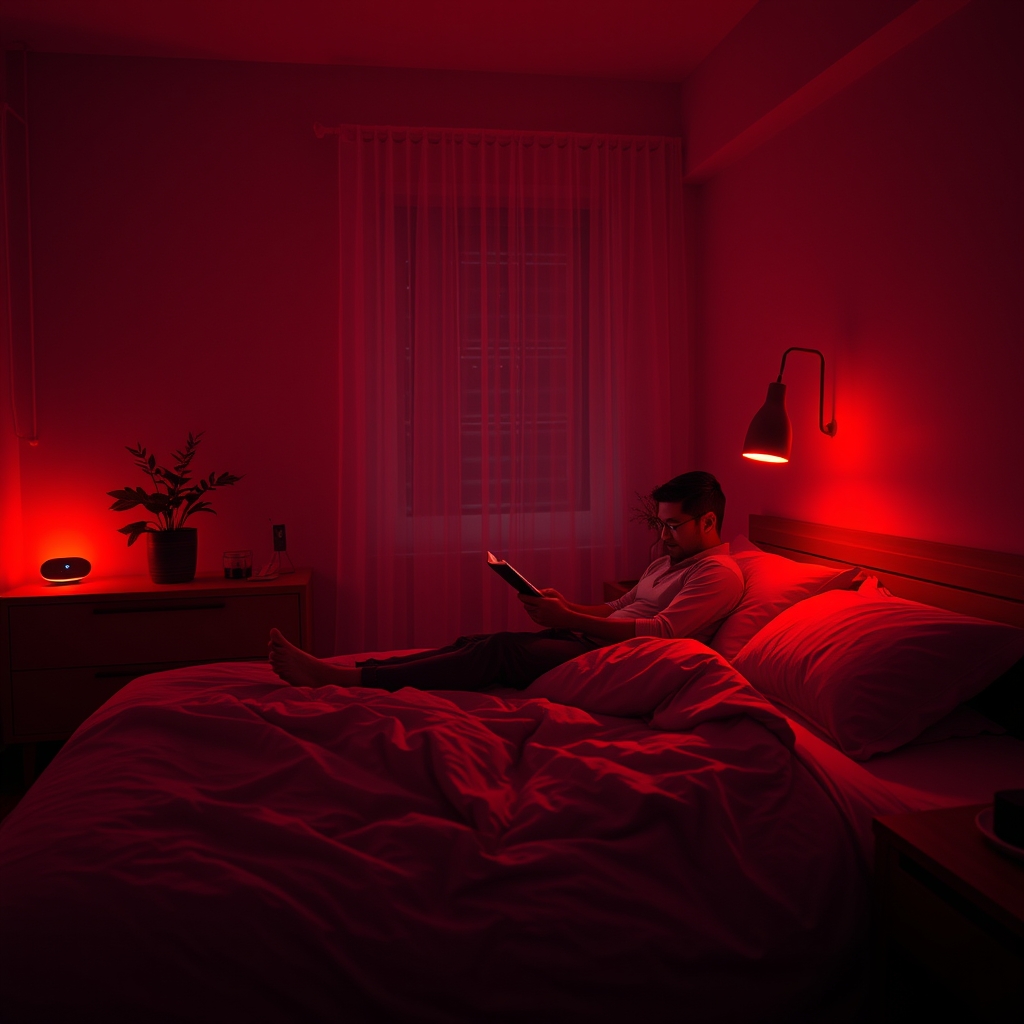
Real-world improvements in insomnia and sleep latency have been demonstrated using bedside red light (not white or blue-shifted lamps) for 10–30 minutes nightly within an hour of usual bedtime. Notably, a 2023 insomnia disorder trial found significant benefits for red light versus visible white light: average sleep-onset latency dropped by 10–12 minutes, sleep efficiency improved, and total sleep time lengthened—while blue or white light worsened scores [source]. In summary, red light therapy sleep protocols, when done with correct specs, can offer measurable improvements for those struggling with sleep initiation.
Step-by-step red light protocol for better sleep (what REALLY works tonight)
If blue light filters and phone settings alone don’t solve your sleep-onset issues, a practical red light protocol is easy to try and based solidly in clinical evidence. Here’s exactly how to replicate the most successful published protocols:
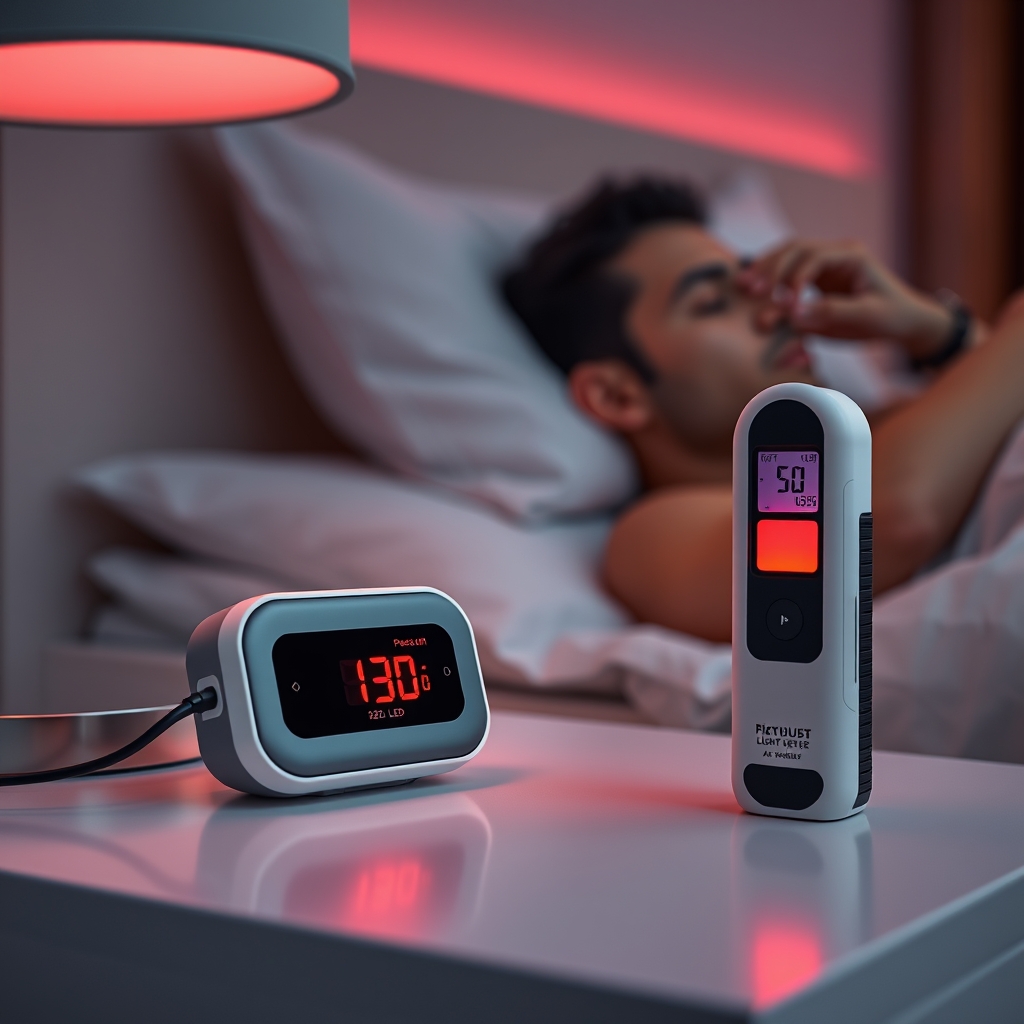
- 1. Choose a red light source that’s clearly labeled 630–660 nm (check device specs or packaging—not all red bulbs are in this range).
- 2. Set up at the bedside so light shines into the space where your head is while reading or relaxing. Lux drops off fast with distance; aim for 40–75 lux at eye level, measured while lying down.
- 3. Use for 10–30 minutes within the hour before your intended bedtime. Common patterns: 30 minutes at 50–75 lux or 15 minutes at 40 lux. Stay consistent nightly for at least 2–4 weeks and track your results.
- 4. Minimize other light sources during exposure (especially phones, TVs, or overheads).
- 5. Optional: Track your sleep latency and mood using a diary or app. Effects may be subtle (e.g., falling asleep 10 minutes sooner nightly).
Clinician trials using these parameters reported increases in evening or overnight melatonin (from baseline values of ~22 to 38 pg·mL⁻¹), and sleep latency cuts of about 9–12 minutes without side effects in most users [source].
If you’re shopping for a device, demand clear info: 630–660 nm wavelength, 10–30 min timer, ability to check lux at the pillow, and transparency from the maker about irradiance. For details, check out our best red light therapy device 2026 guide or get specs for panels versus handhelds.
Advanced analysis & common pitfalls
Red light therapy sleep protocols are promising, but not perfect. Long-term data is still lacking and it’s possible to get the details wrong and see no result—or even worsen sleep.
- Pitfall 1: Using the wrong intensity. Too bright (over 100 lux) can trigger alertness rather than sleepiness. A large human trial found that standard-brightness pre-sleep red light actually increased evening alertness, worsened mood, and fragmented sleep compared to near darkness [source]. Start with the lowest recommended lux and work up only if needed.
- Pitfall 2: Wavelength drift. Anything outside the 630–660 nm sweet spot (like 600 nm, orange, or “amber” bulbs) may not preserve melatonin as shown in published trials. Always verify wavelength on the package—many cheap LEDs are not well specified. For choosing a clinically credible light, see our FDA cleared vs FDA approved red light guide.
- Pitfall 3: Individual variability. Not everyone responds equally—some users find no benefit, or may even feel more alert. If your sleep worsens or negative mood increases, stop and consult a clinician.
| Wavelength (nm) | Duration (min) | Lux at Eye | Avg Melatonin (pg/mL) | Sleep Latency Δ (min) |
|---|---|---|---|---|
| 630 (red) | 30 | 40 | +14 | –10 |
| 660 (red) | 30 | 50 | +16 | –12 |
| Blue (control) | 30 | 40 | –20 | +6 |
| White (control) | 30 | 50 | –18 | +7 |
Trials that compared 630 nm head-to-head with 660 nm found both preserved melatonin, but blue and white light slashed melatonin by two to three times and worsened sleep latency. Red and near-infrared have different biological effects—learn about the contrast in our photobiomodulation vs red light therapy deep-dive.
Finally, be realistic: most quality trials are only 2–4 weeks long, and none so far show strong evidence for reducing sleep medication or delivering long-term cost savings without more research. For more on how red light is being trialed in clinical settings, see this ClinicalTrials.gov listing.
Conclusion
Red light therapy sleep protocols—when they’re evidence-based, low intensity, and applied for 10 to 30 minutes before bedtime—can modestly improve melatonin and speed up how fast you fall asleep by 9 to 12 minutes on average. They’re not a miracle, but they are a practical, low-risk option for adults who want to try something more precise than generic blue-light blocking. Try it for 2–4 weeks, keep your expectations realistic, and stop if you notice increased alertness or negative mood. Want to compare LED shapes or learn more about skin and pain benefits? See our evidence-driven red light therapy device reviews or find specialized advice for red light therapy masks. If sleep-onset problems continue or worsen, consult a sleep medicine clinician. With the right specs, red light therapy sleep protocols are a safe, science-backed “nudge” for your circadian rhythm.
FAQ
What’s the optimal duration and timing for red light therapy before bed?
The most effective clinical protocols involve 10–30 minutes of red light (630–660 nm, 40–75 lux at eye level) within the hour before habitual bedtime. Stay consistent every night for 2 to 4 weeks for measurable results.
Is red light therapy safe to use every night?
Short-term (2–4 week) use at low lux and in the correct wavelength appears safe in published studies, but long-term safety and rare adverse effects are not well studied. Monitor how you feel and stop use if you develop new problems.
Can red light therapy help with severe insomnia or replace medications?
Red light therapy shows modest improvements in sleep latency and insomnia scores but has not been shown to replace medications or cure severe insomnia in published RCTs. Use it as an adjunct and track your symptoms.
Can you use devices that are labeled for skin or pain for sleep?
If the device outputs 630–660 nm and you can control the intensity to the 40–75 lux range at eye level, yes. However, many red light panels are far too powerful or spread light too broadly; bedside lamps or mask-style LEDs are usually a better fit. For device reviews and guides, see our device guide.
How do I know if red light therapy is working for my sleep?
Keep a diary of your time to fall asleep (sleep latency) and overall sleep quality. Expect changes such as falling asleep 9–12 minutes faster after 2–4 weeks. If you feel more alert or agitated, discontinue and try another sleep intervention.