


Red light therapy for testosterone is gaining momentum among men looking for non-drug solutions to low or borderline hormone levels. The big question is: does red light therapy actually boost testosterone, and can it compete with testosterone replacement therapy or supplements? In this evidence-driven guide, you’ll get clear facts, safe application tips, and realistic expectations drawn from the latest clinical trials.
Key Takeaways
- Human studies from 2020–2024 found that targeted testicular red light therapy increased testosterone by about 10–20 percent on average, with the largest and most recent 2024 trial reporting statistically significant gains and better sperm quality.
- The best-researched wavelength range for testicular application is 630–670 nm, with protocols favoring 30–60 J/cm² per session, done three to five times a week; long-term safety is not fully established.
- Red light therapy is not a guaranteed substitute for TRT. Most men should use baseline labs, select precise devices, and monitor progress with their healthcare provider.
- Quick Bottom Line — Can red light therapy boost testosterone?
- How red/NIR light is believed to work on testicular tissue (mechanism)
- What the clinical evidence (2020–2024) actually shows — human trials vs animal data
- Typical protocols reported in the literature — wavelength, dose, time, frequency
- Reported side effects and safety signals (what users and trials report)
- Three important aspects most top articles overlook (must know)
- Common misconceptions and marketing red flags to watch for
- Cost and value comparison: RLT devices vs TRT and supplements (what we know)
- Practical next steps for readers considering RLT instead of or alongside TRT
- What to expect in future research and regulatory landscape
Quick Bottom Line — Can red light therapy boost testosterone?
If you’re wondering “does red light therapy boost testosterone?”—the honest answer is: yes, in many men, but with modest and variable results. The best evidence, a 2024 comparative trial, found direct testicular red light therapy raised serum testosterone by roughly 10–20 percent on average, along with improvements in sperm quality and a reduction in oxidative stress markers (source). These results are not dramatic and won’t match testosterone replacement therapy (TRT), but they are statistically and biologically meaningful for men looking for less invasive options.

How red/NIR light is believed to work on testicular tissue (mechanism)
Why does red light therapy have this effect? It comes down to something called photobiomodulation. When targeted red or near-infrared (NIR) light hits the testes, it penetrates deeply and is absorbed by mitochondria inside your Leydig cells—the “testosterone factories” of the body. This increases energy (ATP) production, reduces oxidative stress, and results in not just higher testosterone output, but better overall sperm parameters too (main review).
The landmark 2024 study confirmed significant rises in both Leydig and Sertoli cell counts after photobiomodulation therapy, with marked improvements in oxidative stress markers. This supports the theory that red light therapy for men’s hormonal health can deliver direct, measurable cellular benefits.
For a broader primer on how red light works across skin, pain, and recovery, see our red light therapy device guide for 2026.
What the clinical evidence (2020–2024) actually shows — human trials vs animal data
The evidence base for red light therapy testosterone increase is growing—but still limited. Rodent studies found red laser therapy at 670 nm could boost testosterone by up to 30–40 percent, with remarkable improvements in Leydig cell vitality and no negative tissue effects (see animal data summary). However, in humans, most trials have reported average testosterone increases of 10–20 percent, and not every user will see the same benefit.
One commonly cited human study actually used a bright white light box (a 10,000 lux SAD lamp), which works via circadian rhythm, not by direct testicular application. The distinction is crucial: for genuine RLT testicle therapy, red light within the 630–670 nm band is the target. Human evidence is promising, but just beginning. Clinical significance usually means a modest but real improvement in testosterone and sperm health, not a total solution for very low T or hypogonadism.
If you’re evaluating other uses or want to know how light therapy is validated for skin and anti-aging, check our photobiomodulation therapy overview.
Typical protocols reported in the literature — wavelength, dose, time, frequency
The “research-backed” protocol for low level laser therapy testosterone (forecasting 2026 consensus) emphasizes specifics you can check against any device listing:
- Wavelength: 630–670 nm (pure red, NOT near-infrared or “full spectrum” for direct testicular use)
- Energy density (fluence): 30–60 J/cm² per session
- Session Duration: 5–10 minutes
- Frequency: 3–5 times per week
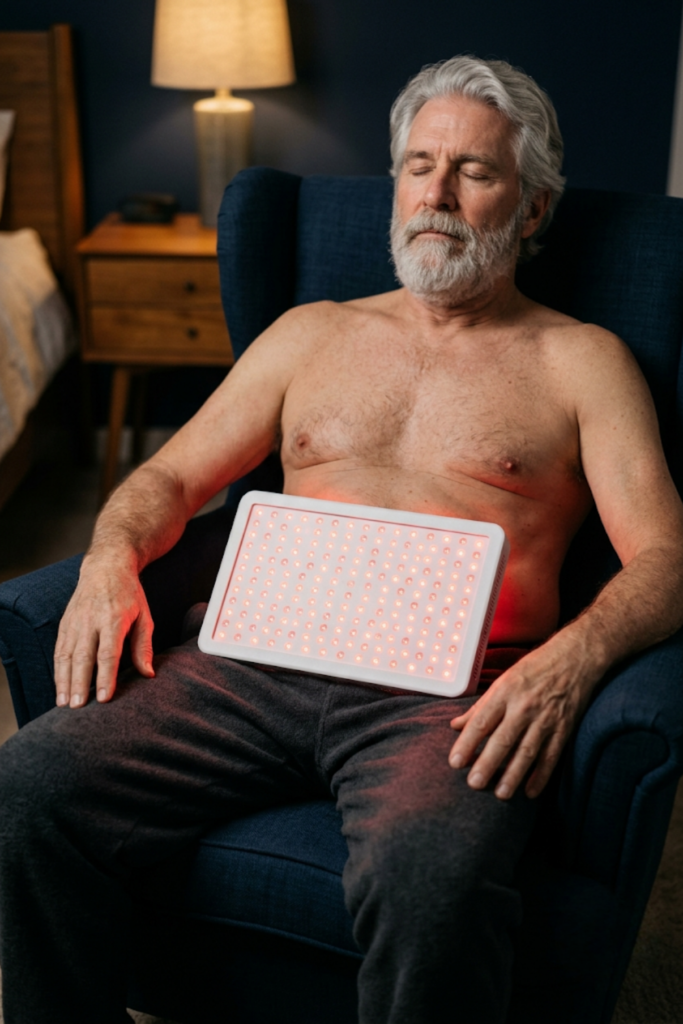
Don’t exceed recommended duration or use high-power near-infrared devices, as excess heat can harm the testes. For a deep dive on the distinctions between NIR and red light options, see our near infrared light therapy guide.
Reported side effects and safety signals (what users and trials report)
Red light therapy is generally safe when practiced with care and the right devices. The most common side effects reported in human studies and user reviews are:
- Temporary warmth or sensation of overheating in the scrotal area
- Mild, brief skin irritation or redness (erythema)
- A strong warning to always protect your eyes—never look directly at the LEDs
No serious or lasting adverse events have been recorded in reviewed human studies (2020–2024), including the 2024 comparative trial.
However, the testes are particularly sensitive to heat. Never use high-powered NIR light panels in this region. Stick with 630–670 nm units, limit sessions as above, and monitor for any discomfort. If you need guidance on safer, medical-grade home use, consult our FDA-cleared RLT device explainer.
Three important aspects most top articles overlook (must know)
- Exact Spectral Range: Many articles lump together red and near-infrared (NIR), but the literature strongly favors 630–670 nm for direct testicular use. Broader bands and NIR wavelengths are less researched for this exact purpose.
- Precise Dosimetry: Dosing isn’t “one size fits all.” The gold standard is 30–60 J/cm², but session timing and frequency matter. Overdoing it can increase oxidative stress or induce excessive heat, compromising sperm quality.
- Long-Term Safety Data: There are no long-term RCTs on reproductive outcomes, fertility, or hormonal cycles after years of repeated use. This is a major gap, and anyone trying RLT testicle therapy should re-check labs periodically and avoid “more is better” thinking.
For practical comparisons of devices and safety, read our red light therapy panel buying guide.
Common misconceptions and marketing red flags to watch for
Unfortunately, some device makers and content creators exaggerate what’s possible. Watch out for:
- Claims that all red or infrared devices are “100 percent safe” regardless of specs; this isn’t true for sensitive areas
- Assertions that these devices are “FDA approved for testosterone” (no consumer device has this designation—see the difference between cleared and approved)
- Testimonials based solely on anecdote without published clinical data
- Ambiguous device advertising with no disclosure of wavelength, irradiance, or outputs in J/cm²
For example, some articles promote devices based on rodent or athlete self-experimentation without noting that human results are much more modest. Stick with research-driven guides and always check for transparent device specs.
Cost and value comparison: RLT devices vs TRT and supplements (what we know)
Here’s a practical framework for comparing red light therapy for testosterone to standard options:
| Approach | Initial Cost | Ongoing Cost | Monitoring Needs | Evidence Level |
|---|---|---|---|---|
| Red Light Therapy Device | $300–$800 (one time) | Minimal (electricity, optional upgrades) | Self + periodic lab tests | Growing (human trials, animal data) |
| TRT (Injections, Gels) | $70–$200/month | $840–$2400/year | Physician exams, mandatory lab monitoring | Very strong for hormone correction |
| Supplements | $20–$60/month | $240–$720/year | Variable—usually self-monitoring | Mixed, mostly modest results |
No clinical trials directly compared the true cost-effectiveness of these approaches. RLT’s primary advantage is a one-time investment and low maintenance, but results are less predictable and not always as strong as TRT. For an HSA/FSA perspective, see our guide on how to buy HSA-eligible red light therapy devices.
Practical next steps for readers considering RLT instead of or alongside TRT
Here’s a checklist for men about to trial red light therapy testicle intervention:
- Get baseline labs: total testosterone, free testosterone, LH, FSH, and semen analysis if fertility is a concern
- Discuss your plan with a healthcare provider knowledgeable about men’s hormonal health
- Pick a device that clearly lists wavelength in the 630–670 nm range and outputs in J/cm², not vague “power ratings”
- Start with 30–60 J/cm², 5–10 minutes per session, three to five times per week; track symptoms and temperature to avoid overheating
- Recheck labs after 2–3 months; if you see a 10–20 percent rise, that matches current best evidence
- Avoid high-powered NIR panels for direct scrotal use, and never look at the LEDs with your naked eyes
- Document all changes: energy, sexual function, and any adverse effects

What to expect in future research and regulatory landscape
Interest in red light therapy for testosterone will only grow as men seek alternatives to pharmaceuticals and injections. Larger randomized controlled trials are sorely needed to standardize dosing, confirm long-term safety, and clarify effects on fertility and reproductive hormone cycles.
The 2024 comparative trial is the strongest human evidence to date, but further data will clarify risks, refine device guidelines, and may influence regulatory policy for at-home use. Stay tuned for updates as the science matures, and be skeptical of any “overnight breakthroughs” not backed by clinical data. If you’re curious about other biohacking approaches, our latest guide on red light therapy for hair growth offers a science-first overview for men.
Conclusion
Red light therapy for testosterone is a promising, evidence-based tool for men looking to modestly increase natural testosterone and sperm health—especially if you want to avoid drugs or shots. Stick with protocols validated in research, prioritize safety (630–670 nm, 30–60 J/cm², brief sessions), and track your results in consultation with a qualified health provider. Remember, red light therapy is an add-on or alternative—not a replacement—for medical management of true hypogonadism.
If you’re ready to start, review your labs, compare devices, trial for three months, and re-measure your testosterone. If you want more detail before buying, explore our deep-dive reviews for the best red light therapy devices for home use. Take control and make your next move—safely, and by the numbers.
Frequently Asked Questions
Can red light therapy fully replace testosterone replacement therapy?
No—while red light therapy for testosterone can deliver a modest boost (10–20 percent in some men), it does not deliver the high, sustained hormone levels that pharmaceutical TRT provides for men with clinically low testosterone.
Is red light therapy safe to use directly on the testicles?
Short-term studies show no serious adverse events when using the correct wavelength (630–670 nm) and proper dosing (30–60 J/cm², 5–10 minutes). Avoid overheating or using high-powered NIR units, and always protect your eyes.
How soon can I expect results from red light therapy for testosterone?
Most clinical studies and user reports suggest measurable changes in testosterone and energy within two to three months of consistent use. Always confirm with follow-up blood tests and adjust your regimen as needed.
Can I use any red or infrared light device for testosterone?
No—devices meant for skin, pain, or general wellness may have the wrong wavelength or be too powerful for direct testicular use. Always confirm specs: 630–670 nm and appropriate energy delivery.
Are there long-term risks of using red light therapy on the testicles?
The long-term impact on reproductive health and sperm quality remains unclear. Use only validated protocols, limit session frequency, monitor regularly, and involve your healthcare provider in tracking labs.