


Red light therapy for gut health is gaining attention as a potential tool to help reduce inflammation, repair the gut barrier, and support a balanced microbiome. But how strong is the science, and is it right for people with IBS, IBD, or chronic gut issues? This article dives into the latest evidence and gives you actionable, realistic advice on using red light or near-infrared photobiomodulation for gut health.
Key Takeaways
- Animal and early human trials suggest red light therapy may lower gut inflammation, improve “leaky gut” markers, and increase beneficial microbiome diversity, but large clinical trials are still needed.
- Most studies use red (660 nm) or near-infrared (808 nm, 904 nm) light panels or lasers, applied several times per week to the abdomen with session energies around 5 J/cm².
- Results are preliminary and variable; users should combine photobiomodulation with standard medical care and monitor symptoms closely.
- Quick answer — can red light therapy help gut health?
- What is photobiomodulation (PBM) and how might it affect the gut — the mechanisms
- Human and clinical evidence (2022–2024) — what the trials and case series found
- Animal and preclinical evidence (2022–2024) — quantified microbiome and inflammation results
- How PBM may improve “leaky gut” — molecular to tissue effects
- Practical dosing & device parameters reported in studies (what researchers actually used)
- Real‑world user experience and common challenges
- Safety, adverse effects and regulatory stance (what’s known and unknown)
- Gaps in the evidence — three critical missing pieces readers should know
- How to evaluate a home red/NIR panel or device for abdominal use (practical checklist)
- Cost vs. benefit — when PBM makes sense and how to integrate it with standard care
- Practical 4‑week starter protocol (evidence‑anchored, conservative)
- Sources, further reading and recommended next steps for researchers/readers
- FAQ
Quick answer — can red light therapy help gut health?
Current research indicates that red light therapy for gut health can measurably reduce inflammation and improve gut barrier function in animal models, and early case series in humans are promising but limited. In a notable 2023 animal colitis study, 660 nm light applied to the abdomen reduced inflammation scores by 42 percent, histological damage by 38 percent, and restored mucosal thickness by about 25 percent. Small human pilot trials and case series have found reductions in IBS symptoms and leakiness of the gut, and a shift toward a healthier gut microbiome. However, large, high-quality clinical trials in people are still lacking. The data should be interpreted as cautiously hopeful, not definitive.

What is photobiomodulation (PBM) and how might it affect the gut — the mechanisms
Photobiomodulation (PBM) uses targeted wavelengths of red or near-infrared (NIR) light to stimulate cellular changes. In the gut, PBM appears to work by several integrated mechanisms:
- Cellular energy boost: Red/NIR photons are absorbed by cytochrome c oxidase in mitochondria, boosting ATP production and fueling cellular repair.
- Upregulation of tight-junction proteins: Key proteins like ZO-1, occludin, and claudin-1 are increased, strengthening gut barrier function.
- Inflammatory modulation: PBM lowers NF-κB activation and pro-inflammatory cytokines (TNF-α, IL-6) while increasing anti-inflammatory markers like IL-10 and TGF-β.
- Antioxidant pathways: PBM activates Nrf2, leading to higher levels of HO-1 and SOD, which help protect gut tissues.
- Gut-brain/vagal signaling: PBM may alter vagal signaling, helping with IBS symptoms via the gut-brain axis.
- Microbiome shifts: A less inflamed, better-sealed gut creates a more hospitable environment for healthy bacteria.
Multiple recent reviews highlight that these mechanisms interact positively, strengthening not only barrier function but also supporting greater microbial diversity and dampened inflammation. For a deeper dive into the technical underpinnings of PBM, see our PBM therapy in-depth guide and check out this curated evidence summary for more mechanistic references.
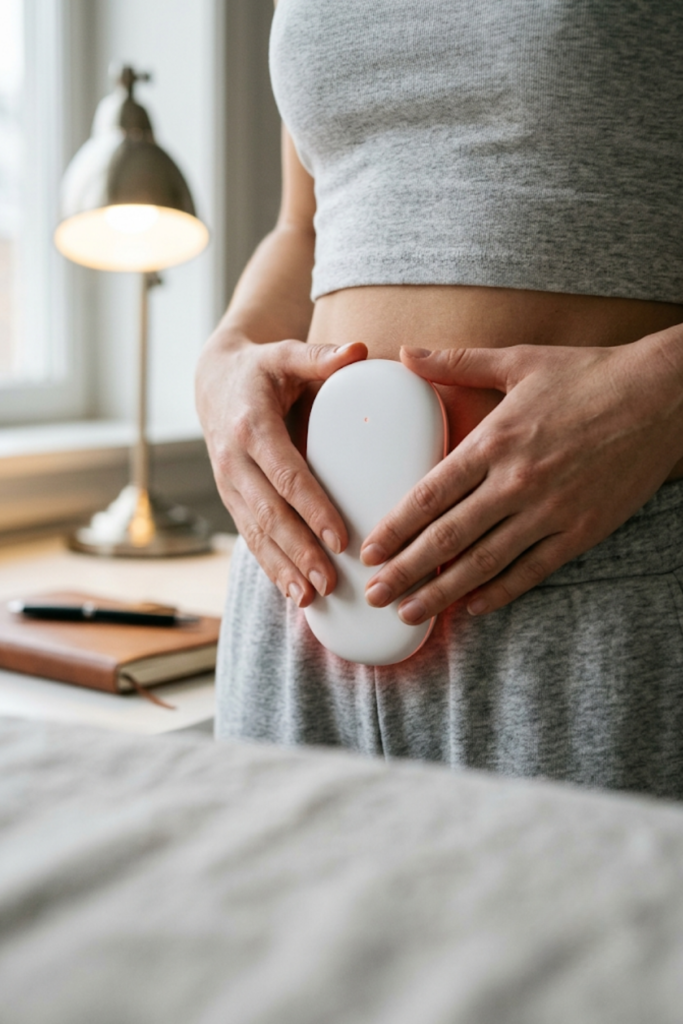
Human and clinical evidence (2022–2024) — what the trials and case series found
Clinical human data on red light therapy IBS or IBD is still in early stages, but here’s what has been published from 2022 to 2024:
- 2024 pilot crossover trial (n=30 IBS): Morning bright light (approx. 10,000 lux, 30 min daily for 6 weeks) reduced IBS-SSS scores from 212 ±34 to 131 ±28 (about 38 percent improvement), dropped gut permeability (lactulose-mannitol ratio) by around 30 percent, and increased fecal microbial diversity (Shannon index +0.48).
- 2023 Parkinson’s case series (n=4): Combined abdominal and cervical PBM (904 nm, 3x/week, 12 weeks) improved constipation and diarrhea scores by 40 percent and shifted the microbiome profile toward healthier populations.
Limitations: These studies feature small sample sizes, brief durations, and sometimes differences in light type (e.g., bright light rather than red/NIR PBM), so results may not directly translate to at-home device use. Adherence, need for ongoing sessions, and individual response variability remain significant factors.
To understand how PBM compares to other modalities and for in-depth device reviews, check out our red light therapy panel guide.
Animal and preclinical evidence (2022–2024) — quantified microbiome and inflammation results
Recent animal models offer strong biological plausibility for PBM’s gut benefits:
- 2023 Mouse colitis model (660 nm): Three sessions per week lowered macroscopic gut inflammation by 42 percent, histologic injury by 38 percent, and restored mucosal tissue thickness by 25 percent.
- 2023 Mouse Parkinson’s-related dysbiosis study (808 nm): Twelve sessions increased Akkermansia muciniphila levels by 2.6 times and Faecalibacterium prausnitzii by 1.9 times, with overall microbial diversity up (Shannon +0.5).
Animal data complement the human findings, showing direct improvements in inflammation and promoting a more diverse, beneficial microbiome. For external expert commentary, see reviews such as Photobiomodulation for Digestive Health and an NIH-archived summary on photobiomodulation and IBD mechanisms.
How PBM may improve “leaky gut” — molecular to tissue effects
“Leaky gut” or increased intestinal permeability is driven in part by loss of tight-junction proteins and inflammation. RLT leaky gut protocols leverage the energy-boosting action of light to encourage higher ATP production, which signals more tight-junction protein expression, leading to decreased permeability.
In the 2024 IBS trial, light therapy reduced the lactulose-mannitol permeability marker by about 30 percent, consistent with prior animal and molecular studies showing PBM boosts ZO-1, occludin, and claudin-1 proteins. This pathway — photons to mitochondrial energy to barrier repair — is well mapped in recent research (see details here). For added background, our piece on near infrared light therapy benefits further discusses tissue penetration and safety.
Practical dosing & device parameters reported in studies (what researchers actually used)
If you’re evaluating a red light panels abdomen benefits protocol, compare your device specs to the studies. Reported regimens include:
- 660 nm (red): 33.3 W/cm², 5.35 J/cm² per session, 3x/week for 2 weeks (animal colitis model).
- 808 nm (NIR): ~5 J/cm² per session, 12 total sessions (mouse dysbiosis model).
- 904 nm (NIR): 3x/week for 12 weeks (case series in Parkinson’s patients).
Some human studies used high-lux broad-spectrum bright light (not classical PBM wavelengths) so not every positive result is directly translatable to home red/NIR panels. Make sure your device can meet similar energy densities, has a measured and published output, and is used as close to skin as possible. For unbiased device reviews and tips, see our 2026 red light therapy device guide.
Real‑world user experience and common challenges
While promising, red light panel abdomen benefits protocols come with real-world obstacles. Many protocols require repeated, time-intensive sessions (3x per week, up to 12 weeks) and rely on devices with consistent, measured irradiance output. Early data are based on small samples: for example, only four patients in some clinical series, so generalizability is not proven. User forums and case reports note that improvements, when achieved, may take weeks to months of consistent use. Additionally, symptoms often fluctuate regardless of intervention because of the complex, relapsing nature of IBS/IBD. Device cost, adherence, and need for combination with standard therapy are common challenges.
If you need a more portable or wearable option, explore our review of the best red light therapy belt devices for abdominal use.
| Aspect | Common Reality | Study/Forum Note |
|---|---|---|
| Session Frequency | Usually 3x/week for several weeks | 4-patient clinical series, 12-week regimens |
| Symptom Changes | Often slow and variable | Reported improvement over 4–12 weeks |
| Generalizability | Limited by small sample sizes | Mostly animal or n=4–30 human sample |
| Combination Therapy | Often used with conventional care | Not a substitute for GI meds or diet |
| Device Setup | Time-consuming, may require space/privacy | Full abdominal access needed for best results |
Safety, adverse effects and regulatory stance (what’s known and unknown)
So far, no major adverse events have been reported in PBM gut health trials, but most data come from small pilot studies or limited case series. Longer-term safety and the risk in people with complex medical histories or those on immunosuppressant or photosensitizing medications are yet to be clarified. Consult your clinician before starting, especially if you are taking such medications.
The literature repeatedly highlights the lack of robust adverse-event tracking and cautions against routine recommendation outside research or adjunct use. For up-to-date FDA status and society endorsements, see our FDA cleared red light therapy guide.
Gaps in the evidence — three critical missing pieces readers should know
- No large randomized controlled trials: Current evidence is driven by animal work and small pilot/case series in humans (e.g., n=4 in some reports).
- Unknown long-term safety and results durability: There are no studies with prolonged follow-up, so durability and possible delayed effects are unknown.
- No dosing consensus or subgroup data: We lack data for different IBS subtypes (diarrhea, constipation, mixed), Crohn’s vs. ulcerative colitis, or immunosuppressed patients. Dosing is variable and not standardized.
As summarized by reviewers (see NIH review), photobiomodulation gut microbiome research is “deserving of further study” before routine clinical use.
How to evaluate a home red/NIR panel or device for abdominal use (practical checklist)
- Wavelength: Prefer devices offering 630–850 nm (red) and NIR up to 904 nm, as used in most studies.
- Irradiance and energy: Look for published output specs allowing per-session energies of at least 5 J/cm² delivered to abdominal skin.
- Timer and treatment area: Should allow consistent delivery and comfortably cover the abdomen.
- Clinical evidence/manufacturer data: Request proof of output and summaries of gut-directed trial data if available.
- Return policy and safety instructions: Clear directions and a reasonable return/refund option are essential.
Compare any model to detailed examples on our device buying guide. For more on RLT leaky gut and clinical safety, check our near infrared guide as well.
Cost vs. benefit — when PBM makes sense and how to integrate it with standard care
Photobiomodulation can be considered as an adjunct for symptom relief in select patients who have mild–moderate gut inflammation, or persistent symptoms despite best medical therapy. It’s not a substitute for dietary, medication, or primary GI treatments. If you trial PBM, talk with your gastroenterologist and track symptoms (IBS-SSS, bowel frequency/consistency, and permeability markers if possible). The time and device expenditure should be weighed against the early benefit signals seen in small clinical trials (38 percent reduction in IBS-SSS, 30 percent reduction in “leaky gut” in one pilot trial) and your willingness to adhere to a 4–12 week regimen. For tips on insurance/flex spending, visit our HSA/FSA red light therapy coverage guide.
Practical 4‑week starter protocol (evidence‑anchored, conservative)
Here’s a conservative, evidence-aligned protocol for red light panel abdomen benefits, intended as a starting point for discussion with your provider:
- Use a panel or pad with 660 nm or 808–904 nm output (check manufacturer’s certificate or independent tests).
- Apply to clean abdominal skin, exposed, center of the gut, not through thick clothing.
- Session duration: Target dose around 5 J/cm² per session (typically 12–20 min depending on device output; check product manual).
- Frequency: Three sessions per week, ideally on non-consecutive days.
- Duration: Re-assess after four weeks; track symptoms (IBS-SSS), stool record, and general wellness before and after.
- Combine with usual dietary/medical care; discontinue if any unexpected side effects.
This protocol is grounded in regimens from published animal and small human series. For more advanced self-tracking tips and troubleshooting light device use, see our post on maximizing recovery with red light panels and methods to validate device output at home.
Sources, further reading and recommended next steps for researchers/readers
If you want to read more or see the original studies, explore:
- Red Light Therapy Scientific Research on Gut Health (curayou.com)
- Photobiomodulation for Digestive Health (Rouge Care)
- NIH: PBM and IBD mechanisms
- Photobiomodulation therapy vs red light therapy
- PBM and the oral-gut microbiome axis (NIH)
Ask your GI clinician for updates on ongoing PBM clinical trials and what gut-directed devices, if any, have preliminary efficacy in your diagnosis. When comparing devices, consider independent reviews and ask about real-world return policy and safety data.
Conclusion
Red light therapy for gut health is a promising, science-backed intervention with plausible anti-inflammatory and microbiome-optimizing effects, but reliable clinical proof for most human users is not yet here. If you decide to trial PBM for gut symptoms, do so cautiously, track your own results, and always coordinate with your medical team. For more device comparisons, evidence links, and expert answers, explore our guides and stay engaged with future clinical trial data. Ready to try or compare red light therapy panels? Start your research or reach out to your provider today.
FAQ
Is red light therapy for gut health safe for people with autoimmune conditions?
Small studies show no major harms but large scale safety data are missing. Discuss with your clinician, especially if on immunosuppressants, as individual risk may vary.
Can I use any red light panel for my abdomen, or does wavelength matter?
Wavelength matters. Look for devices in the 630–850 nm red and 808–904 nm NIR range. Lower quality, unverified LEDs may not deliver enough energy to the tissue depth needed.
How quickly can I expect to see results with gut-directed photobiomodulation?
Clinical studies suggest results, if any, may take 4–12 weeks with consistent use (typically 3x per week). Symptom tracking is key; some users may need longer or see partial benefit only.
Is this therapy covered by insurance or HSA/FSA?
Few insurers cover home PBM devices for gut health, but some may qualify under HSA/FSA with a letter of medical necessity. Review our dedicated HSA/FSA guide for practical steps.
Should red light therapy replace my current IBS/IBD medication?
No. PBM should only be considered as an adjunct, not a replacement for proven medical care. Always consult your treating physician before changing therapies.