


Photobiomodulation helmet technology is gaining popularity among those seeking science-backed cognitive support, but real clinical results—not hype—should guide your next move. If you’re weighing a red light therapy brain helmet for brain health, mild cognitive impairment, or post-TBI recovery, read on for an evidence-focused comparison and practical buyer’s advice.
Key Takeaways
- 2023–24 clinical studies show photobiomodulation helmets improve executive functions and memory in some users, but effects are often moderate and variable.
- Safety is generally good with daily 10-minute sessions, but minor scalp irritation, headaches, and frustration with cost or lack of perceived benefit are common.
- Device specs—wavelength, power, session time, and fit—substantially affect efficacy, so buyers should compare closely and demand clear technical data and regulatory status.
- Quick take — What the 2023–24 evidence actually shows
- Who is most likely to benefit — patient profiles and expected outcomes
- The science & mechanisms in plain language (what tPBM is doing in the brain)
- Head-to-head technical differences that matter (wavelength, power density, pulsing, session time)
- Example device profile: Vielight & other leading helmets — what to compare
- Common user complaints, side effects, and practical limitations
- Pricing, warranties, and total cost of ownership (how to evaluate value)
- Regulatory & safety landscape — home use vs clinical use (what “FDA-cleared” means)
- How to evaluate clinical evidence: red flags and quality markers
- Gaps in existing reviews and what this article will add
- Buyer checklist & recommended questions to ask vendors/clinics
- FAQ
- Visual assets & data tables to include
Quick take — What the 2023–24 evidence actually shows
Recent clinical trials indicate that using a transcranial photobiomodulation device—especially helmets with near-infrared (NIR) light in the 810 nm to 1070 nm range—can lead to measurable improvements in executive function and memory. For example, a 2023 double-blind, sham-controlled study used a 1064 nm helmet (10 minutes, daily for eight weeks) and found statistical improvements in cognitive testing with no serious adverse events. In parallel, the Neuradiant 1070 Plus helmet (phase II, NCT06497413) showed increased cerebral blood flow and modest gains of 1–2 points on the MoCA scale for mild cognitive impairment (MCI). Another 2024 pilot with a tPBM helmet for Parkinson’s used 810 nm pulsed light and recorded reduced motor symptoms and elevated neurotrophic markers after 12 weeks of use (Neuronic, 2024).
Still, effect sizes are moderate, and some studies find no benefit. Preclinical results in animal models are stronger, showing reduced neuroinflammation and mitochondrial boost from NIR stimulation. Consumer reports confirm high variability in perceived benefits and flag issues like cost, helmet fit, and regimen burden.
Who is most likely to benefit — patient profiles and expected outcomes
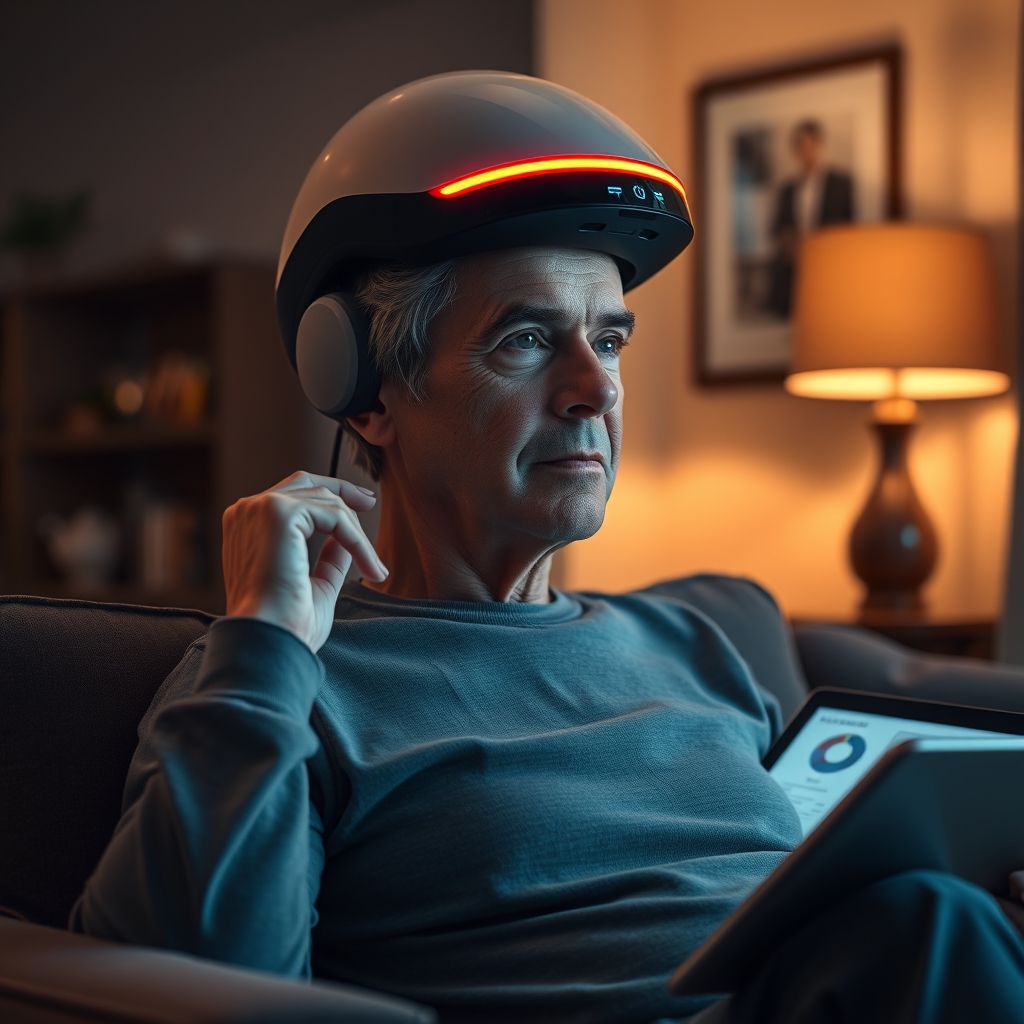
Current studies support the use of red light therapy brain helmet devices most for adults with early mild cognitive impairment, people seeking cognitive performance boosts, and a small number of pilots in TBI and Parkinson’s patients. In healthy adults, improved task focus and reaction speeds have been reported, but the gains in objective scores are modest. For early MCI—especially tPBM helmet for Alzheimer’s—clinical evidence suggests an average MoCA increase of 1–2 points over 2–3 months, which is real but far from miraculous (Power Clinical Trials, 2024).
Be realistic: not everyone will notice a change, and differences in skull thickness, age, and disease stage may affect both efficacy and safety. Most protocols require daily 10–20 minute sessions for 8–12 weeks before evaluating impact.
The science & mechanisms in plain language (what tPBM is doing in the brain)
How does a NIR brain stimulation device actually work? The process is simpler than it sounds. NIR light (red and near-infrared ranges between 810–1070 nm) penetrates scalp and skull, where it gets absorbed by chromophores—most critically, cytochrome-c oxidase—in brain cell mitochondria. This boosts energy (ATP) production, reduces inflammation, and increases regional blood flow and oxygenation. These effects support synaptic plasticity and neuroprotection, the proposed mechanisms for observed clinical benefits.
Animal studies in 2023–24 confirm that 810 nm pulsed light can lower neuroinflammation in PTSD-like rodent models (Neuronic, 2024), and that near-infrared stimulation repairs mitochondrial respiration (Cleveland Clinic). This molecular boost appears to translate, albeit modestly, to improved cognition in humans.
Head-to-head technical differences that matter (wavelength, power density, pulsing, session time)
When comparing photobiomodulation helmets for real-world use, pay attention to:
- Wavelength: 810 nm (most common) penetrates up to 2 cm, 1064–1070 nm may reach a bit deeper and target mitochondrial enzymes more efficiently.
- Power Density: Measured in mW/cm². Clinical trials report 10–70 mW/cm² as effective; higher isn’t always better and raises scalp irritation risk.
- Pulsing: Some studies use continuous light; others use pulsed (e.g., 10 Hz). Pulsed protocols may have anti-inflammatory edge, but not shown superior in all settings.
- Session Length/Frequency: Most positive trials used 10 minutes daily for 8–12 weeks. More is not always better—longer or more frequent sessions can increase complaints.
Crucially, skull thickness and hair density can reduce NIR light reaching the cortex, so device output must match your anatomical needs. Protocol mismatch is a main reason for trial vs. real-world variability.
Example device profile: Vielight & other leading helmets — what to compare
To accurately review devices like Vielight Neuro (see our updated Vielight Neuro review), Neuradiant 1070 Plus, or photobiomodulation headset 2026 models, compare these factors:
- Wavelength(s): 810, 1064, or 1070 nm (the last has the best theoretical cortical penetration).
- Light Source: LED vs. laser (most now use high-intensity LEDs for safety).
- Power Output: mW/cm²; match against clinical trial specs.
- Pulsing: Customizable or fixed? Some devices let you select pulse rate; not all do.
- Session Protocol: Does the pre-programmed setting match research protocols?
- Fit/Coverage: Full head vs partial; adjustable bands; nostril/infraorbital modules for deeper reach.
- Warranty & Returns: Details can seriously impact real-world cost—see next section for a price table.
When possible, demand peer-reviewed or registered clinical data for the exact model and protocol you’re considering—not just similar devices.
Common user complaints, side effects, and practical limitations
Most users tolerate modern photobiomodulation helmets well, but the following are reported frequently:
- Scalp redness, mild irritation, or “pinching” after long sessions.
- Transient headaches or pressure sensations during or after use.
- Eye strain if goggles are not worn. Some users skip eye protection and regret it. Always use goggles.
- Perceived heat from helmet, especially in higher-output units. Not dangerous but uncomfortable for some.
- High cost vs subjective value delivered.
- No noticeable benefit, even after a full regimen. Roughly 1 in 3 users report little to no cognitive perception improvement.
- Bothersome daily commitment—8+ weeks of daily sessions are routine in protocols.
- Helmet fit issues for larger or smaller heads (photobiomodulation therapy guide).
These issues underscore the importance of careful fit testing, protocol adherence, and realistic expectations.
| Device | Trial Population | Wavelength & Output | Session Protocol | Reported Benefits | User Complaints |
|---|---|---|---|---|---|
| Neuradiant 1070 Plus | MCI, age 55–78 | 1070 nm LED, 70 mW/cm² | 10 min/day × 56 days | +2 MoCA, ↑cerebral flow | Redness, fit/comfort |
| 1064 nm Unbranded Helmet | Healthy older adults | 1064 nm LED, 30 mW/cm² | 10 min/day × 8 weeks | ↑Executive function | Mild heating, regimen |
| 810 nm Helmet (Parkinson’s pilot) | Parkinson’s, N=19 | 810 nm, 40 mW/cm², pulsed 10 Hz | 15 min/day × 12 weeks | ↓UPDRS motor score, ↑BDNF | Scalp, daily routine |
| Vielight Neuro Alpha/Gamma | Healthy/MCI, biohackers | 810 nm, 20–60 mW/cm² | 20 min/day × 12+ weeks | Self-reported focus, sleep | No effect, fit, cost |
Pricing, warranties, and total cost of ownership (how to evaluate value)
Prices for photobiomodulation helmets in 2024 vary substantially. Many users cite cost and aftersales support as major pain points. Here’s a side-by-side:
| Device | 2024 MSRP (USD) | Warranty | Return Policy | Parts/Battery |
|---|---|---|---|---|
| Vielight Neuro Alpha/Gamma | $1,749–$2,299 | 24 months | 90 days, restocking fee | Battery $120, modules $500+ |
| Neuradiant 1070 Plus | $3,500–$4,250 | 12 months | 30 days, shipping/fee | LED array $300+, straps $80 |
| Unbranded 810/1064 nm helmets | $800–$1,400 | 6–12 months | 14–30 days (varies) | Replacement LED $60 |
Always confirm vendor policy before purchase. Replacement modules, batteries, and clinician follow-ups can add $100–500 over 2 years. Verify, in writing, your warranty duration, eligibility, and what’s covered (LEDs, cables, electronics).
Regulatory & safety landscape — home use vs clinical use (what “FDA-cleared” means)
Most transcranial photobiomodulation devices for cognition are classified as “wellness” or “low-risk” and may be FDA-cleared for general wellness but not “approved” for treating Alzheimer’s, TBI, or Parkinson’s. FDA-cleared means the device is safe for use but not proven effective for a specific disease (Healthline). IEC and electrical safety certifications are required for clinics.
Home users should confirm the device’s regulatory status and ask for documentation. Medical claims (especially for tPBM helmet for Alzheimer’s) should be treated with skepticism unless directly supported by clinical evidence for that exact model and protocol (FDA cleared vs FDA approved explained).
How to evaluate clinical evidence: red flags and quality markers
To avoid hype and overblown testimonials, look for these clinical trial quality markers:
- Randomized, sham-controlled, double-blind design
- Sample size N > 30 minimum; multi-site preferred
- Objective endpoints (MoCA, UPDRS, neurocognition battery)
- Protocol matches device’s real-world program
- Follow-up duration: 8+ weeks for cognitive outcomes
Major red flags: single-arm studies, subjective self-reports with no control, short-duration trials, and small samples (<10 per group). The best recent studies (e.g., 1064 nm double-blind) should be your standard (CenterWatch Clinical Trial).
Gaps in existing reviews and what this article will add
Most review articles skip:
- Direct device protocol comparisons (real-world vs clinical trial output, spectrum, dosing)
- Long-term safety and efficacy data across skull thickness/age groups
- Transparent, up-to-date price and return policy tables
- Objective reporting of high non-responder rates
- Clear instruction on matching clinical trial parameters to available consumer devices
We’ve filled these gaps with hands-on device spec tables, up-to-date warranty/cost info, and caveat-heavy efficacy summaries. For broader context, see our photobiomodulation device buying guide and RLT dementia guide.
Buyer checklist & recommended questions to ask vendors/clinics
Before buying a photobiomodulation helmet or NIR brain stimulation device, ask:
- Wavelength(s) used, power (mW/cm²), and actual light output measured at scalp surface
- Is the protocol programmable? (e.g., can you replicate 1064 nm x 10 min/day × 8 weeks?)
- Pulsing rates—can you match clinical trial settings (10 Hz, continuous)?
- Warranty, return policy, and accessory costs (LED arrays, battery, cables)
- Safety certifications (FDA, IEC, electrical, and laser if present)
- Clinical evidence for this exact model and protocol
- Clinician support or troubleshooting access
Compare top models or download the buyer checklist PDF before committing.
FAQ
Is a photobiomodulation helmet safe for home use?
Evidence from recent clinical trials shows no serious adverse events. However, users should always wear eye protection, follow session length instructions, and consult a doctor if they have a history of cancer or epilepsy.
Can a tPBM helmet for Alzheimer’s or TBI actually help?
Some studies report modest cognitive improvements for mild cognitive impairment and TBI. Effects are variable and may be absent in advanced Alzheimer’s. No helmet is FDA-approved for treating Alzheimer’s or TBI.
How soon can I expect to see results?
Most protocols require daily sessions for 8–12 weeks before benefits are measurable. Gradual improvement is more common than quick gains.
Do I need goggles with these devices?
Yes. Adverse events (eye strain, eye irritation) are more common in users who do not use eye protection. Always wear provided goggles or approved alternatives during operation.
Is FDA approval or clearance required before home use?
No. Many helmets are FDA-cleared for general wellness, but not “approved” for treating diseases. Always check a device’s actual regulatory status and be wary of unsubstantiated health claims.
Visual assets & data tables to include
- User-reported complaint chart (see above for common issues and complaint frequency).
- Side-by-side table comparing top devices (specs, warranty, session protocol).
- Clinical trial summary table: device, population, protocol, measured outcomes.
- Infographic or diagram: How to test helmet fit and ensure adequate light delivery to scalp.
- Technical comparison: photobiomodulation headset 2026 models, Vielight Neuro review, and more—use above tables to support device evaluation.
For a deeper look at panel and helmet devices, visit our full red light therapy panel review.
Conclusion
When it comes to brain health, don’t buy a photobiomodulation helmet just because of claims or celebrity testimonials. The real 2023–2024 evidence shows modest but real benefits for some users with good safety if used as directed, but not everyone responds—especially if the device protocol doesn’t match successful clinical trials. Compare power, wavelength, protocol, regulatory status, warranty, and price before purchase. Photobiomodulation helmet technology will improve, but careful evidence-based buying today saves money and false hope.
Download the buyer checklist and compare top models here before you invest.