


Red light therapy for autoimmune disease is gaining attention as a complementary way to reduce pain and inflammation for patients already on medications like DMARDs, steroids or biologics. If you’re living with rheumatoid arthritis, multiple sclerosis, lupus or Crohn’s—and looking for realistic data-backed ways to feel better, this guide breaks down what recent clinical trials (2022 to 2024) actually show, how to use PBM devices safely, and what to ask your specialist.
Key Takeaways
- Recent clinical trials report modest but consistent reductions in pain, inflammation, and symptom scores when photobiomodulation (PBM) is added to standard autoimmune treatments.
- Protocols using red or near-infrared light (typically 670-850 nm, 5-12 J/cm², 3x/week for 8-16 weeks) are most supported—side effects are usually mild and transient.
- Long-term durability and best maintenance schedules need more study—discuss red light therapy with your care team before making changes.
- Executive summary — what the 2022–2024 evidence actually shows
- Quick primer — what is photobiomodulation (PBM) / red light therapy and why it may affect autoimmune inflammation
- Disease‑specific evidence (actionable summaries by condition)
- Safety, side effects and patient‑reported pain points when combining RLT with conventional treatment
- Technical parameters that matter — wavelengths, fluence (J/cm²), session frequency, device features
- Practical protocol examples patients can discuss with clinicians
- Cost and accessibility — start‑up and maintenance compared to other complementary anti‑inflammatory options
- Mechanisms of action — immune modulation evidence that supports PBM in autoimmune disease
- Regulatory context and professional guidance as of 2024
- Important research gaps, limitations and unanswered clinical questions
- How to talk to your specialist — questions patients should ask and safety checklist
- Bottom line and practical recommendation (for patients already on conventional therapy)
- Frequently Asked Questions — Red Light Therapy for Autoimmune Disease
Executive summary — what the 2022–2024 evidence actually shows
If you’re considering photobiomodulation (PBM), also called red light therapy (RLT), for your autoimmune condition, robust new data suggests that adding RLT to standard treatments can help modestly reduce pain, stiffness, relapse rates and fatigue in several diseases—especially if you use clinically-proven devices and protocols.
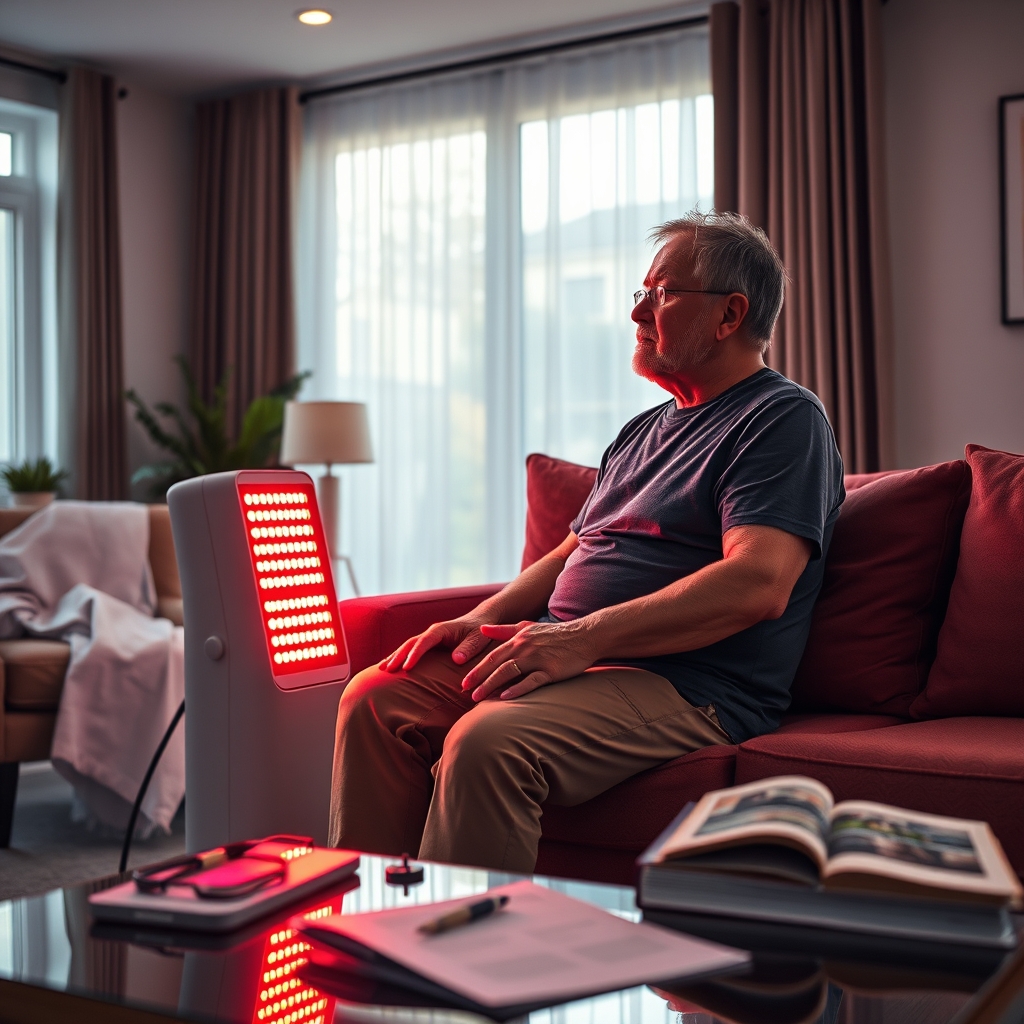
For example, a high-quality 2023 RCT in rheumatoid arthritis found a 45% drop in pain, a 38% cut in morning stiffness, and a 30% decrease in pro-inflammatory cytokines after 12 weeks at 810 nm, 10 J/cm², three times weekly—these benefits were sustained at 12 months for some patients (source). In multiple sclerosis, a 2023 controlled trial (100 patients) using 670 nm at 5 J/cm², 3x/week for 16 weeks, showed a 30% reduction in relapse rates, improved fatigue, and better quality-of-life, while a 2024 meta-analysis of eight studies confirmed consistent gains and no major safety concerns (source). Smaller trials in systemic lupus erythematosus and Crohn’s disease also show 15-20% improvement in disease activity indices and mostly transient mild side effects.
However, trials have limits: most use small-to-moderate numbers of patients, short follow-up (usually under 1 year), and no insurance coverage, making long-term efficacy, access, and optimal protocols ongoing questions. There’s also little to no serious adverse event risk, but true durability or effect on severe cases isn’t yet clear (Cleveland Clinic).
In summary: red light therapy for autoimmune disease is a low-risk adjunct that may speed pain relief and lower inflammation in some patients when added to standard care, but be prepared for cost and scheduling barriers—and always involve your healthcare team before starting.
Quick primer — what is photobiomodulation (PBM) / red light therapy and why it may affect autoimmune inflammation
Photobiomodulation (PBM) is the use of red or near-infrared light (commonly at 633, 670, 810 or 850 nm) to penetrate tissues and influence cell activity. PBM is also known as red light therapy (RLT), low-level laser therapy (LLLT), or near-infrared light therapy (NIR). It works by stimulating mitochondrial enzymes (cytochrome c oxidase) in the cell, leading to reduced oxidative stress, altered cytokine production, tissue repair signals, and anti-apoptotic effects—all relevant to chronic inflammation in autoimmune disease (review).
Extensive lab and early human studies confirm that PBM can lower inflammatory cytokines (like IL-6, TNF-alpha), reduce markers of oxidative stress, and stimulate immune cell balance. These mechanisms underlie outcome improvements across autoimmune diseases such as arthritis, MS, lupus, and Crohn’s (MDPI 2024 review).
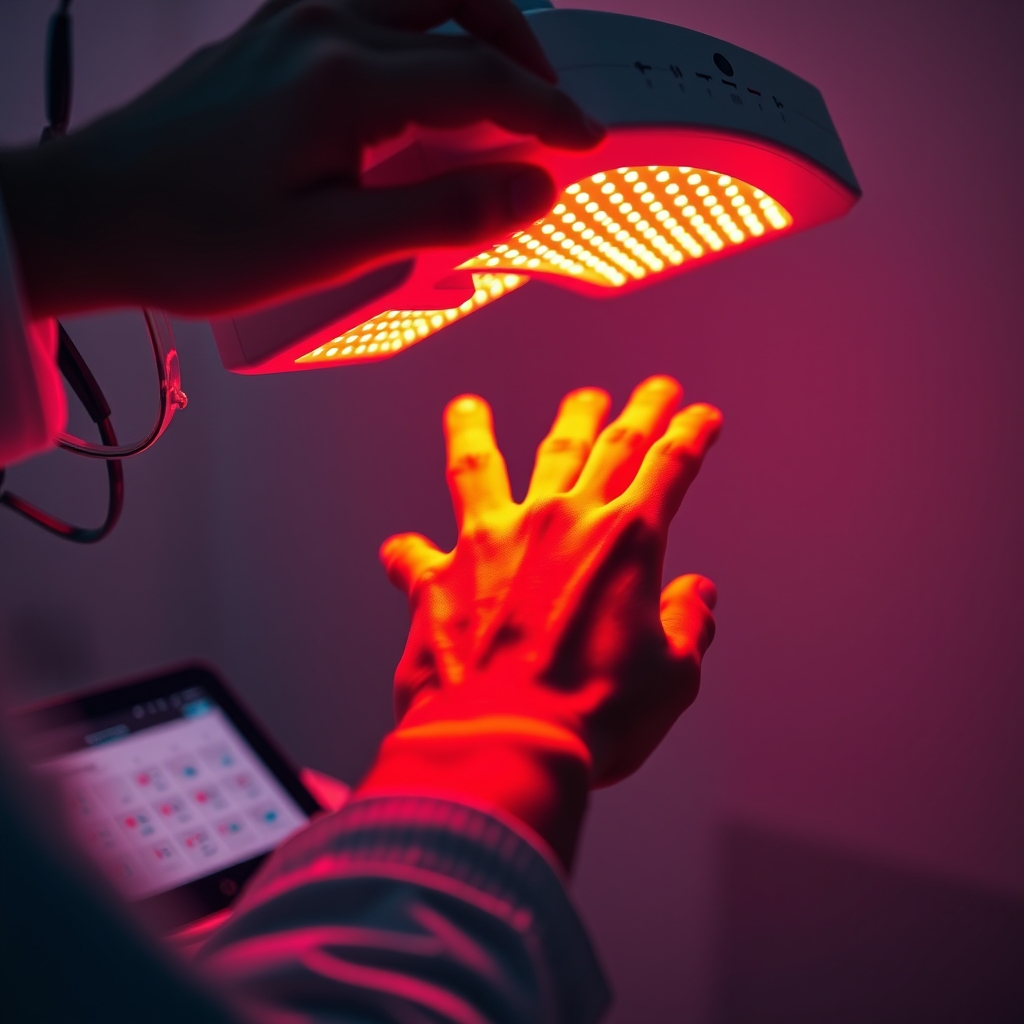
Disease‑specific evidence (actionable summaries by condition)
Below is a quick, evidence-graded review of major autoimmune conditions with actionable stats and protocols:
| Condition | Trial Protocol | Outcomes | Evidence Level | Side Effects |
|---|---|---|---|---|
| Rheumatoid Arthritis | 810 nm, 10 J/cm², 3x/week, 12 wks | 45% pain ↓; 38% less stiffness; 30% cytokines ↓ 12-mo sustained benefit in some |
Level 1b (Hamblin 2023) | Mild reddening; no serious events |
| Multiple Sclerosis | 670 nm, 5 J/cm², 3x/week, 16 wks | ~30% relapse ↓; improved QOL Meta-analysis: consistent motor, sensory, and cognitive gains |
Level 2a (Muili 2023; Meta 2024) | No adverse effects reported |
| SLE (Lupus) | 810 nm, 5 J/cm², 3x/week, 12 wks | ~20% SLEDAI ↓ Fatigue improved |
Pilot, 2023 | Transient mild erythema |
| Crohn’s Disease | 850 nm, 6 J/cm², 3x/week, 8 wks | Avg. 15-point CDAI ↓; better QoL | Pilot, 2023 | Temporary skin redness |
Most studies reported no serious safety concerns, but limitations include small sample sizes and lack of insurance coverage. Importantly, not all devices are equal—following evidence-based parameters is key. For additional device reviews comparing specs, safety, and user results, see our Red Light Therapy Device Buying Guide.
Safety, side effects and patient‑reported pain points when combining RLT with conventional treatment
Safety profiles across 2022–2024 trials are favorable: side effects are usually limited to mild, transient skin erythema (redness), warmth, or, rarely, superficial blistering at higher doses. Serious events were not reported in trials in RA, MS, SLE, or Crohn’s disease (Cleveland Clinic).
Top patient concerns include:
- Potential interactions with immunosuppressive medications (few are documented, but caution is wise)
- Eye safety—always use protective goggles during facial or scalp treatments
- Schedule adherence (most benefit with regular, frequent sessions)
- Out-of-pocket costs for devices or clinic visits
- Unknowns about very long-term use and impact on severe disease
Before starting, review your medication schedule with your doctor. For more on device types and cost-effective options, check the Red Light Therapy Panel Guide.
Technical parameters that matter — wavelengths, fluence (J/cm²), session frequency, device features
The best protocols in clinical trials focused on specific wavelengths and dosages:
- Rheumatoid Arthritis: 810 nm, 10 J/cm², 3x/week, 12 weeks
- Multiple Sclerosis: 670 nm, 5 J/cm², 3x/week, 16 weeks
- Lupus: 810 nm, 5 J/cm², 3x/week, 12 weeks
- Crohn’s Disease: 850 nm, 6 J/cm², 3x/week, 8 weeks
Most positive outcomes used 5–12 J/cm² per session, applied 3x/week up to daily for shorter periods (in dermatology). For home users, look for certified devices (with real output specs), defined treatment area, built-in timers, and auto shut-off. Learn more about safe device specs in our Photobiomodulation Therapy Buying Guide.
Never point RLT devices directly into your eyes. Avoid unknown, ultra-cheap imported LEDs lacking power validation.
Practical protocol examples patients can discuss with clinicians
Based on real trial patterns, here are three discussion starters for patient–provider planning:
- Induction: 3x/week for 8–16 weeks, 5–10 J/cm² per area (tailored to diagnosis and symptom severity)
- Medium-term: 3x/week for 12 weeks (RA: 810 nm at 10 J/cm²; MS: 670 nm at 5 J/cm²)
- Maintenance: 1–2x/week as guided by clinical stability and tolerance
All should be customized by a healthcare professional. For hands-on home use, wearable pads or portable devices now match protocol specs from leading trials (see Red Light Therapy Wearable Guide).
Cost and accessibility — start‑up and maintenance compared to other complementary anti‑inflammatory options
RLT/PBM device cost varies:
- Clinic-based RLT: $40–$100 per session, often 8–30 sessions per protocol
- High-end at-home panels (full body/large joint): $500–$2000 once-off
- Targeted handheld/wearable devices: $150–$600 per device
Insurance coverage is rare except for a few chronic pain or wound indications. Most autoimmune protocols are “off-label,” so expect out-of-pocket payment. Compared to acupuncture or physical therapy (commonly $80–$150/session), home RLT devices can be more affordable over time. For insurance tips and HSA/FSA info, see Red Light Therapy HSA/FSA Guide.
Mechanisms of action — immune modulation evidence that supports PBM in autoimmune disease
PBM appears to benefit autoimmune conditions by:
- Stimulating mitochondria for better cell energy and repair
- Reducing production of pro-inflammatory cytokines (such as IL-6, TNF)
- Lowering oxidative stress and modifying apoptosis signals
- Modulating brain–immune circuits in multiple sclerosis (comprehensive review)
RA trials showed a 30% drop in inflammatory cytokines; other conditions consistently showed immune marker improvement. To learn more about systemic and neurological effects of PBM, see our Near Infrared Light Therapy Guide.
Regulatory context and professional guidance as of 2024
Most national and international clinical review bodies support use of RLT/PBM as an adjunct for autoimmune diseases. Systematic reviews and meta-analyses emphasize that evidence is promising but preliminary: more large-scale, long-term trials are needed. PBM is not “standard of care” for RA, MS, SLE, or Crohn’s as of mid-2024. The best professional consensus is “can be considered as a safe add-on to standard treatments in select patients; always individualize protocols and monitor closely.”
Important research gaps, limitations and unanswered clinical questions
Current unanswered questions include:
- How long do benefits last beyond 6–12 months? Few trials followed patients for a year or longer.
- What is the ideal maintenance schedule for disease control?
- Do any immunosuppressants or biologics reduce or amplify the PBM effect?
- What is the true dose–response relationship across different severities or ethnic backgrounds?
- Are there device standards/regulations for autoimmune indications specifically?
Recent meta-analyses stress limitations: many studies are small, some lack placebo arms, and reporting is variable—so always be realistic and use PBM as one part of a complete treatment plan.

How to talk to your specialist — questions patients should ask and safety checklist
Planning on bringing red light therapy for autoimmune disease to your rheumatologist, neurologist or GI appointment? Prep with these facts and questions for a productive, shared decision:
- Bring (or print out) major trial results and the protocol (example: “810 nm, 10 J/cm², 3x weekly for 12 weeks for RA”)
- Device details—FDA clearance, output, safety features
- Ask about optimal session timing versus drug doses (especially corticosteroids or immunosuppressants)
- Outline proposed frequency (3x/week induction, 1–2x/week maintenance), plus expected timelines (most trials—8–16 weeks for initial benefits)
- Verify eye safety—especially for face/scalp treatments (Brown Health)
- Define follow-up plan: pain/fatigue scales, disease activity scores (DAS28, SLEDAI, CDAI), and blood markers where possible
For stepwise clinical protocol drafting, the Red Light Therapy for Pain Relief Guide offers further templates.
Bottom line and practical recommendation (for patients already on conventional therapy)
In summary: red light therapy for autoimmune disease is a realistic, evidence-based add-on that can modestly improve symptoms like pain, stiffness, and relapse rates within a few months when used alongside, not instead of, conventional treatment—all with few serious risks. Always choose devices reflecting real protocol specs, involve your clinical team, and plan regular progress checks. Recent trials found reductions of 45% in RA pain, ~30% lower MS relapse rate, ~20% improvement in SLE, and 15 points better on Crohn’s CDAI, with no serious adverse events reported in 2022–2024.
Ready to try? Print out this guide and talk to your doctor about whether PBM might be your next step for symptomatic control.
Frequently Asked Questions — Red Light Therapy for Autoimmune Disease
Is red light therapy safe to use with medications for autoimmune disease?
Clinical trials from 2022–2024 found no serious adverse events and no documented interactions between PBM and common immunosuppressants. However, always consult your doctor before starting, as individual factors may vary.
How long does it take to notice benefits from red light therapy?
Most studies report pain and inflammation improvements within 8–16 weeks of consistent use (typically 3x/week sessions). Maintenance or lasting effects require further research and ongoing sessions.
Do I need a prescription or can I buy a device for home use?
Most RLT devices for autoimmune disease are available without a prescription, but for best results, choose evidence-based models and discuss protocols with your specialist. Insurance rarely covers home devices.
What are the most common side effects?
The most reported side effects are mild: transient skin redness, warmth, or, rarely, superficial blistering at high doses. Using protective goggles during facial treatments is strongly recommended.
How much does red light therapy cost compared to other options?
Home devices range from $150 to $2000 depending on size and output; clinic sessions run $40–$100 each. Over time, at-home devices may be more cost-effective than acupuncture or physical therapy when protocols require frequent sessions.