


Red light therapy contraindications are crucial to understand before you purchase or use any home device. If you have a medical condition, are taking prescription drugs, or want real clinical data—not just generic advice—this guide is written for you. We focus on actual adverse event rates, clear “absolute” versus “debated” cautions, and the best pre-purchase safety checks for peace of mind.
Key Takeaways
- Recent clinical trials from 2022–2024 show red light therapy has a low adverse event rate—serious complications are not documented in peer-reviewed studies through 2024.
- Certain groups—those with cancer, pregnancy, active wounds, epilepsy, or on photosensitizing medication—should avoid unsupervised RLT. Some conditions remain controversial and always require medical oversight.
- Screening for universal contraindications, understanding real-world risks, and reviewing medications are essential before you start or purchase any device.
- How safe is red light therapy? Latest clinical summary (2022–2024)
- Most commonly reported side effects — what to expect and how often
- Higher‑risk groups — who experiences more adverse events and why
- Universal contraindications — conditions widely agreed in the literature
- Edge cases & divided opinions — conditions requiring individualized decisions
- Drug interactions — photosensitizers, examples, and biological mechanisms
- RLT and cancer risk — evidence, limitations, and what regulators say
- Official guidance compared — NIH/Mayo/Cleveland Clinic/AAD vs. manufacturer warnings
- Practical pre‑purchase due diligence checklist (for consumers)
- When to stop use and when to see a clinician — red flags to watch for
- Top 3 contraindication‑related content gaps competitors miss (opportunities)
- Suggested meta/FAQ prompts to optimize search intent and SERP snippets
How safe is red light therapy? Latest clinical summary (2022–2024)
In the last three years, multiple large-scale reviews and randomized controlled trials confirm that red light therapy (RLT) is generally considered safe when used according to established parameters. Unlike ultraviolet treatments, RLT uses non-ionizing wavelengths, meaning there is no DNA damage risk. Across major trials and meta-analyses from 2022–2024, adverse events were reported in no more than 2% of participants. Serious adverse events—such as permanent skin damage, vision loss, or systemic toxicity—have not been documented in any peer-reviewed study through 2024 [1].
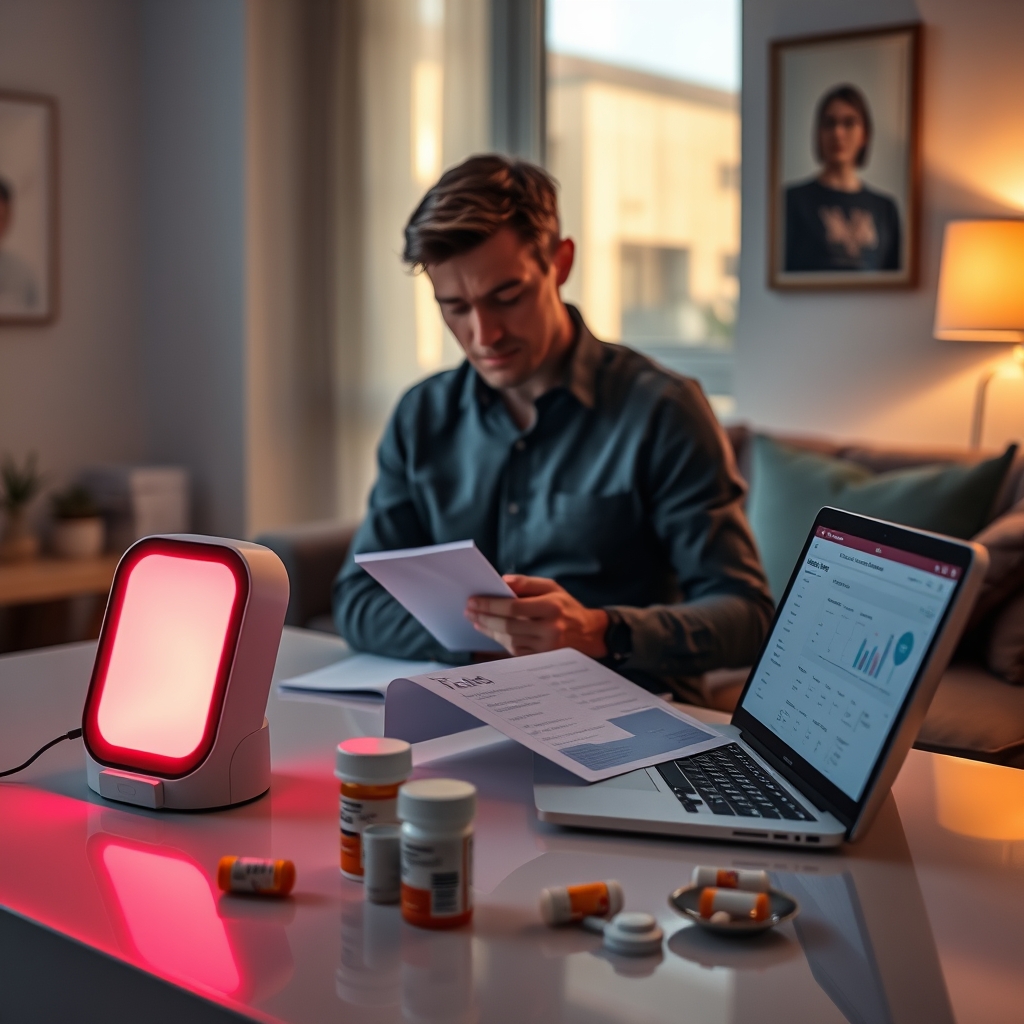
As a rule, side effects are mild and transient, usually related to overuse or improper setup. Choosing a device certified for therapeutic certified irradiance and following published protocols further reduces your risk. But for certain populations, even mild excess exposure can cause more notable problems (see sections below for specifics).
Most commonly reported side effects — what to expect and how often
The most frequent side effects observed in published studies, clinical registries, and user reports are:
- Transient redness (erythema) or mild warmth at the treatment site: about 1.2% of users overall
- Brief headache or scalp tingling: around 0.3%
- Temporary worsening of telangiectasia or old scar redness: about 0.1% [8]
Most of these resolve within 1–24 hours and do not require treatment. Small numbers of participants in recent trials withdrew early due to discomfort but did not experience permanent harm.
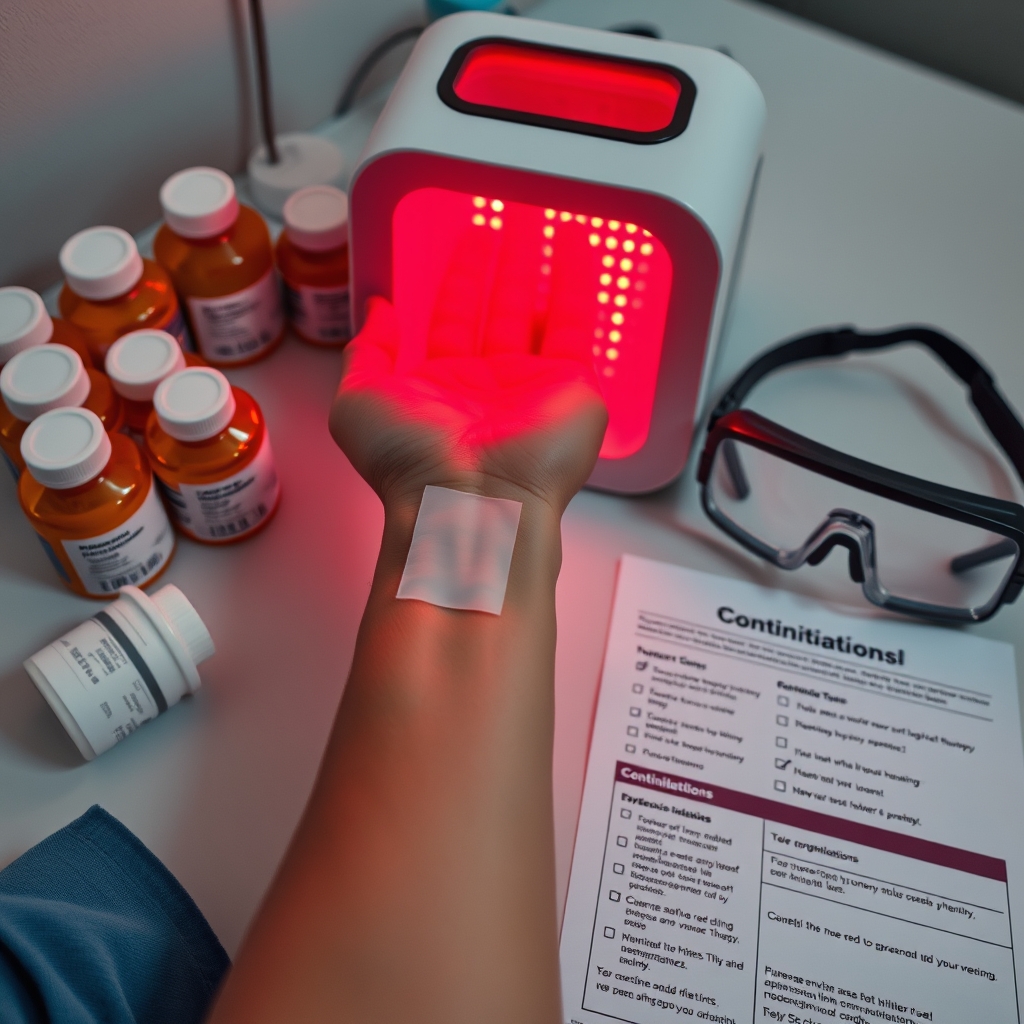
Photosensitivity is rare with RLT but can occur if you use medications that amplify light response (see below). Mild visual side effects, including eye strain or headache, are mostly reported with unfiltered, direct facial use without appropriate protective goggles [7].
Higher‑risk groups — who experiences more adverse events and why
While red light therapy side effects are rare for most, certain populations have a slightly increased risk. Understanding why and how risk rises can help you avoid problems:
- Diabetic peripheral neuropathy / reduced heat perception: About 1–2% incidence of mild burns or more severe skin irritation when standard exposure times were exceeded. Users with impaired sensation cannot always self-limit treatment based on warmth or discomfort.
- Darker skin phototypes (Fitzpatrick IV–VI): Heat discomfort emerged at lower doses, with a roughly 1.5% session termination rate in controlled studies [6].
- Recent wounds or burns: Sessions early after surgery or serious injury risk disrupting healing. Literature discourages use on open wounds until at least 48 hours post-injury unless supervised in-clinic [3].
- Reduced circulation (peripheral vascular disease): These users may have impaired heat dissipation and require stricter limits.
| Population | Increased Risk / AE Rate | Mitigation |
|---|---|---|
| Diabetic Neuropathy | 1–2% burns/irritation if overdosed | Supervised use, shorter duration, inspect skin |
| Darker Skin Types (IV–VI) | ~1.5% heat discomfort, session stop | Lower initial dose, monitor warmth, adjust distance |
| Recent Wounds & Acute Burns | Increased irritation, healing delay | Avoid RLT <48 hrs after injury/surgery |
| Impaired Circulation | Local overheating | Shorter session, increase device distance |
Universal contraindications — conditions widely agreed in the literature
Current literature and guidance from skin and eye health associations agree on several absolute red light therapy contraindications for home or unsupervised use. You should not use RLT if you:
- Have active malignancy in the planned treatment area
- Are pregnant, especially for exposures to the abdomen, pelvic area, or breasts
- Have had a recent acute burn or surgical wound (within 48 hours)
- Have uncontrolled epilepsy/seizure disorder (risk of LED flicker as trigger)
- Are using photosensitizing medications (like tetracyclines, amiodarone, methotrexate, psoralens)
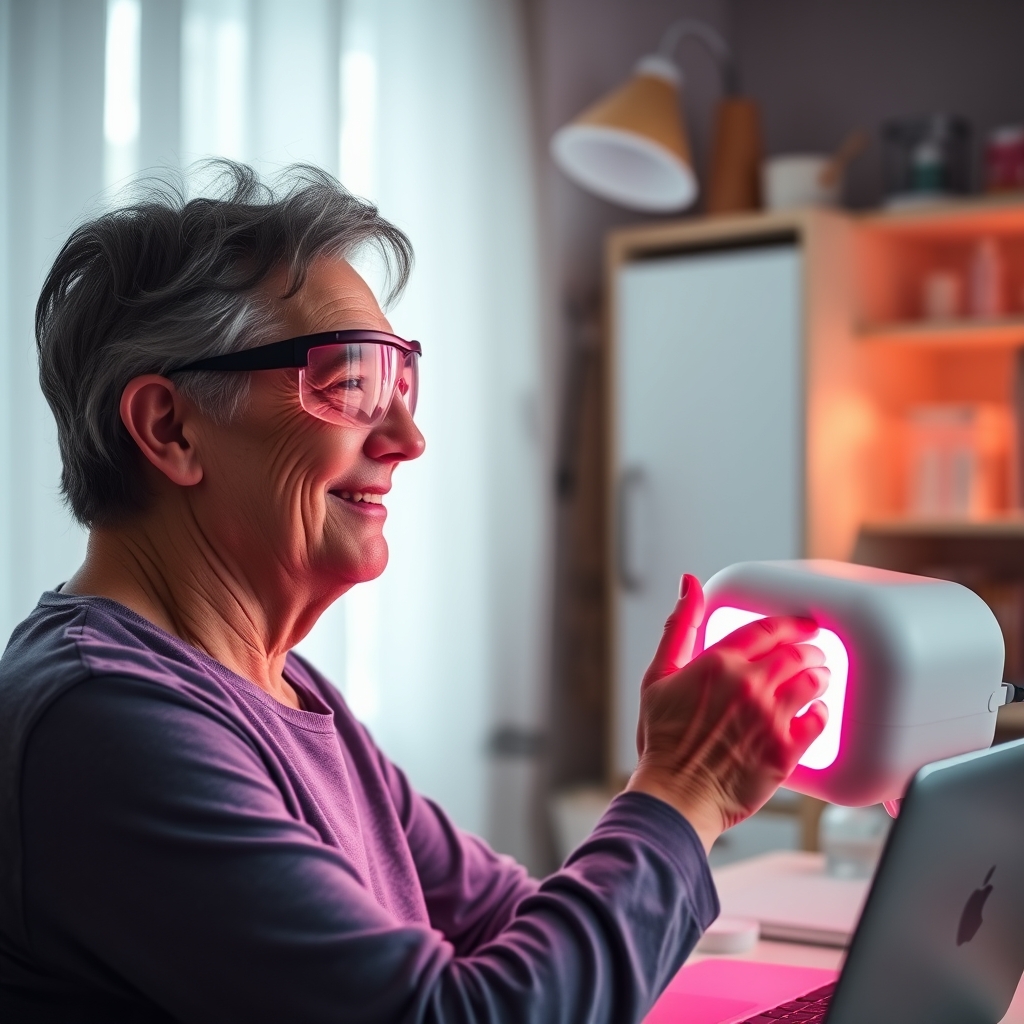
- Plan direct ocular exposure without protective goggles or filters
These warnings align both with journal literature and with institutional sources like Cleveland Clinic and the American Academy of Dermatology [4,5].
Edge cases & divided opinions — conditions requiring individualized decisions
Certain conditions are neither fully contraindicated nor universally considered safe. If you have one of the following, individualized assessment and direct clinician involvement is strongly advised:
- Systemic lupus erythematosus (SLE): Some studies show low-fluence RLT is tolerated; others warn of potential flares.
- Porphyria: Extremely light-sensitive; some case reports allow low-dose use, but risk may be unpredictable.
- Thyroid disease: Especially if hyperthyroid or on high-dose medications impacting thyroid function. Hypothyroidism may be an indication, though supervision is key. See our red light therapy for thyroid resource for a deep dive.
- Cancer survivorship: Studies such as Kauark-Fontes et al. (2022) in head and neck cancer patients using extraoral photobiomodulation report no evidence of cancer recurrence from PBM, but ongoing oversight is best [1].
If you have any of these conditions:
- Bring your device’s specs and your full med list to your next clinician appointment.
- Undergo periodic skin and symptom checks after starting therapy.
- Use lower doses and shorter sessions than standard protocols until proven safe.
Drug interactions — photosensitizers, examples, and biological mechanisms
The risk of photosensitivity red light therapy reactions is well documented for a handful of medications. The mechanism is either direct phototoxicity (skin is more easily burned) or photoallergy (immune response with rash or inflammation).
Common drugs listed in literature as definite contraindications include:
- Tetracyclines (antibiotics—doxycycline, minocycline)
- Amiodarone (heart arrhythmia)
- Methotrexate (immunosuppression)
- Psoralen derivatives (used for phototherapy in skin conditions)
If you are currently taking a drug with a warning for sun/UV sensitivity, do not use RLT unless cleared by your provider. If RLT is needed for pain or wound healing, your doctor can sometimes advise a dosing schedule or drug hold to minimize risk.
For a broader guide on RLT and medication safety or drug-dependent effects, see our deep-dive on red light therapy for pain relief.
RLT and cancer risk — evidence, limitations, and what regulators say
RLT cancer risk remains a source of mixed advice online, but clinical evidence is reassuring:
- Red and near-infrared light are non-ionizing and do not cause the kind of DNA damage that ultraviolet can.
- Studies from 2022–2024—including extraoral PBM protocols used in cancer patients (head and neck mucositis)—show no evidence that RLT accelerates tumor growth or cancer recurrence [1].
- No peer-reviewed documentation exists through 2024 showing RLT worsens or induces malignancy.
Regulatory groups and hospital providers echo these points but recommend that if you have a cancer diagnosis or a history of treated cancer, discuss any use of RLT devices with your oncology team.
For a breakdown of real clinical use, data, and regulatory advice, see our FDA cleared red light therapy device FAQ.
Official guidance compared — NIH/Mayo/Cleveland Clinic/AAD vs. manufacturer warnings
Top medical authorities—including Cleveland Clinic and the American Academy of Dermatology—recommend caution or avoidance of RLT in the same universal contraindication scenarios listed above: pregnancy, active cancer in the treatment area, recent severe wounds, photosensitizing medications, and without eye protection.
In contrast, many manufacturer instruction manuals use much broader and sometimes vague warnings—sometimes simply listing “consult your physician” for all uses. Always weigh official hospital/clinic sources more heavily than generic device pamphlets. The AAD’s safety page is regularly updated for clarity and specificity [5].
Practical pre‑purchase due diligence checklist (for consumers)
Before buying any RLT device—particularly if you have a chronic health condition—use this due diligence process:
- List all current diagnoses and prescription/OTC meds, crosscheck for any known photosensitizers or flagged high-risk conditions.
- Consult with your primary clinician or dermatologist if you have history of cancer, pregnancy, seizures, or autoimmune disease.
- Check device specs — preferred wavelengths (630nm, 660nm, 850nm), certified irradiance (avoid wild claims), built-in eye protection or recommended goggles.
- If possible, do a patch test: single short session to a concealed area, monitor 24 hours for redness, blistering, or irritation.
- Begin with short treatment intervals and lower fluence, increase gradually only if no side effects develop.
- Document device type, session parameters, and skin reactions in a simple log. Top vendors should provide materials safety data or clinical certification on request.
Curious about device reviews, specs, or choosing certified options? Our 2026 red light therapy device guide covers evidence-based options for face, pain, and at-home safety.
If seeking full body or wearable devices, read up on full body red light therapy panel safety.
When to stop use and when to see a clinician — red flags to watch for
Discontinue use immediately and consult a clinician if you experience:
- Persistent or worsening redness, swelling, or blistering after a session
- Vision changes or new eye discomfort, especially after direct exposure
- Headache, dizziness, or new neurological symptoms with or after treatment
- Any reaction in the context of pregnancy, cancer history, or immunosuppression
- Unexpected changes in an existing skin lesion or surgical area
Even though the adverse event rate is ≤2% and serious events are not recorded in trials, real-world users with higher risk factors (e.g., neuropathy) do occasionally experience problems if doses/times are exceeded. You should keep your threshold to seek help low.
Explore more safety guidelines for niche populations—such as in our guides on RLT for autoimmune disorders and red light therapy for neuropathy.
Top 3 contraindication‑related content gaps competitors miss (opportunities)
Many guides on red light therapy contraindications are vague, outdated, or lack actionable data. Here is how our clinical, highly referenced approach is different:
- No exact numbers: Competitors often skip hard stats. We report the ≤2% overall adverse event rate, plus the detailed breakdown (erythema ≈1.2%, headache ≈0.3%, scar or telangiectasia ≈0.1%).
- Drug interactions’ specifics: Most articles just mention “photosensitivity.” Here, we list actual drug classes (tetracyclines, amiodarone, methotrexate, psoralens), mechanisms, and give linked real-world mitigation options.
- Nuanced guidance for cancer survivors and “edge cases”: We directly cite new large-scale studies showing PBM does not increase tumor risk, but still advocate close clinician involvement in these populations for absolute safety.
For buyers who want the science and the real numbers, our guides—including those on FDA cleared RLT devices and photobiomodulation therapy—offer more detail and transparency than most mainstream reviews.
Suggested meta/FAQ prompts to optimize search intent and SERP snippets
Is red light therapy safe?
When used at established therapeutic doses, red light therapy is safe for most healthy adults. Clinical trials from 2022–2024 report adverse events in less than 2% of sessions, nearly all mild and temporary.
Who should not use red light therapy?
People with active cancer in the treatment area, during pregnancy (especially abdomen/chest), recent severe burns, seizure disorders, or who are taking photosensitizing drugs, should not use RLT unsupervised.
Which medications make red light therapy unsafe?
Photosensitizing drugs—especially tetracyclines, amiodarone, methotrexate, and psoralen-based agents—increase the risk of skin reactions and are contraindicated for at-home RLT unless approved by your doctor.
Can red light therapy cause cancer?
There is no evidence that red light therapy causes cancer. Red and near-infrared light are non-ionizing and do not create the DNA changes linked to malignancy.
Is red light therapy safe during pregnancy?
RLT is not recommended during pregnancy, especially on the abdomen, pelvic area, or breasts, because safety for the developing fetus has not been established.
Conclusion
Understanding red light therapy contraindications and real-world risk is key to safe results, especially if you have medical conditions or take prescription medications. Stick to published dosing, screen for absolute contraindications, review your medication list, and always start gradually. If in doubt, a brief consult with your clinician can prevent problems before they start. Ready to take control of your RLT experience? Use our expert guides for specific devices, advanced protocols, and actionable safety steps—and feel free to reach out with questions or personalized advice.